Yukon Developer Expands Holdings with Acquisition of Two Prince Rupert Hotels
Northern Vision Development partners with First Nations corporations to diversify investments outside Yukon
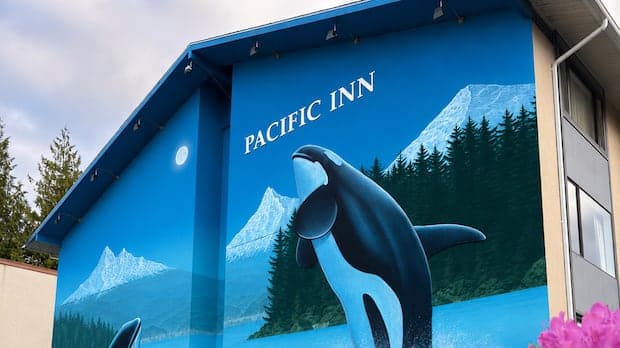
Northern Vision Development (NVD), a real estate and hospitality company based in Yukon, has acquired two hotels in Prince Rupert, British Columbia. The purchase, completed in June, involved the Inn on the Harbour and the Pacific Inn. NVD entered into this transaction in partnership with the Lax Kw'alaams Business Development LP and the Metlakatla Development Corporation, both of which represent economic development arms of regional First Nations.
Michael Hale, CEO of NVD, stated that the company’s decision to invest outside Yukon aligns with a broader strategy to diversify its holdings. He explained that with a workforce nearing 400 employees, NVD considers it necessary to broaden its investment base to protect against economic fluctuations in the Yukon. "So if there's ever a downturn in the Yukon, we're going to be OK," he said, emphasizing the importance of geographical diversification for both employees and investors.
NVD has built its reputation in Yukon through ownership and management of a diverse portfolio, which includes condominium developments, hotels, and seniors' homes, as well as ongoing commercial work in the Whistle Bend area of Whitehorse. According to vice-president Blake Buckle, the company is involved in the direct ownership or partnership operation of approximately 26 businesses within the territory.
While Hale clarified that he does not foresee an imminent downturn in the Yukon economy, he pointed to the potential for economic "flattening," particularly if government infrastructure spending is reduced. The most recent territorial budget reported an $82-million deficit, and Yukon’s government has utilized $1.168 billion of its $1.2-billion federal borrowing limit. Premier Currie Dixon has indicated an intention to reduce government spending without public sector job cuts.
Hale said these fiscal constraints reinforce the responsibility of NVD to invest beyond Yukon’s borders to provide a buffer against potential local economic slowdowns. The choice of Prince Rupert was described as motivated by what the company views as an "under-realized opportunity" in that city.
Despite the expansion into British Columbia, NVD maintains an ongoing commitment to Yukon. Hale pointed to significant expenditures in Whitehorse, including between $30 million and $50 million invested in the Whistle Bend development and $54 million spent on the newly opened Hyatt Place hotel. However, he noted the increasing challenge of constructing new projects in Yukon due to escalating costs. "It is almost impossible to build new viably here," he said, adding that another large-scale hotel such as the Hyatt is unlikely to be repeated in the near future. The Whistle Bend project is also expected to generate only marginal returns due to high construction expenses.
Nevertheless, NVD is exploring further developments within Yukon, including potential expansion into areas such as Kluane. For Prince Rupert, Hale described the company’s objective as creating a "mini-version" of NVD in the city, with plans to increase its presence through further business acquisitions.
Jack Payne, the previous owner of both the Inn on the Harbour and the Pacific Inn, has longstanding roots in Prince Rupert. Payne expressed confidence in NVD’s approach and values, suggesting that their entry represents a noteworthy but perhaps under-recognized development in Canadian business circles. "It's an exciting story that's going on here and one that's not well known, I don't believe, across Canada," Payne said.
The acquisition comes at a time when Prince Rupert is drawing increased national attention. The city’s port, already the third-busiest in Canada, is a focal point of the new Canada-British Columbia Cooperative Prosperity Agreement. There are also proposals under consideration for a new liquefied petroleum gas export facility, which would enable fuel to be shipped internationally. The enterprise proposing this facility is partially owned by the same First Nations—Metlakatla and Lax Kw’alaams—whose development corporations partnered with NVD in the hotel acquisition.
Payne suggested that developments in Prince Rupert are likely to become more prominent as Canada continues to expand its international trade ties. "And I think you'll be hearing a lot more about Prince Rupert in the next little while as things progress in our country and we start to look to trade with the world," he said.
The partnership between NVD and the First Nations corporations reflects a trend toward collaborative investment models in northern British Columbia. Such arrangements can align community economic interests with private sector growth strategies. The involvement of both Metlakatla and Lax Kw'alaams in significant infrastructure and hospitality projects may indicate a multifaceted approach to leveraging local assets for both employment and revenue generation.
The transaction underscores larger themes in northern economic development: the search for diversification by established regional firms, the constraints imposed by public sector fiscal realities, and the growing role of Indigenous economic development corporations in shaping commercial landscapes. The acquisition of these two hotels by NVD and its partners illustrates how these factors are converging in communities positioned as gateways to trade and resource development.