Yukon and First Nations Set Collaborative Path to Overhaul Mineral Laws
Territory, Indigenous governments launch joint process to update mining legislation by 2029
The Yukon government and Yukon First Nations have agreed to a new process for overhauling the territory’s mineral resource laws, a move that aims to update mining legislation dating back more than a century. The framework, announced July 7, 2026, establishes mechanisms for self-governing Yukon First Nations and the territorial government to collaboratively draft new mineral legislation, with opportunities for transboundary Indigenous governments and industry to provide input when relevant.
According to the Yukon government, the new legislation is intended to cover the entire mining life cycle, addressing all phases from initial prospecting through to mine closure and remediation. The government’s news release stated that the process is designed to allow broad participation, ensuring a range of perspectives are considered as the legislation is developed.
The agreement outlines a multi-tiered governance structure. An Oversight Group will be formed, including the Chiefs Committee on Mining, alongside a Collaborative Development Group composed of senior officials. These groups will be supported by technical working groups, which will be tasked with addressing specific technical issues and seeking advice from industry stakeholders as needed.
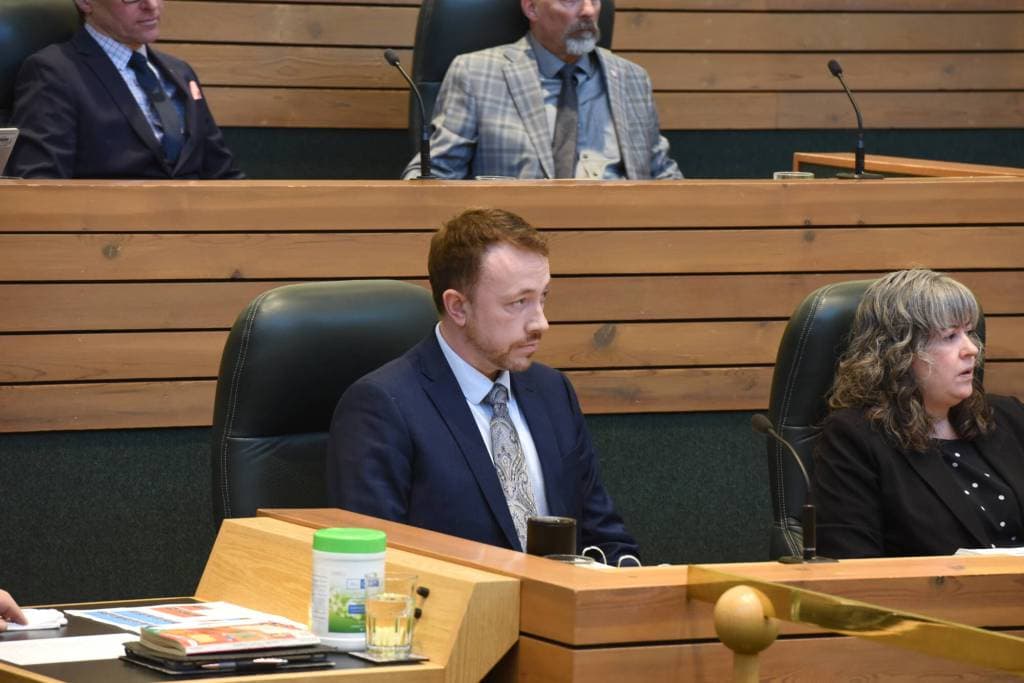
Energy, Mines and Resources Minister Ted Laking stated in an interview that while the process is now underway, the timeline for completion remains broad. The current Yukon government mandate expires at the end of 2029, and Laking indicated that it is too early to predict when a draft of the legislation might be ready for public review. He emphasized that the first steps involve establishing the process and pace in collaboration with all parties.
Laking described the legislative overhaul as overdue, noting that existing mining laws in the Yukon still refer to gold prices from the early 1900s. Calls for updated mineral resource laws have come from First Nations leaders in various forums, including repeated discussions at the Yukon Forum. These meetings, which bring together Yukon government and First Nations leaders, have highlighted mineral legislation as an area requiring ongoing policy collaboration.
The minister confirmed his participation in several Yukon Forum meetings where First Nations leaders raised concerns regarding mining policy. However, when asked about specific areas for reform that had been communicated to him, Laking stated that detailed discussions have only just begun and did not provide examples.
The Tr’ondëk Hwëch’in First Nation, quoted in the government news release, described the new process as one that supports respectful dialogue and shared responsibilities, while also acknowledging that significant work remains. The First Nation did not provide additional comment before publication.
In addition to the collaborative work with self-governing Yukon First Nations, the Yukon government has committed to holding bilateral engagements with transboundary First Nations and those that do not have Final Agreements. Laking said that these efforts are part of fulfilling commitments made through devolution and various final agreements with First Nations.
The structure of the Collaborative Development Group is expected to allow for the inclusion of industry advice at appropriate points, with Laking emphasizing that it is important for all perspectives to be heard during the review and drafting process. The group will determine the most effective way to consult with mining industry representatives as specific issues arise.
Although the minister did not outline precise areas of reform under consideration, he noted that the process would begin by identifying issues that could be resolved in the short term, followed by work on more complex legislative gaps. The approach is intended to be incremental, addressing straightforward fixes while laying the groundwork for more comprehensive changes.
Earlier in 2026, during a Yukon Forum meeting, mining policy and the early stages of the legislative overhaul were discussed by government and First Nations leaders. Premier Currie Dixon stated at the February meeting that royalty structures would be included in the scope of the review, though no further details were provided at that time.
Minister Laking also noted ongoing communication between the Yukon government and the federal government regarding reviews of the Yukon Environmental and Socio-economic Assessment Act. Both governments, he said, are seeking to avoid overlapping or conflicting legislative processes, with the intention that any changes to mining and environmental laws proceed in an orderly manner and do not result in unintended consequences for the territory or its communities.
Once developed, a final draft of the new mineral legislation will be tabled in the Yukon legislative assembly. This will allow for a line-by-line debate by elected representatives. According to Laking, the latest possible date for passage of the bill would be early 2029, in line with the expiration of the current government’s mandate.
The overhaul of Yukon's mineral laws represents an effort to update regulatory frameworks that have remained largely unchanged since the early twentieth century. It is also seen as a means to address longstanding concerns and modernize processes in a manner that reflects both the interests of Yukon First Nations and the wider community, while aligning with commitments made during devolution and in final agreements. The involvement of multiple stakeholders, including transboundary First Nations, those without Final Agreements, and industry representatives, highlights the broad scope and complexity of the legislative review process.