Wendat First Nation Reclaims Language with New Stop Signs
Installation of säa'tatenh signage reflects ongoing efforts to revitalize Wendat language and identity
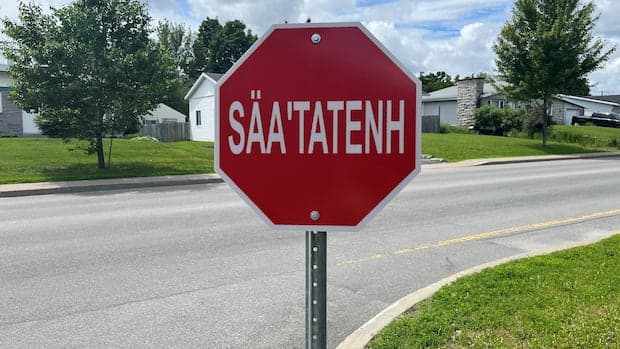
The Wendat First Nation, located in Wendake near Quebec City, has begun replacing its stop signs with new signs bearing the Wendat word 'säa'tatenh', a move seen as part of a broader initiative to revitalize and preserve the community’s language and culture. The installation of these signs, which is expected to be completed by mid-July, marks a shift from the previous bilingual signage featuring both French ('arrêt') and an earlier Wendat term, 'seten'.
Louis-Karl Picard-Sioui, a writer and member of Wendake’s linguistic revitalization committee, explained that the previous term 'seten' was not grammatically correct in Wendat. Addressing the nuances of the language, Picard-Sioui noted that the concept of 'stop' in Wendat requires specificity—distinguishing whether the action is directed at a person, an animal, or an object. "It’s great to finally have language signs that reflect our linguistic reality—without errors," he said, emphasizing the significance of authenticity in language representation.
Pierre Picard, the grand chief of the Wendat Nation, said the new signage is intended to celebrate and affirm Wendat identity. He stated that 'säa'tatenh' holds real meaning in the language, whereas 'seten' did not carry significance. According to Picard, the Wendat language had been dormant for 150 years and is in the process of being revived. He described the protection and authentic representation of the language as essential to this process.
Picard further remarked that the new signs act as a signal to the Wendat people, reinforcing the community’s distinct culture, identity, and language. "We are Wendat, and we possess a culture, an identity, and a language that are uniquely our own—and it is important to showcase them," he said.
The initiative to install 'säa'tatenh' stop signs is part of a wider movement among Indigenous communities in Canada to reclaim and strengthen their languages after periods of dormancy or decline. The Wendat experience mirrors broader efforts across the country where Indigenous language revitalization is often tied to cultural affirmation and public visibility.
The process in Wendake underscores the importance that community members place on linguistic accuracy and representation in public spaces. The decision to move away from 'seten' to 'säa'tatenh' was informed by consultations within the community and language experts, who highlighted the need for terms that accurately reflect the structure and semantics of the Wendat language.
The new signage is viewed not only as a practical change but also as an expression of linguistic sovereignty. For the Wendat, displaying their language on traffic signs represents both an act of cultural pride and a step towards normalizing the use of Wendat in everyday life. The visibility of the language in public infrastructure is intended to encourage both younger and older community members to engage with and use Wendat more frequently.
The historical context of the Wendat language’s dormancy is linked to broader patterns of language suppression experienced by Indigenous peoples in Canada. Over the past century and a half, colonial policies and assimilation efforts contributed to the decline of Indigenous languages, including Wendat. Recent years have seen a resurgence in efforts to reclaim these languages through education, documentation, and public initiatives such as signage.
The significance of the initiative is also reflected in the process itself. Community members have described the installation of the new signs as a visible marker of progress in the revitalization project, and as a source of pride. The transition to linguistically accurate signage is seen as a corrective step, allowing the community to reclaim control over how its language is represented and used in official contexts.
Wendake’s approach, emphasizing both linguistic correctness and cultural affirmation, aligns with a broader trend in Indigenous language policies, which often prioritize community-led initiatives and authenticity. The example of the Wendat stop signs may serve as a reference point for other Indigenous communities considering similar measures to increase the public presence of their languages.
As the installation of 'säa'tatenh' signs continues through July, the Wendat Nation’s efforts highlight the intersection of language, identity, and public space. The initiative is positioned as a step towards linguistic normalization and cultural resilience, with both immediate practical effects and longer-term implications for language preservation.
The move has drawn attention both within and outside the community, with members and leaders expressing hope that the increased visibility of the Wendat language will contribute to its ongoing revival. The project is part of a series of initiatives aimed at reinforcing Wendat culture and language, and reflects ongoing discussions about the role of Indigenous languages in the province of Quebec and across Canada.