Tornado and Severe Storms Cause Damage Across Manitoba
Winnipeg and Western Communities Hit by High Winds, Flooding, and Power Outages
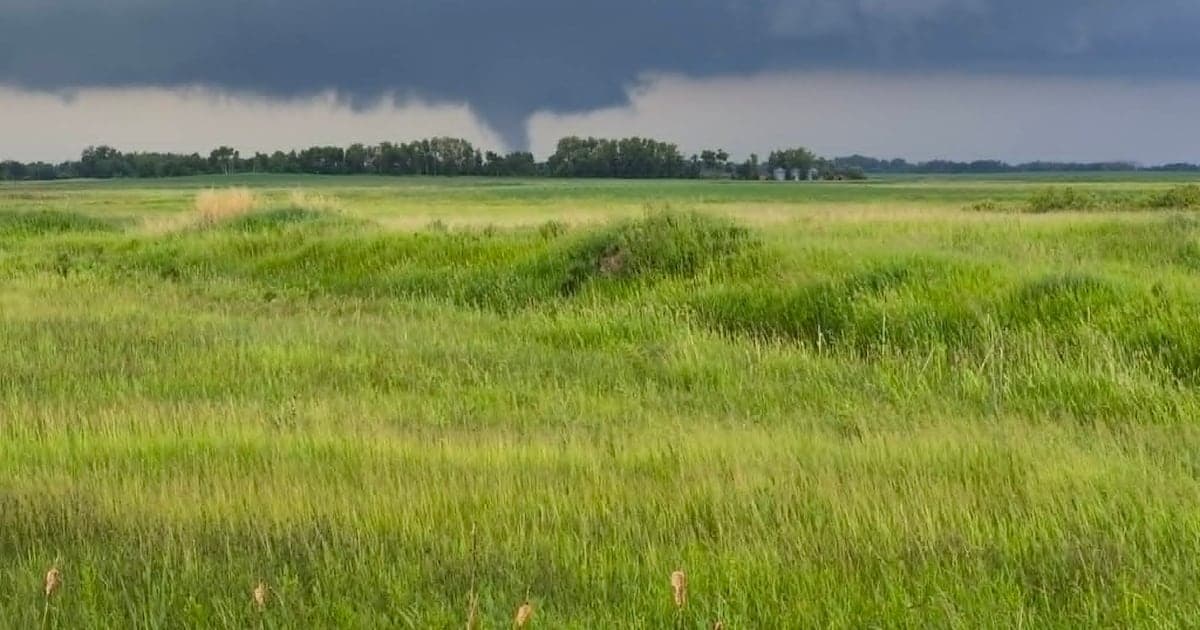
A severe weather event swept across southern and western Manitoba on Monday night, resulting in significant property damage, power outages, and localized flooding in several communities. In Winnipeg’s southwest Whyte Ridge neighbourhood, a storm caused the partial collapse of a house and widespread destruction, which experts believe was likely due to a small tornado touching down in the area. The occurrence of a tornado within a major city such as Winnipeg is considered rare, though not unprecedented, according to John Hanesiak, a professor of atmospheric science at the University of Manitoba who is working with the Northern Tornadoes Project to assess the event.
Hanesiak explained that the line of storms passing through the city can sometimes generate small tornadoes. He indicated that further investigation, including drone surveys and engineering assessments, would be conducted to determine the full extent and intensity of the damage. The storm in Whyte Ridge tore shingles and plywood off roofs, leveled fences, displaced barbecues and sheds, uprooted and snapped trees, and damaged structures such as a metal shelter for shopping carts in a local grocery store parking lot.
Cyndi Porcher, a resident of Tolcross Gate in Whyte Ridge, described the aftermath as something she had only seen in news coverage from the United States, where tornadoes are more frequent. Another resident, Lila Hillman, recounted that the most intense part of the storm occurred just before 10 p.m., leaving her yard filled with debris from neighbouring properties. The owners of the house that partially collapsed were out of the city at the time and were informed of the damage by neighbours.
The emotional impact on residents was noted, with calls for increased municipal support and for the city to restrict access to affected areas to assist local homeowners. The City of Winnipeg reported that as of 7 a.m. Tuesday, it had received 111 reports of downed or damaged trees and numerous other service requests, including for plugged catch basins, malfunctioning traffic signals, and sewer backup. Tree damage was identified as the main concern, and city forestry crews were dispatched early to address the issues.
Environment and Climate Change Canada (ECCC) reported that its airport weather station in Winnipeg recorded a peak wind gust of 57 km/h, but radar analysis suggested that local wind gusts may have exceeded 90 km/h in some areas. Brian Proctor, a meteorologist with ECCC, highlighted that the strongest wind gusts in thunderstorms often occur in concentrated bursts, which may not be captured by standard measuring equipment. In other parts of Manitoba, the town of Morden reported gusts as high as 106 km/h, while communities such as Manitou, Clearwater, Snowflake, Lac Du Bonnet, Pilot Mound, and Gardenton experienced winds of 80 km/h or more.
In addition to wind damage, the storms brought heavy rainfall to western Manitoba, resulting in localized flooding. The community of Boissevain reported 152 millimetres of rain as of early Tuesday morning, with Mayor Judy Swanson describing the rapid accumulation as overwhelming. The floodwaters affected homes and businesses, including the local insurance office, and Swanson personally dealt with flooding in her basement. Environment Canada data also recorded 67 millimetres in Brandon, 130 millimetres in Deloraine, and at least 100 millimetres in communities such as Shilo, Minto, Neepawa, Plumas, and Rivers. In contrast, Winnipeg received 27 millimetres of rainfall.
The intensity of the storm in Winnipeg’s Whyte Ridge neighbourhood was described by resident Doug Bows as comparable to a hurricane, with sounds of crashing and airborne debris. James Green, who lives in the nearby Waverly West neighbourhood of Bridgwater, recounted seeking shelter in his basement after observing rain moving horizontally and objects being lifted by the wind. The storm’s intensity and damage were noted as unprecedented during their time living in the area.
The storm also resulted in widespread power outages. Manitoba Hydro reported that more than 14,000 customers were without electricity on Tuesday morning due to downed power lines and storm-related infrastructure damage. The Crown corporation stated it was actively working to restore service and aimed to reconnect all affected customers in the coming days. The City of Winnipeg’s fire paramedic service experienced an increase in calls, primarily related to downed power lines and alarm activations.
Southern Manitoba had already been experiencing frequent storm activity in the days leading up to Monday’s event. On Sunday, a confirmed tornado south of Rossburn destroyed parts of a century-old brick farmhouse. The rating of this tornado was later upgraded as further damage assessments were conducted. Monday’s rain and storm activity extended to Brandon and surrounding communities, exacerbating flood conditions.
Environment Canada issued a rainfall warning for portions of western Manitoba on Tuesday, forecasting an additional 15 to 50 millimetres of precipitation, with the heaviest amounts expected between Roblin and Dauphin. The agency described June and July as the peak months for severe weather in the region, with the severe weather season typically tapering off in early August. Despite the current pattern, meteorologists anticipate a more stable and drier period approaching the upcoming weekend.
Experts emphasized the importance of ongoing assessments to distinguish between tornado damage and that caused by straight-line or downburst winds, which can produce similar impacts. The Northern Tornadoes Project and municipal authorities continue to gather data to inform both immediate response and future preparedness.
The recent storms underscore the vulnerability of communities in Manitoba to sudden and intense weather events, with implications for emergency response, municipal infrastructure, and resident well-being. The situation remains dynamic as officials and residents continue cleanup efforts and further assessments are carried out.