Three Dead After Plane Fighting Wildfire Crashes Near Fort Simpson, N.W.T.
Bird Dog 104 downed during suppression efforts as region faces ongoing fire risk
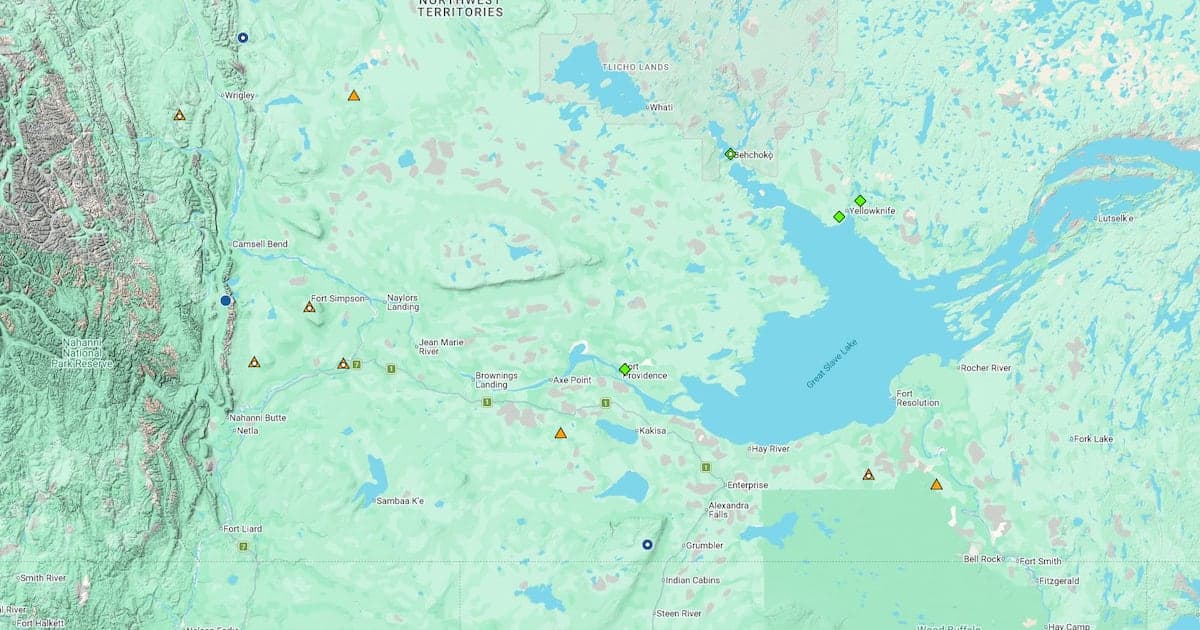
Three people died after a firefighting aircraft crashed Wednesday night approximately 50 kilometres west of Fort Simpson, Northwest Territories. The aircraft, a Turbo Commander 690 operating as Bird Dog 104, was engaged in wildfire suppression activities at the time of the incident. Authorities confirmed there were no survivors after first responders accessed the crash site.
According to RCMP and territorial government officials, the plane was serving as a bird dog, an airborne command centre used to coordinate aerial firefighting operations. The aircraft had been supporting suppression efforts on a fire identified as FS009-26, located in the Marten Hills area, west of Fort Simpson. This wildfire began Tuesday and, as of Thursday, was reported by territorial authorities as out of control and covering approximately 100 hectares. The blaze was believed to have started naturally and was detected on June 23.
Buffalo Airways, which operated the Turbo Commander 690, confirmed in social media posts that one of its aerial firefighting pilots died in the incident. The company indicated it was working closely with Transport Canada, the Transportation Safety Board of Canada (TSB), the RCMP, and the Government of the Northwest Territories' Department of Environment and Climate Change. Buffalo Airways requested privacy for its crews and company to support the ongoing investigation, stating, "In the coming days we will honour our fallen in close consultation with their family."
The bird dog plane is an integral part of aerial wildfire response, providing airborne command and control. The pilot and an air attack officer, an experienced fire specialist, direct air tankers to precise locations for suppressant drops, communicate with ground and air crews, and ensure safe flight operations in the vicinity of the fire. Bird Dog 104 was one of four such aircraft in the Government of the Northwest Territories' (GNWT) air tanker fleet, which also includes 10 air tankers. The bird dog was partnered with a Lockheed Electra L-188 air tanker and was based at Hay River airport.
The identities of the three individuals on board have not been released as of Thursday afternoon. Officials have not clarified the role of the third person. The GNWT indicated that the focus is currently on supporting the families, friends, colleagues, and fire personnel affected by the crash.
Mike Westwick, the territory’s manager of wildfire prevention and mitigation, stated that NWT Fire learned of the crash after the aircraft was reported overdue. He described the days following the incident as "tough" for wildfire crews, emphasizing the immediate need to support personnel. Stress management professionals and specialists began arriving in the territory Thursday and are expected to continue to arrive throughout the weekend. Additionally, crew members from other parts of Canada and the private sector are being mobilized to enable northern crews to take time off to grieve and recover.
The Transportation Safety Board of Canada has deployed a team of investigators to the crash site, working alongside the RCMP, the NWT Coroner Service, and the GNWT. Liam McDonald, a spokesperson for the TSB, confirmed that an investigation team was en route to gather information and assess the occurrence. The cause of the crash has not yet been determined.
Local leaders and government officials have expressed condolences and acknowledged the risks faced by those involved in wildfire suppression. Kele Antoine, chief of Łı́ı́dlı̨ı̨ Kų́ę́ First Nation in Fort Simpson, noted the impact on the community, stating, “Incidents like this remind us of the risks faced by those who work to protect our lands in our communities.” Antoine also highlighted concerns for the families and the individuals who managed the emergency response. NWT Premier R.J. Simpson described the crash as “too common of an occurrence” and said the government is continually seeking ways to improve safety during forest fire season.
Prime Minister Mark Carney issued a statement offering condolences, saying, “Protecting Canadians from wildfires requires profound sacrifice and courage. We owe them our deepest gratitude.”
In recent years, the region has experienced other fatalities among wildfire response personnel. In 2023, firefighter Adam Yeadon died while fighting a fire near Fort Liard, marking the territory's first wildland firefighter death in the line of duty since 1971. In 2024, pilot Tom Frith was killed in a helicopter crash near Fort Good Hope during wildfire operations.
The crash comes amid ongoing high heat and elevated wildfire risk in the Northwest Territories. NWT Fire has urged residents to exercise caution to avoid sparking additional wildfires. Westwick emphasized the hazardous nature of wildfire response and the responsibility of residents to reduce avoidable risks, noting the real impact on community members tasked with such work.
The GNWT, NWT Fire, and Buffalo Airways have stated that those who lost their lives in the line of duty will be honoured at an appropriate time, in accordance with the wishes of their families. The organizations indicated that the priority remains on supporting those affected as the investigation proceeds. Critical incident stress management teams continue to be deployed to support wildfire management staff at several bases as the territory’s fire response community processes the loss.