Storm Brings Widespread Flooding and Damage to Manitoba-Ontario Border Region
Heavy rainfall, high winds, and power outages disrupt communities from Whiteshell to Dryden
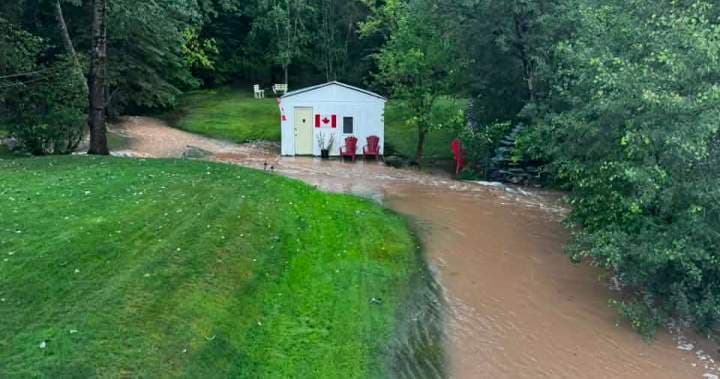
A powerful storm system swept through a 200-kilometre corridor from Whiteshell Provincial Park along the Manitoba-Ontario border to Dryden, Ont., on Monday afternoon, resulting in widespread flooding, property damage, and power outages across multiple communities. The event, which began with cellphone alerts at 1:37 p.m. local time and continued until after 4 p.m., prompted Environment Canada to issue severe weather warnings, including tornado alerts for Kenora, Sioux Narrows, and Dryden.
Environment Canada reported intense rainfall, with nearly 100 millimetres falling in some areas, and localized reports indicating up to 136 millimetres in rain gauges. In Kenora, 94 millimetres of rain was measured, while Ruthann Lake recorded 56 millimetres. Over half of the rainfall occurred within a single hour, resulting in flash flooding and overland water accumulation that transformed streets into lakes and yards into rivers. Nickel to loonie-sized hail was also observed in some locations.
Wind gusts reached up to 125 kilometres per hour, downing trees and power lines and contributing to the storm's destructive impact. Hydro One, the regional electricity provider, reported more than 4,000 customers without power at the peak of the event. By Tuesday afternoon, approximately 3,000 customers remained without service. In Kenora specifically, Hydro One’s outage map showed 25 outages affecting 3,379 customers, with restoration efforts projected to conclude by 11 p.m. Tuesday.
The City of Kenora issued a public statement on Tuesday, acknowledging a high volume of calls related to flooding, sewer backups, road washouts, downed trees, and drainage concerns. Municipal response teams focused efforts on assessing and repairing critical infrastructure, clearing blocked catch basins and culverts, removing debris, maintaining wastewater system operations, and addressing flood-damaged roadways. The city advised motorists to avoid areas with standing water and to observe all road closure signs and traffic control measures, while encouraging residents to report non-emergency issues through an online tool to prioritize emergency response.
Rees Snow, co-owner of Sounds & Systems music store in Kenora, described the storm’s intensity, noting that sidewalks around the store were completely submerged and water collected at the building’s corner. Snow estimated that leaving the building during or shortly after the storm would have required walking through up to 24 inches of water, and described the experience as making the building feel like an island. By the following morning, while streets had dried, significant debris remained.
Cleanup efforts extended beyond Kenora. Carson Milko, owner and operator of United Tree Service in Kenora, characterized the storm as the second and by far the most severe of the year for tree loss. Milko’s team received about 20 calls and emails within the first hour after the storm, and demand for assistance continued into Tuesday. He reported widespread road washouts in Kenora and on bypass roads, numerous trees on roofs, and many smaller trees blocking access to cottages. In Clearwater Bay, crews of eight workers were expected to spend at least a week removing fallen trees, with some roads blocked by 200 to 300 downed trees. Milko stated that the priority was to restore access for cottagers and address immediately hazardous situations.
Peter Kimbell, a warning preparedness meteorologist with Environment Canada, noted that as the storm moved eastward from Manitoba, it retained its intensity through Kenora before dissipating after midnight near Thunder Bay. Kimbell confirmed the issuance of tornado warnings and reported that the Northern Tornadoes Project would be investigating whether any tornadoes touched down. As of Tuesday, investigators had not determined if tornado activity had occurred.
In addition to tree damage and power outages, the storm caused significant flooding, damaging vehicles and swamping boats. Reports indicated that both residential properties and municipal infrastructure were affected, with flooded basements and blocked drainage systems requiring ongoing cleanup.
The scale of the event was characterized by rapid onset and high rainfall rates, which overwhelmed local drainage and response systems. The volume and velocity of water contributed to road washouts and isolated some residents, particularly those in cottage areas dependent on a limited number of access routes. Municipal authorities and private contractors coordinated efforts to restore critical transportation links and public safety.
No injuries or fatalities were reported as a result of the storm. As of Tuesday, weather forecasts from Environment Canada indicated no further rain expected for the affected region on Wednesday or Thursday, allowing uninterrupted recovery and restoration work.
This storm follows a pattern of severe weather events in the region, with local residents and service providers noting the unusual intensity and frequency of rainfall and wind incidents in recent years. The event highlighted infrastructure vulnerabilities in rural and recreational areas, as well as the challenges of emergency response and recovery in communities with dispersed populations and extensive private properties.
Hydro One and municipal crews continued power restoration and debris removal. Authorities urged caution around floodwaters, downed power lines, and blocked roadways, emphasizing the importance of public cooperation with safety advisories and reporting procedures. Investigations into the possibility of tornado touchdowns and the full extent of damage were ongoing as of the latest updates.