Severe Storms Cause Widespread Flooding, Damage and Disruptions Across Toronto and Southern Ontario
Record rainfall, power outages, transit interruptions and emergency response mark one of Toronto’s most intense weather events in decades
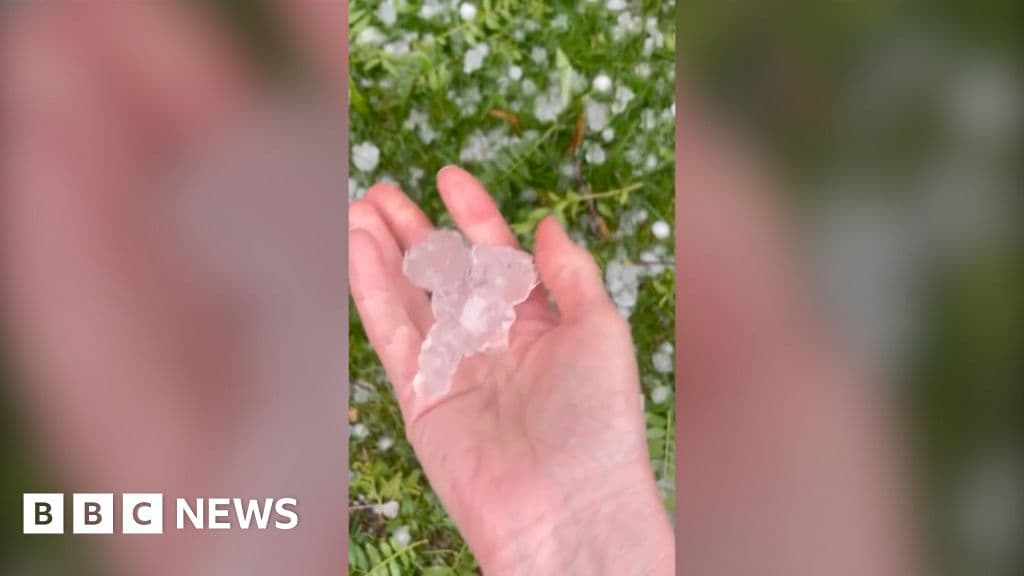
A series of severe thunderstorms swept through Toronto and southern Ontario on Wednesday afternoon and evening, resulting in extensive flooding, property damage, power outages, and widespread disruptions to transportation and public services. The storms, which brought torrential rainfall, large hail, and high winds, were described by officials as a '100-year storm' and marked the wettest September 2 ever recorded in Toronto, according to Environment and Climate Change Canada climatologist David Phillips.
The weather system struck during the afternoon rush hour, with Environment Canada reporting wind gusts up to 85 kilometres per hour and rainfall in some areas reaching more than 100 millimetres—nearly a month's worth of precipitation in a matter of hours. In certain neighbourhoods, unofficial measurements suggested totals could approach 125 millimetres. The rainfall was not uniform across the city; city officials and meteorologists noted a range between 11 and 110 millimetres depending on location, but significant amounts fell across wide areas, rather than in isolated pockets.
The Greater Toronto Area (GTA) was subject to a succession of emergency weather alerts, including a rare 'red warning' from Environment Canada, which signals 'very dangerous and possibly life-threatening weather.' Residents received repeated notifications on their mobile devices, warning of destructive winds, large hail—some as large as tennis balls or ping-pong balls—and the risk of tornadoes. The Toronto and Region Conservation Authority (TRCA) raised its flood warning to the highest level, reporting major flooding at key watersheds and urging the public to avoid rivers, streams, and shorelines due to hazardous fast-rising water.
Torrential rain led to extensive street flooding, submerged vehicles, and hazardous driving conditions. Video evidence circulated on social media showed floodwaters pouring into transit buses, with passengers partially submerged, and cars stranded under flooded underpasses such as Lower Simcoe. The Don Valley Parkway, a major city artery, was closed in both directions at multiple points due to flooding, as were parts of the Gardiner Expressway, Bayview Avenue, and sections of Yonge Street. Traffic lights failed across the city, compounding risks for both drivers and pedestrians. In Vaughan, Huntington Road was closed indefinitely after a large sinkhole opened, and outside Toronto, there were reports of structural damage including a destroyed roof in Brampton.
Public transit faced major disruptions. Flooding and debris forced the closure of stations and suspension of subway service on portions of Toronto’s Line 1 and the entire Line 6 for a period. GO Transit experienced significant delays, especially on the Kitchener, Milton, and Stouffville lines, with Metrolinx warning of weather-related impacts to track conditions and water accumulation at stations. The Canadian National Exhibition (CNE) closed early on Wednesday evening, pausing all rides and outdoor activities, but reopened the following day.
Pearson International Airport reported dozens of flight delays and at least ten cancellations, with passengers advised to check flight status before travel. The airport stated it received about 40 millimetres of rain during the storm, and operations were returning to normal by Thursday morning.
Toronto Hydro reported that at the peak of the storm, approximately 65,000 customers were without electricity, with the bulk of outages in Etobicoke, North York, midtown, or East York. Restoration efforts began immediately but were hampered by downed lines and fallen trees, and by Thursday morning about 6,000 customers remained without power. Hydro One, supplying areas outside Toronto, reported more than 20,000 customers still affected by outages. Power was fully restored to Vaughan by Thursday afternoon.
Emergency responders experienced a surge in demand. Toronto Fire Services responded to nearly 1,500 calls in a 24-hour span, the second-highest call volume in its history. Firefighters conducted rescues of individuals trapped in elevators, on scaffolding, in floodwaters, and inside partially collapsed buildings. In Vaughan, emergency crews rescued drivers and occupants from multiple submerged vehicles near Jane Street and Highway 7. Toronto police and city crews handled numerous reports of fallen trees and downed power lines.
Significant property damage was reported, including at Rogers Stadium, a 50,000-capacity outdoor music venue in North York. Live Nation Canada, the venue operator, confirmed 'significant damage' to the temporary seasonal structure, with video showing collapsed framing and torn coverings. No injuries were reported, and assessments of the damage were ongoing. The stadium had recently hosted major concerts and had a history of weather-related disruptions.
Residents described the storm as unprecedented in their experience. Shelagh Delves-Broughton, sheltering under an overhang on St. Clair Avenue West, witnessed 'horrific winds' and large hail, while debris such as patio furniture was swept from high balconies and fell onto the street. Canute Lawrence, a high school teacher in North York, likened the force of the winds to his memories of Hurricane Gilbert in Jamaica in 1988. Julie Lang, a convenience store owner in East York, recounted scrambling to save her outdoor plants as hail struck. Social media posts documented scenes of flooding, hail, and community efforts to assist neighbours.
The storms’ impact extended to health facilities; Michael Garron Hospital reported flooding in its emergency department but remained operational, advising non-urgent patients to seek alternative care due to the situation. Toronto’s parks and recreation facilities began returning to normal operations by Thursday, though some pools and washrooms remained affected by flooding.
The meteorological context for the event included a humid, unstable air mass and a stationary boundary over southwestern Ontario. Environment Canada meteorologist Rob Kuhn described the sequence as a 'classic' severe thunderstorm setup, with all contributing factors present for intense rainfall, high winds, and hail. The same system prompted tornado watches and warnings across southwestern Ontario, including areas around Kitchener, Waterloo, and Windsor-Essex. A radar-indicated tornado was later confirmed to have touched down in Wheatley, Ontario, on Thursday.
Experts and city officials acknowledged that while it is difficult to attribute any single weather event directly to climate change, the increasing frequency and severity of such storms is consistent with projected trends. City manager Paul Johnson noted that previous storms, such as the 2005 Toronto flood, had driven investments in flood mitigation and protection, which had some effect, but that Wednesday’s event was unique in its breadth and intensity. Environment Canada’s David Phillips suggested that such storms could become more common in coming decades.
Toronto Mayor Olivia Chow praised the coordinated response by city teams and emergency responders, thanking residents who sheltered in place and checked on others. She emphasized that the city had prepared in advance, activated its Emergency Operations Centre, and would continue working to clear roads and restore services. Ontario Premier Doug Ford stated that the province was in contact with municipalities and ready to assist.
The event has renewed discussion about the need for continued investment in resilient infrastructure, emergency planning, and adaptation to extreme weather. Experts have suggested options such as upgrading stormwater systems, building wetlands, and reinforcing electrical grids to absorb increased runoff and withstand future events. The cleanup and recovery process is ongoing, with city officials focused on restoring services, clearing debris, and supporting affected residents as Toronto and the surrounding region assess the full impact of the storms.