Saskatchewan Speed Cameras Go Offline Amid Vendor Transition
SGI navigates early contract termination by Verra Mobility Systems, impacting automated traffic enforcement across the province
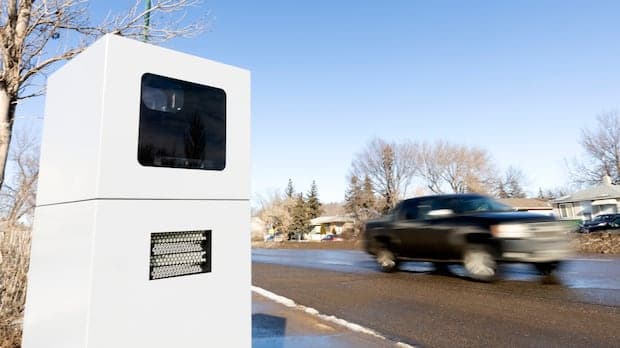
Photo speed enforcement in Saskatchewan has become temporarily inactive at various locations following the early termination of the province’s contract with Redflex Traffic Systems Limited, operating as Verra Mobility Systems. The Saskatchewan Government Insurance (SGI), which oversees the province’s photo speed enforcement program, confirmed that its agreement with Verra ended as of May 31, several months ahead of schedule. The company’s decision was described by SGI as a “business decision,” and no additional explanation was provided by either party. Requests for comment directed to Verra Mobility Systems have not been answered.
Since 2020, Verra Mobility Systems had supplied SGI with nine speed cameras. These cameras rotated among 27 locations, including highways, school zones in Saskatoon, Regina, and Moose Jaw, and work areas throughout the province. The vendor’s responsibilities included leasing the cameras, installing them, and processing the resulting tickets. SGI paid a monthly fee per camera, which covered these services, as well as a separate fee for each camera mount location.
The current transition leaves some or potentially all camera locations inactive. SGI has not confirmed the precise status of the equipment, stating only that the devices are being replaced as part of the process of transitioning to a new vendor. The Crown corporation declined to specify whether all the camera boxes are empty, citing road safety concerns. “In the interest of road safety, we do not comment on the status or deployment of equipment at specific sites. Drivers should assume photo speed enforcement is in place at all locations and continue to obey posted speed limits,” SGI said in a statement.
The speed enforcement cameras were introduced in Saskatchewan following a 2014 pilot project. In 2019, SGI selected Verra through a public call for providers, and the cameras have since been used in areas identified as high-collision or heavy with pedestrians. The program’s stated aim has been to improve road safety by deterring speeding in critical zones.
Revenue from the photo speed enforcement program is distributed according to location. For cameras within cities, 25 percent of the fine revenue is directed to the provincial General Revenue Fund, after which SGI is reimbursed for program costs. The remaining balance is split between the municipality and the Provincial Traffic Safety Fund, which issues grants for driver safety initiatives in other municipalities. For highway cameras, 25 percent of revenue goes to the General Revenue Fund, with the remainder allocated to the Provincial Traffic Safety Fund. On average, the program generates $1.3 million in fines per month when operational.
The abrupt end to Verra’s contract with SGI occurred shortly after a major development at the corporate level. On May 26, Avis Budget Group, parent company of Avis and Budget car rentals, announced it was terminating its contract with Verra. At the time, Verra’s stock was trading at US $13.08 per share. The day after the announcement, Verra’s stock value dropped by more than 70 percent to US $3.85. In the aftermath, Verra’s CEO stepped down, and the company began searching for a replacement. Within a month, the stock stabilized at just over US $4.
SGI’s statement noted that police will “continue to provide appropriate speed enforcement, as they always have,” during the period when automated cameras are offline. This includes stepped-up patrols in affected areas. The Saskatoon Police Service indicated that its Traffic Unit members would add former speed camera areas to their enforcement rotation as time and resources permit. The Regina Police Service reported that its traffic and road safety operations would proceed as usual.
SGI has confirmed it is in the process of transitioning to a new vendor for the speed camera program. However, as of the most recent updates, no finalized contract has been announced. The corporation emphasized that some speed cameras may be “temporarily inactive at points” during this process, but did not specify a timeline for when the new vendor would be in place or when full service would resume.
The current uncertainty means that some speeding incidents may not be captured or ticketed by automated enforcement. However, SGI and law enforcement agencies stress that traditional policing methods for speed monitoring remain in effect.
The deployment model for Saskatchewan’s speed cameras has involved rotating nine devices among 27 locations. For example, a single camera could be moved between six different sites on Regina’s Ring Road. The program’s rotation strategy aims to maximize coverage in areas deemed most in need of speed enforcement based on collision data and traffic volume.
SGI has reiterated its commitment to road safety and the continued enforcement of speed limits, regardless of the temporary gap in automated enforcement. The corporation has also encouraged drivers to maintain compliance with posted speed limits, emphasizing that the presence or absence of cameras should not affect safe driving behaviour.
The transition period highlights the dependency of automated enforcement programs on private vendors and the potential for operational gaps when contracts end unexpectedly. The early removal of Verra’s equipment and the absence of a replacement vendor means the province is currently relying more heavily on traditional law enforcement methods to deter speeding and monitor compliance with traffic regulations.
The financial implications of the program’s pause include a temporary reduction in the monthly average of $1.3 million in fines, which may affect the funding streams for provincial and municipal road safety projects. The long-term impact will depend on the duration of the transition and how quickly a new vendor can be secured and operationalized. SGI has not indicated whether it anticipates any changes to the structure or scope of the photo speed enforcement program once a new vendor is in place.