Saskatchewan reports $947-million deficit for 2025-26, reversing earlier surplus projection
Higher health, wildfire, and corrections costs drive largest shortfall since 2022
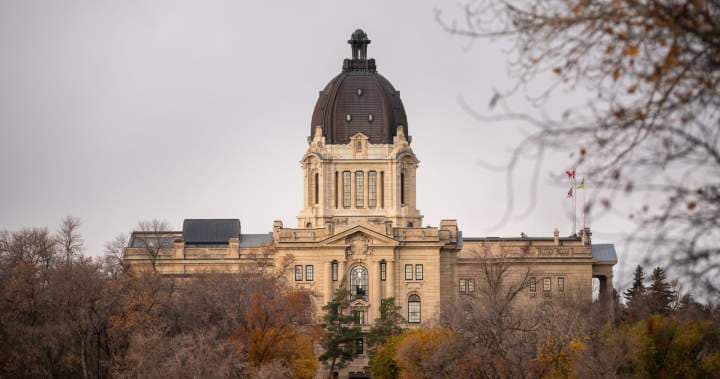
Saskatchewan has reported an operating deficit of $947 million for the 2025-26 fiscal year, according to public account documents released by the provincial government. This outcome represents a significant change from the $12-million surplus that Finance Minister Jim Reiter projected when the budget was tabled in March 2025. The swing amounts to a $959-million variance from the original forecast.
The Ministry of Finance stated that while the final deficit was $960 million higher than the surplus initially predicted, it was $263 million lower than the $1.2-billion deficit forecast at the third quarter. The improvement relative to the third-quarter projection was attributed to increased oil revenues and better results from government business enterprises, as well as lower-than-expected crop insurance payouts due to improved agricultural yields.
Overall, the province’s revenue increased by $77 million compared to the budget, described by officials as a “modest” improvement. However, this was offset by notable decreases in net income from government business enterprises and taxation revenue. The rise in revenue was insufficient to counterbalance the $1-billion increase in expenditures over the same period, bringing total provincial spending to $22 billion for the fiscal year.
Finance Minister Jim Reiter attributed the deficit primarily to higher-than-anticipated spending in health care and correctional facilities. "There’s always pressures on health and they were somewhat higher than anticipated, but obviously we are going to fund health care. So that was part of it. Corrections, part of that was over time in some of the cases with guards," Reiter said in an interview. He identified these sectors as key drivers of the spending increase.
The province also experienced a significant rise in costs related to wildfire response and community evacuations. Saskatchewan spent $405 million on wildfire protection and related measures, representing a 37 per cent increase over the budgeted amount. This increase followed a challenging wildfire season, during which provincial expenditures to protect people and property exceeded initial estimates.
Provincial auditor Tara Clemett recently highlighted the need for Saskatchewan to improve its planning for wildfire response. Finance Minister Reiter indicated the government would review her recommendations, noting that budgeting practices in this area have been consistent for many years.
Despite the increase in revenue from higher oil prices—estimated by Reiter to have improved the province’s position by about $40 million—these gains were counteracted by elevated spending in other areas. Lower-than-expected expenditures in agriculture, particularly due to reduced crop insurance payouts from better yields, also contributed to mitigating the deficit compared to third-quarter expectations.
The province’s net debt increased by $1.5 billion over the fiscal year, bringing the total to $17.2 billion. This represents the largest annual deficit since Saskatchewan posted a $1.47-billion shortfall in 2022 and is a substantial increase from the $249-million deficit recorded in the 2024-25 budget.
Reiter emphasized Saskatchewan’s strong credit rating, suggesting the province remains in a favourable fiscal position despite the increased debt load. "So certainly there are always challenges, but we’re in good shape moving forward," he said. Nevertheless, he indicated plans to work on reducing expenses while providing affordability relief.
Reactions to the deficit have varied. Gage Haubrich, Prairie Director for the Canadian Taxpayers Federation, expressed concern about the growing debt. "When the government spends on debt interest, that’s money that’s completely wasted. It can’t be used for hospitals, key infrastructure, or tax relief. And it’s simply happening because the government keeps spending more than it told taxpayers it would," Haubrich said. He advocated for reduced spending and greater transparency in financial planning, particularly regarding wildfire protection.
The NDP Opposition has also criticized the government’s fiscal management. Opposition finance critic Trent Wotherspoon described the missed forecast as evidence the government cannot be trusted with the province’s finances, referring to the budget as "bogus" in a news release.
Looking ahead, the provincial budget for 2026-27, tabled earlier this spring, forecasts a deficit of $819.4 million, indicating that the Saskatchewan government anticipates ongoing fiscal challenges. These budgetary outcomes have prompted debate regarding spending priorities, the accuracy of government forecasts, and the province’s approach to risk management in sectors such as health and emergency response.
The deficit and increased debt load have implications for future budgeting, the province’s ability to invest in infrastructure and services, and the financial obligations associated with debt servicing. The province’s handling of these fiscal pressures will remain a subject of scrutiny as it manages spending, addresses unexpected events such as wildfires, and seeks to balance public service delivery with fiscal restraint.