Saskatchewan Implements Changes to Daycare Funding Model, Prompting Concerns from Providers and Opposition
Shift to per-licensed-space grants impacts part-time and flexible child care users
As of July 1, Saskatchewan has implemented changes to its child care funding model, altering how provincial grants are distributed to daycare providers. The revised system now allocates the monthly Parent Fee Reduction Grant strictly according to the number of licensed spaces at each centre, regardless of how many families may utilize those spaces on a part-time or casual basis throughout the year.
Previously, daycare operators could receive grants for instances where a single licensed space was shared among multiple children, such as kindergarten students who only required care on alternating days or children of shift workers whose attendance was irregular. This flexibility enabled providers to serve more families than their licensed space count would suggest, accommodating those with part-time or drop-in needs. Under the new model, centres can only claim the grant once per licensed space, even if the actual number of families served exceeds that number due to shared or casual arrangements.
Cara Werner, executive director of Dream Big Childcare in Rocanville and chair of the advocacy group Child Care Now Saskatchewan, has voiced concerns about the impact of the changes. She stated that her centre, licensed for 45 spaces, has been supporting 82 families annually by offering casual and part-time care. "So the families that are above and beyond that 45, we will no longer be able to receive fees from them, from the government. So the only compensation we will get is the $10-a-day that is provided by the parents. So on a 10-hour day, that's a dollar an hour," Werner explained. She described the situation as both frustrating and challenging, particularly when informing families that they may lose access to affordable care or face increased fees.
The Saskatchewan government has stated that the move is intended to stabilize, protect, and sustain the child care system as the province transitions from rapid expansion of spaces to a focus on long-term stability and sustainability. In a statement, the province indicated that the changes were necessary to ensure the child care system remains strong and accessible, especially as current support is partially reliant on temporary federal funding.
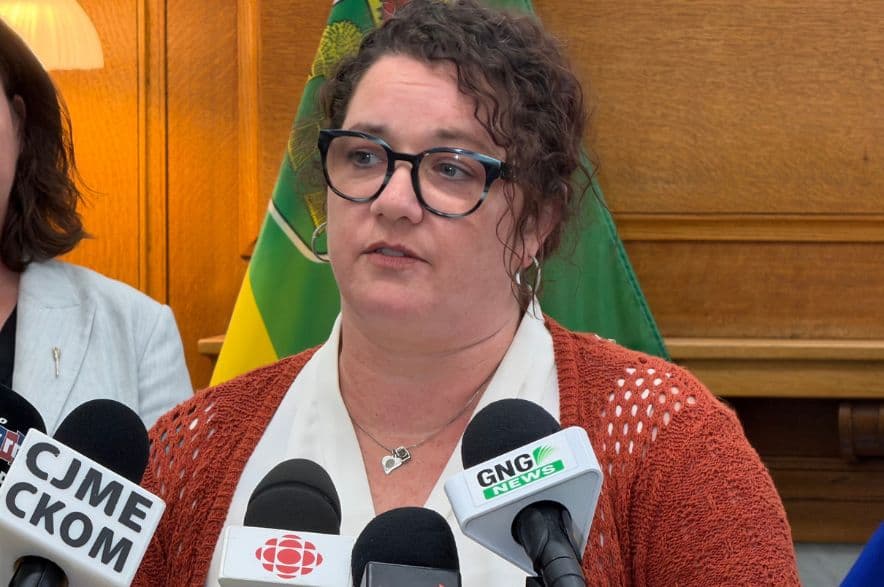
However, the policy shift has prompted criticism from the provincial Opposition. At a news conference, NDP early learning and child care critic Joan Pratchler argued that the changes would have broad impacts across Saskatchewan, affecting both urban and rural communities. Pratchler emphasized the potential challenges for parents balancing work and family responsibilities, as well as for health-care and shift workers who rely on flexible child care arrangements. "They will be felt by child-care providers who are being forced to make impossible decisions around their board table about the future of their centres," Pratchler said. She called for increased consultation with those affected by the changes and urged the government to invest more in the child care system.
As a result of the funding adjustment, some child care centres participating in Saskatchewan’s $10-a-day program have begun introducing additional fees for certain families. These changes are reportedly intended to offset funding gaps where government grants no longer cover part-time or casual placements, leaving some parents facing increased costs despite the province-wide goal of more affordable child care.
The modifications to the grant system are occurring in the context of a broader Canada-wide push to provide accessible, affordable child care, supported by federal funding agreements with provinces. The Parent Fee Reduction Grant is designed to bridge the gap between the $10-a-day fee paid by parents and the actual operational costs of licensed daycare spaces. The Saskatchewan government has framed its changes as aligning with the need for fiscal sustainability once federal support winds down.
Child care advocates, including Werner and the Child Care Now Saskatchewan group, have highlighted that the previous grant structure allowed providers to maximize the use of licensed spaces and respond to the needs of families with non-traditional schedules. They argue that the new model risks excluding those who require flexible arrangements and could reduce overall accessibility for families not seeking full-time care.
For providers, the shift means reassessing enrolment practices, potentially limiting casual or part-time placements in order to avoid unfunded spaces. This may result in fewer options for families who do not need or cannot afford full-time care, particularly in communities where licensed spaces are already in high demand.
The government maintains that the adjustment is necessary to underpin the long-term resilience of the child care sector, ensuring that resources are allocated transparently and sustainably. The statement from the province underscores a transition from expansion to system stabilization, aiming to keep the network accessible for families across Saskatchewan.
The Opposition NDP, meanwhile, contends that the funding changes are out of step with the realities of modern work patterns and the needs of working parents, particularly those in shift-based or irregular employment. They have urged the government to reconsider the policy and engage more directly with stakeholders, warning of potential negative consequences for both families and child care centres.
The debate reflects broader tensions in child care policy across Canada: balancing affordability, access, and sustainability while addressing diverse family requirements. The outcome in Saskatchewan is being closely watched by stakeholders and may inform future discussions about child care funding and program design both within the province and nationally.