Saskatchewan Harvest Progress Lags Amid Variable Weather Conditions
Producers report yield variability as dry start gives way to heavy rainfall and uneven regional progress
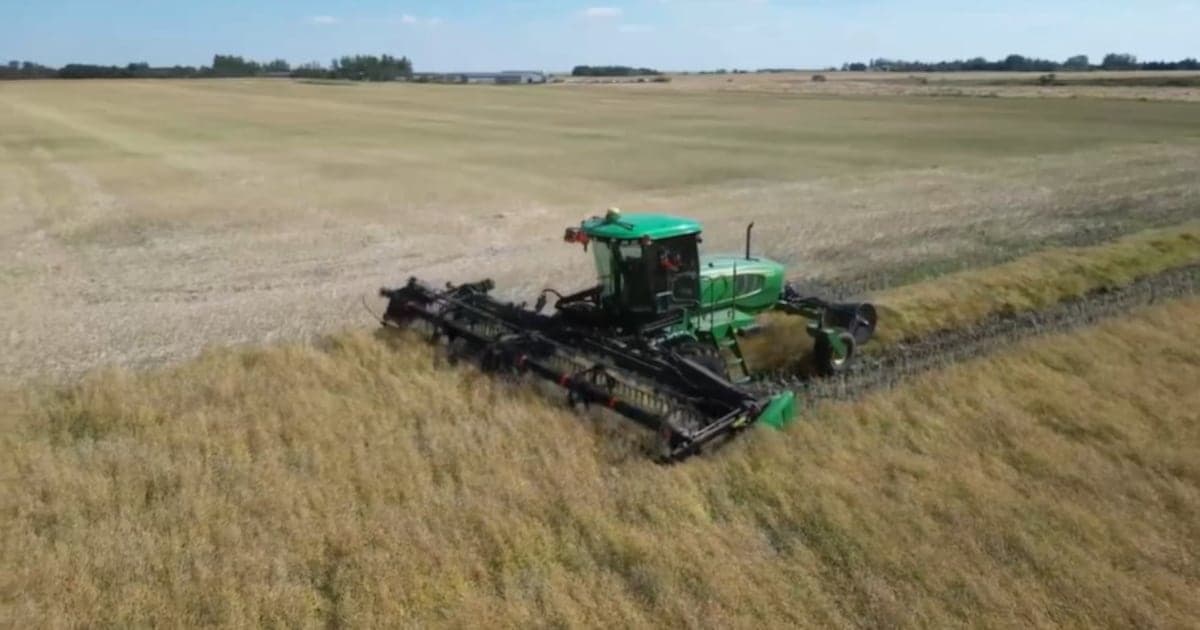
Saskatchewan producers made harvest progress during the week of August 25 to 31, with 18 per cent of the provincial crop reportedly harvested, according to the latest crop report from the provincial Ministry of Agriculture. This figure represents an increase of seven percentage points from the previous week, when only 11 per cent of the harvest was complete. Despite these gains, the 2026 harvest remains behind historical trends for this period. The five-year average for harvest completion at this time is 39 per cent, and the ten-year average is 34 per cent.
Regional variation in harvest completion is pronounced. The southwest region leads with 38 per cent of crops harvested, followed by the southeast at 19 per cent. The west-central region reports 17 per cent completion, the east-central region 10 per cent, and both the northwest and northeast regions trail at four per cent. The Ministry of Agriculture and crops extension specialists attribute this pattern to both weather conditions and the timing of precipitation events.
The beginning of the week was characterized by dry conditions, which enabled many producers to advance their harvest operations. However, the return of rain and localized hail in several regions later in the week slowed progress and introduced additional variability. Heavy rainfall was recorded in specific areas, with Prairie Rose receiving the highest total at 134 millimetres. Fertile Felt, Langenburg, and Sasman each reported over 95 millimetres. This precipitation, while hampering some field activity, contributed to improved topsoil moisture levels across Saskatchewan.
As of the latest assessment, cropland topsoil moisture was rated at 11 per cent surplus, 64 per cent adequate, 20 per cent short, and 5 per cent very short. The province noted that this represents an improvement in moisture conditions compared to previous weeks, which had seen extended dry spells in multiple regions.
Harvest progress varies by crop type. Winter cereals are furthest advanced, with 74 per cent of winter wheat and 88 per cent of fall rye harvested. Among spring cereals, triticale is at 68 per cent, while barley stands at 32 per cent completion. Lentils lead pulse crops with 73 per cent harvested, followed by field peas at 66 per cent. Mustard is the most harvested oilseed, with 25 per cent complete.
Yield estimates for 2026 indicate significant variability, which the province attributes to inconsistent growing conditions throughout the season. Chickpeas currently have the highest average yield at 1,501 pounds per acre. Lentils, mustard, and canary seed each yield over 1,100 pounds per acre. Standout yields among cereals include 94 bushels per acre for oats and 52 bushels per acre for hard red spring wheat.
Crop damages reported during the period were mostly related to wind and rainfall. Some producers have also noted the presence of Sclerotinia stem rot in canola crops. The Ministry of Agriculture has encouraged producers to remain vigilant regarding safety during this period of heightened activity, recommending that fire suppression equipment be on hand and that caution be taken when working near powerlines.
Producers continue to report considerable yield variability across the province. According to the crop report, "The significant variation in growing conditions across Saskatchewan resulted in a wide range of yield estimates for all crops." The dynamic nature of the growing season has led to uncertainty in projected outcomes in several areas.
Crops Extension Specialist Davidson Ugheoke noted that while the week started dry, favourable for harvest, subsequent rainfall and localized hail created challenges for producers. The mixed weather has contributed to uneven progress both provincially and within individual regions.
In terms of safety, the province has highlighted the importance of precautions for both producers and the general public. Farmers are advised to have emergency equipment available, and motorists are urged to exercise caution when encountering farm machinery on highways. The Farm Stress Line is offered as a confidential support resource for producers, accessible toll-free at 1-800-667-4442.
Looking forward, producers remain optimistic that favourable weather conditions will support further harvest progress. However, with the harvest still well behind the five- and ten-year averages, continued favourable weather will be critical for producers seeking to bring in their crops before autumn conditions further complicate the process.
The full scope of harvest progress and challenges in Saskatchewan reflects the interplay between weather events, regional disparities, and the inherent variability of agricultural production in the province.