Ontario Court Denies Emergency MAID Access for Mental Illness in Landmark Ruling
Decision compels federal government to address constitutional challenge over exclusion of mental illness from assisted dying eligibility
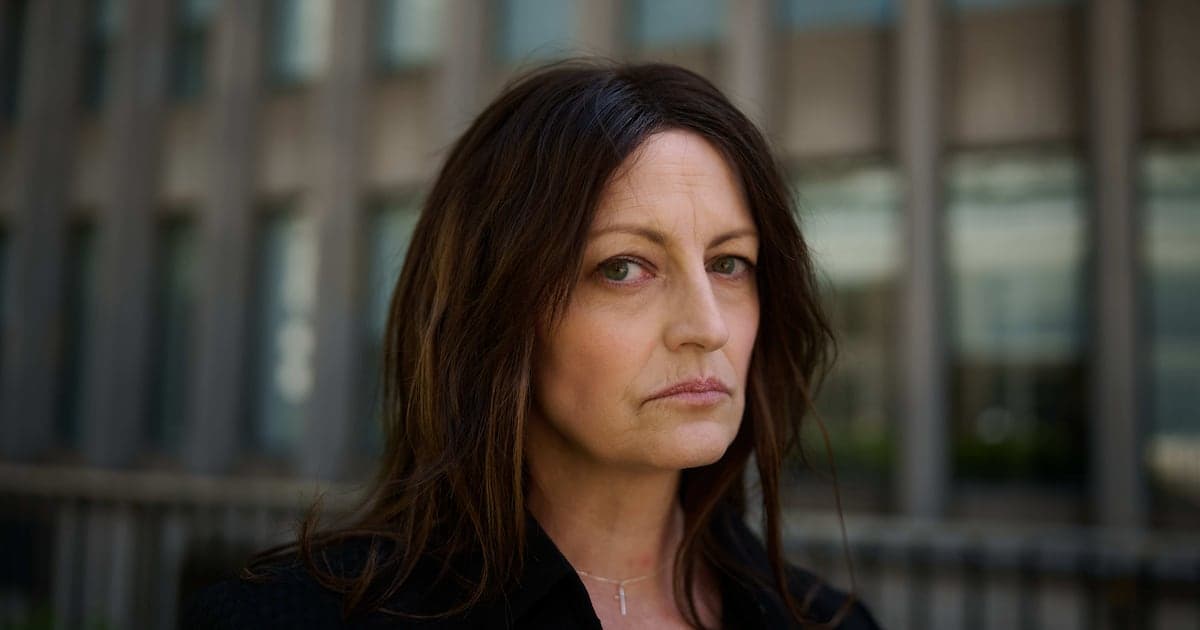
An Ontario court has denied a request from Claire Brosseau, a 49-year-old Toronto woman living with multiple mental health diagnoses, for emergency access to medical assistance in dying (MAID) on the basis of mental illness alone. The decision, issued by Justice Carissima Mathen on Thursday, also orders the Attorney General of Canada to respond to a related constitutional challenge, which questions the legality of excluding mental illness as a sole qualifying condition for MAID.
Brosseau, a former actress and comedian, filed her urgent motion in May, seeking a constitutional exemption from the current law. Her legal team argued in court on July 20 that she required immediate relief due to persistent mental anguish that began in childhood and has intensified over the past 35 years. Brosseau has been diagnosed with bipolar disorder, an eating disorder, substance use disorder, and post-traumatic stress disorder. She has undergone a range of treatments, including electroconvulsive therapy, cognitive behavioural therapy, and rehabilitative treatment, and she continues to see two psychiatrists. She maintains that none of these interventions have meaningfully alleviated her suffering.
In her written decision, Justice Mathen stated that Brosseau’s evidence of decades-long suffering is credible and compelling. Mathen noted, "Over the months and, perhaps, years that this litigation will endure, she is at risk of significant harm." Nevertheless, Mathen concluded that granting an exemption would have significant consequences. She emphasized the importance of Parliament’s ongoing role in making policy decisions on sensitive social issues and the need for proper interpretation of Charter rights, saying, “They include Parliament’s role to make policy decisions on sensitive social issues, and the proper interpretation of the Charter rights in play.”
Brosseau’s lawyer, Michael Fenrick, argued that granting access to MAID was the only meaningful solution for his client’s advanced and irreversible state of decline. In his view, without such access, Brosseau’s options are limited to continuing to suffer intolerably or choosing suicide. Fenrick also contended that the findings of a recent parliamentary committee, which recommended ongoing exclusion of mental illness as a sole criterion for MAID, should not be considered as determinative in Brosseau’s urgent request, arguing that these did not reflect the will of Parliament.
The legal challenge filed by Brosseau and supported by Dying With Dignity Canada dates to August 2024. It contends that the exclusion of individuals whose sole underlying condition is mental illness from MAID eligibility constitutes a breach of the Canadian Charter of Rights and Freedoms. The constitutional case has not yet commenced in court, prompting the urgent motion for interim relief. Justice Mathen instructed that Brosseau and the Attorney General schedule the next steps in the Charter challenge within 14 days.
A spokesperson for the Department of Justice acknowledged the difficult circumstances leading to Brosseau’s motion but agreed with the court that the legal requirements for granting a special exemption or pausing the law were not met in this instance. Joseph Cheng, senior counsel for the Attorney General of Canada, stated during July arguments that while he did not dispute Brosseau’s suffering, the court was being asked to make a policy decision on “one of the most contentious, complex and sensitive policy issues” at the same time as Parliament is considering its approach. Cheng argued that the judiciary should not act in place of Parliament by making bold moves that legislators themselves have not undertaken.
The context for Brosseau’s legal actions is the evolving framework of Canada’s MAID legislation. When the law was first enacted in June 2016, eligibility was limited to individuals whose death was deemed reasonably foreseeable. In 2021, following a Quebec Superior Court decision that deemed the original law unconstitutional, the federal government expanded eligibility to include those with serious and incurable illnesses or disabilities, regardless of whether death was imminent. However, a temporary exclusion for mental illness as the sole underlying condition was introduced, intended to allow further study and preparation for implementation. This exclusion has since been extended multiple times, most recently to March 2027, and is under active political and legal debate.
A special parliamentary committee convened in spring 2026 to examine readiness for extending MAID eligibility to those with mental illness. The majority of committee members recommended that the federal government amend the Criminal Code to indefinitely exclude mental illness as the sole qualifying condition for MAID, citing "significant complexities and risks, grave concerns and deep divisions that continue to accompany this issue." The federal government has not yet indicated whether it will accept or reject this recommendation. According to sources cited by The Globe and Mail, the government is open to introducing further legislative amendments, but no decision has been publicly confirmed. Justice Minister Sean Fraser has indicated he is reviewing the committee’s report and its dissenting opinions.
Brosseau, in reaction to the decision, stated that it is another instance of governmental systems denying people with mental illnesses the same rights and autonomy as others. She described the outcome as an additional barrier, stating, “This is not living – I do not have a life.” Brosseau and her legal team have expressed their intent to continue advancing the Charter challenge in hopes of eventually changing the law to permit those in similar circumstances to make what they argue are fundamental decisions about their own lives.
Helen Long, chief executive officer of Dying With Dignity Canada, characterized the decision as disappointing but said it underscores the urgency of addressing broader systemic challenges to MAID access. She called for government action so that the larger Charter case can proceed and the broader issues for all eligible persons in Canada can be addressed.
The case has brought renewed attention to the debate over whether patients with mental illness should have access to MAID. Advocacy groups, legal experts, and policymakers remain divided on the issue, with some emphasizing the importance of bodily autonomy and equal rights, and others citing unresolved questions about capacity, consent, and the risks associated with extending MAID to those whose conditions are psychiatric in nature.
For now, the law maintains the exclusion of mental illness as a sole basis for MAID eligibility, pending the outcome of ongoing legal and political processes. Justice Mathen’s decision underscores the complexity of balancing individual suffering and rights with broader societal considerations and the legislative process. The next steps in Brosseau’s constitutional challenge, as ordered by the court, are expected to set the stage for further scrutiny of Canada’s MAID framework and its alignment with Charter protections.