Nova Scotia Implements Higher Cannabis Fines and New Offences Amid Market Tensions
Province intensifies crackdown on illegal sales as Mi’kmaq leaders and industry groups question approach
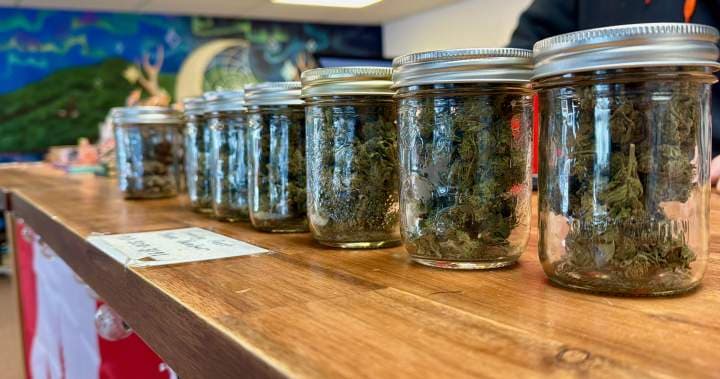
Nova Scotia has enacted a series of amendments to its Cannabis Control Act, introducing higher fines and new offences as part of its ongoing efforts to address illegal cannabis sales. The changes, which were passed during the spring sitting of the legislature and proclaimed on June 25, 2026, are targeted at reinforcing provincial control over cannabis retail and strengthening public health and safety measures, particularly for youth.
The updated legislation expands enforcement authority, allowing peace officers such as conservation officers to enforce cannabis laws in addition to police. The Nova Scotia Liquor Corporation (NSLC) remains the exclusive legal retailer for cannabis in the province, a structure first established when recreational cannabis was federally legalized in 2018. The provincial government asserts that the revised fines and offences are intended to discourage illegal sales and support a safe, regulated market.
Fines have increased substantially under the new rules. Individuals under 19 found possessing cannabis now face fines ranging from $250 to $500. Purchasing cannabis from any source other than the NSLC can result in penalties between $600 and $5,000. Individuals caught selling cannabis illegally may be fined between $5,000 and $25,000, while businesses face fines from $15,000 up to $50,000 for the same offence. Additionally, it is now an offence for illegal sellers to advertise or promote cannabis sales, and for landlords to permit their property to be used for illegal cannabis sales; each of these offences is subject to a $25,000 fine.
A further provision targets larger-scale illegal distribution: anyone found guilty of selling at least one kilogram of cannabis illegally is now subject to a fine equal to twice the amount of tax that would have been paid on a legal sale of that quantity. This works out to $3,680 per kilogram. All cannabis-related offences in Nova Scotia carry mandatory minimum fines, and the legal age for use, purchase, growth, or possession of cannabis remains 19.
Attorney General and Minister of Justice Scott Armstrong stated that the province’s approach is "squarely focused on public health and safety, especially for our youth." Armstrong said the changes are designed to reinforce that buying and selling cannabis outside the legal market is illegal, and to protect young people while supporting a safe, legal market for adults.
Dr. Sabina Abidi, Associate Chief of the Division of Child and Adolescent Psychiatry at IWK Health’s Mental Health and Addictions Program, noted the impact of high-potency cannabis on youth mental health. She highlighted concerns expressed by youth about the risks of high-potency cannabis, including psychosis, and the accessibility of illegal products. Dr. Abidi called for strengthened measures to reduce youth access, promote safer use, and prevent harm through collaboration among healthcare providers, families, educators, communities, government, and youth.
The provincial government has cited a growing parallel black market, particularly over the past six months, as a major driver behind the legislative changes. Armstrong stated, "It’s really important that we address a growing public health and safety issue, and that’s what the changes in the legislation are targeted to do." In December 2025, the province directed police to intensify enforcement against illegal cannabis operations, including sending a letter to 13 Mi’kmaq chiefs requesting cooperation.
This directive has led to multiple RCMP raids on cannabis storefronts and subsequent protests against the crackdown, with some Mi’kmaq leaders and advocates criticizing the province’s approach. Tuma Wilson, legal counsel for the Micmac Rights Association, argued that the measures infringe on Mi’kmaq economic rights, specifically referencing Article 4 of the 1749 Peace and Friendship Treaty. Wilson stated, "What we’re seeing in Nova Scotia is that now that we’re saying that there isn’t going to be a rolling over by the Mi’kmaq, they’re not going to surrender their economic rights." Wilson further suggested that the new rules will result in "court time and money and resources wasted," and described the enforcement as "economic genocide."
Mi’kmaq chiefs have said the enforcement order undermines relations with Indigenous Peoples. Armstrong has indicated a preference for integrating NSLC outlets into First Nations communities, encouraging First Nations groups to consider legal cannabis sales through NSLC channels so that profits and proceeds can support social programs within the bands. Wilson, however, contends that this proposal violates the Mi’kmaq right to self-determination and trade.
Premier Tim Houston has said that the crackdown is motivated in part by concerns about human trafficking and the risk of contamination of illegal cannabis with substances such as fentanyl. However, the federal justice minister has stated that there are no reports of human trafficking linked to contraband cannabis, and both the Nova Scotia RCMP and Halifax Regional Police have indicated that they are not aware of any fentanyl having been detected in cannabis seized from illegal storefronts.
The broader context for these changes includes ongoing challenges faced by the legal cannabis industry in Canada. The Cannabis Council of Canada, a national lobby group, has announced it will disband due to a combination of financial pressure, complex regulations, and the persistence of a "highly active" illicit market. The council’s president, Paul McCarthy, has called for Ottawa to establish a national strategy to address the unregulated cannabis market, arguing that, while enforcement is a provincial and territorial responsibility, accountability ultimately lies with the federal government, which legalized cannabis in 2018.
McCarthy identified the illicit market as the primary obstacle to achieving the policy goals of legalization: displacing illegal sales, preventing youth access, and ensuring product safety. "The illicit market is the ... common denominator that is actually the barrier to achieving all of the public policy objectives of legalization," he said.
The legislative changes in Nova Scotia reflect a continued focus on public health and safety, regulatory enforcement, and market control, amid ongoing legal, economic, and jurisdictional disputes. The implementation of higher fines and expanded enforcement powers signals the government’s intent to curtail illegal cannabis activity, while debates over Indigenous rights and the effectiveness of current frameworks remain active.