New Brunswickers Share Personal Stories as Bilingualism Review Committee Tours Province
Official Languages Act review brings forward personal accounts, policy concerns, and debates on cost and access
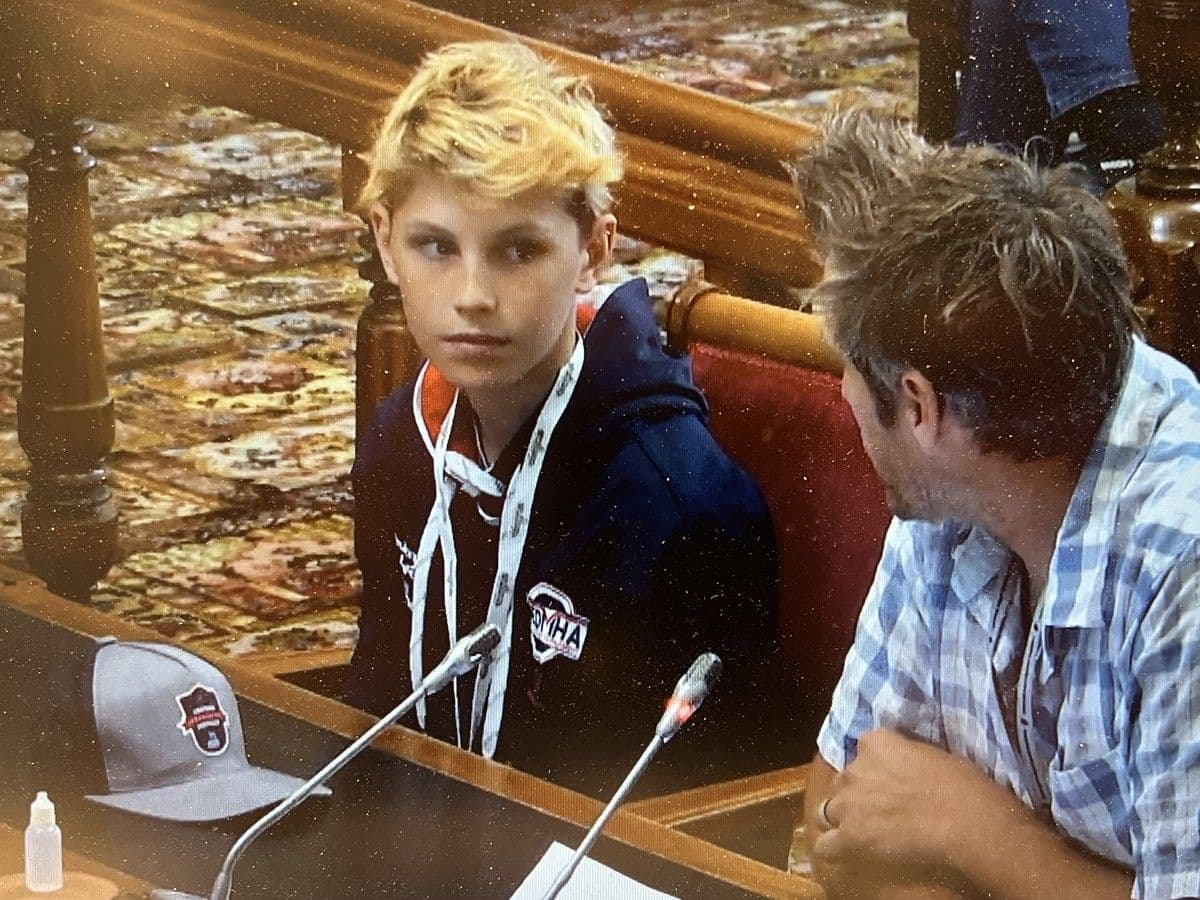
A provincial legislative committee examining New Brunswick’s Official Languages Act recently concluded a series of nine public hearings across the province, gathering input from residents in Moncton, Saint John, Fredericton, and Woodstock. The committee, composed of politicians from the three main parties, sought perspectives on reforming the law in Canada’s only officially bilingual province.
While the hearings featured testimony from academics and leaders of nonprofit organizations, a significant portion of attention was directed toward the personal stories shared by ordinary New Brunswickers. These firsthand accounts highlighted both the challenges of accessing services in one’s language of choice and the broader issues underpinning the province’s approach to bilingualism.
One such account was delivered by Gisèle Caissie at the Moncton hearing. Caissie described her sister Carmelle’s experience at the Miramichi Regional Hospital, where Carmelle, an elderly francophone who does not speak English, underwent hip surgery. According to Caissie, Carmelle was placed in a ward where none of the staff spoke French. Despite staying in the hospital for several months, Carmelle was unable to communicate effectively with staff about her pain or care needs. Caissie recounted a specific incident in which her sister was left soiled with feces, requiring over 15 minutes to arrange personal care. "None of them spoke French. They didn’t even know the French word for ‘patient,’" Caissie said, characterizing the environment as hostile to francophones. She questioned why a hospital serving a catchment area of 50,000 people, including francophone communities such as Rogersville, Baie-Sainte-Anne, and Neguac, lacked enough bilingual staff.
Caissie also indicated that her formal complaints to health authorities and the provincial health minister went unanswered. She argued that insufficient emphasis is placed on recruiting bilingual staff, sharing that a job advertisement for the relevant hospital ward posted a single bilingual position for only five days.
Luke Randall, the Liberal MLA for Fredericton North and a cabinet minister, attended all nine hearings. While refraining from commenting specifically on Caissie’s testimony, Randall reflected on the importance of the hearings in amplifying voices that might otherwise go unheard. "How do we be better engaged as New Brunswickers? How do we give voice to people who don’t have a voice right now?" Randall asked following the Woodstock session.
Another case presented to the committee concerned access to French immersion education. Andrew and Westin Garsch, a father and son from New Maryland, described how 12-year-old Westin was barred from enrolling in French immersion by Anglophone School District West after transferring from the francophone system. Although both parents are anglophone, the district’s policy prohibited Westin from joining French immersion because his prior education in French was deemed a disqualifier. Westin testified that his French proficiency had declined since leaving the francophone school, stating, "I could understand French, I could read French, I could talk French, very easily. Then when I went to New Maryland, I started losing it, because, like, the French was just below me, and now when I’m in Bliss Carmen, I’m not allowed to take French immersion classes, or they haven’t offered enrichment classes, so I just feel like I’m losing my French every day now."
Andrew Garsch told the committee that repeated appeals to the district for enrichment opportunities, as referenced in section 6.1.1 and 6.1.2 of district policy, were unsuccessful. "We have asked continually while he was at New Maryland Elementary, and we asked when he was at Bliss Carmen Middle School at the start of the year, we notified them. Those opportunities were never given. So now, I’ll be completely honest, his understanding in French has degraded severely, and I feel it’s a complete injustice."
The nonprofit Parents for Bilingual Education New Brunswick submitted testimony noting that while 90 per cent of students who complete French immersion are conversational in French, fewer than one-third of anglophone New Brunswickers are able to speak French. Their statement underscored the broader need for access to immersion programs, particularly outside urban centres.
Benoît Bourque, the Liberal MLA chairing the committee, acknowledged the Garsches’ concerns but noted that the committee’s mandate was to examine the Official Languages Act, not education policy directly. However, Bourque said education-related issues had emerged as the second-most discussed topic during the hearings, closely following official language matters.
In contrast to calls for enhanced language services, other presenters raised concerns about the costs and logistical challenges associated with bilingualism. Ron Steeves, a retired transit manager from Fredericton, argued that the requirement for bilingual service in all government institutions—including the hiring of bilingual bus drivers—places substantial strain on the provincial budget. "As we all know, New Brunswick is bordering on bankruptcy," Steeves said, referring to the province’s multi-billion dollar debt. He described the costs of bilingual staffing as "mountainous in the millions of dollars per year," expressing concern that the policy contributes to segregation and separation within the province.
The committee’s hearings took place as part of a five-year review cycle for the Official Languages Act, which had previously been reviewed every decade. Recommendations from the committee are to be submitted to the provincial government by the end of the year.
The personal stories and policy concerns presented to the committee underscore the complexity of implementing bilingualism in New Brunswick. The province’s dual commitment to French and English as official languages has produced both notable successes—such as high rates of French fluency among immersion graduates—and persistent gaps in service delivery, particularly in health care and education.
The hearings surfaced a range of perspectives: from those advocating for strengthened enforcement and broader access to language programs, to those cautioning against the fiscal and administrative implications of bilingual service requirements. The committee’s final recommendations are expected to reflect the diversity of views expressed throughout the public consultation process.