Margaret Commodore: From Residential School Survivor to Groundbreaking Yukon MLA
The life and legacy of a pioneering Indigenous leader who transformed the Yukon’s political and social landscape
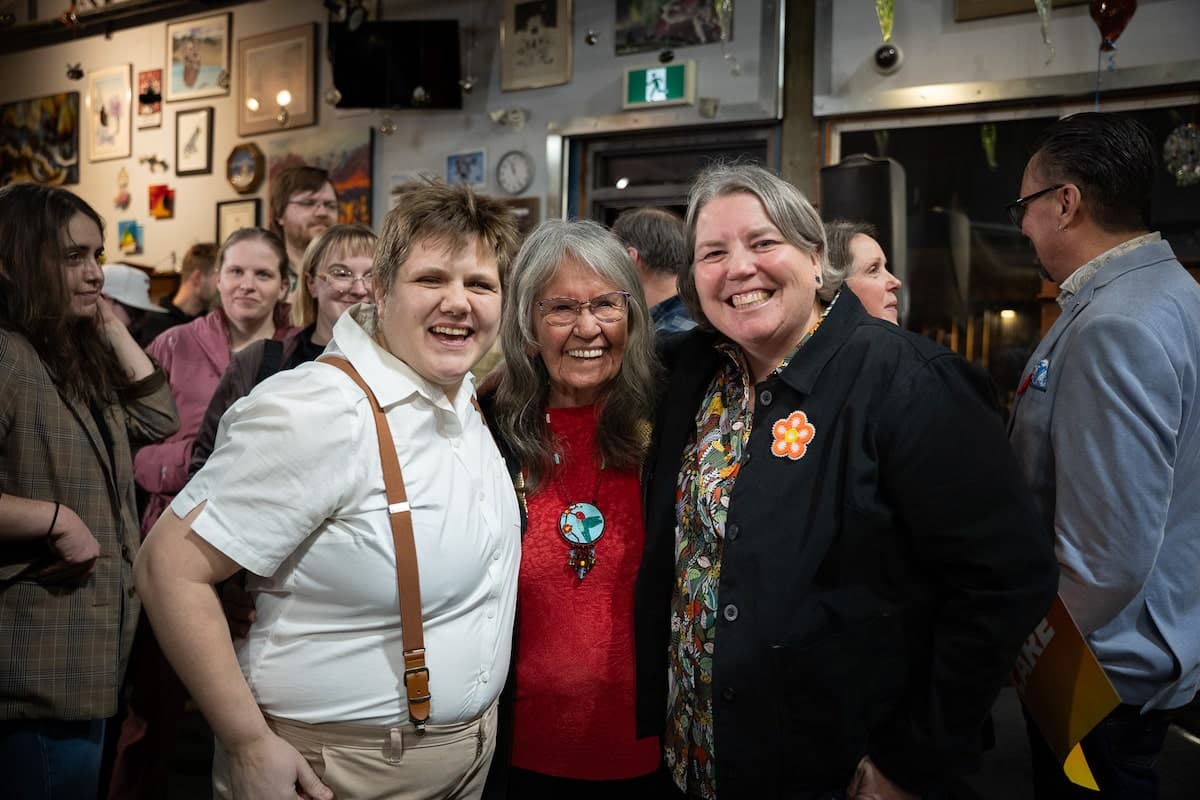
Margaret Muriel Commodore, who died on June 1, 2024 at the age of 93, played a significant role in Yukon and Canadian public life, becoming the first Indigenous person to serve as justice minister anywhere in Canada and the first Indigenous woman to serve in a Canadian cabinet. Her career was marked by a series of firsts and a persistent commitment to advocating for Indigenous rights and social justice, underpinned by her personal history as a residential school survivor.
Born on October 9, 1932 in Chilliwack, British Columbia, Commodore was the second of nine siblings. Her father, Andy Commodore, was a member of the Soowahlie First Nation of the Stó:lō people, while her mother, Theresa Prest, had Kwakiutl ancestry and settler roots through her father. The family moved frequently during the Depression as Andy Commodore sought work as a boom man in the logging industry.
Commodore spent most of her childhood at Alberni Residential School on Vancouver Island, later revealed as one of the residential schools with a high incidence of abuse. She recounted years of strict regimentation, separation from family, and frequent punishment. In John Lutz’s biography, she recalled standing with hands out to be strapped, determined not to cry: “You stand there with your hands out, and you repeat to yourself, ‘You’re not going to make me cry.’ And they couldn’t, in the end.” She also described forming lifelong friendships and developing a passion for softball, ultimately becoming a pitcher, a role she played competitively until age 55.
At age 14, Commodore attempted to transition to public school in Hope, B.C., but struggled to adapt after years in residential school and dropped out shortly after her 15th birthday. She began working at Coqualeetza Indian Hospital, which treated tuberculosis among Indigenous patients. She worked there intermittently for 18 years, including during a 1948 fire that required the evacuation of 150 patients. She also played for Chilliwack’s women’s softball team, becoming one of the first Indigenous women to play organized ball in the Fraser Valley.
Commodore’s early adulthood included a first marriage that left her a single mother of two daughters facing poverty. Because her husband was not Indigenous, she lost her Indian status—a consequence of federal law at the time. Regaining her status became a lifelong cause, and she participated in the campaign that led to the repeal of the provision in 1985, which had stripped Indigenous women of status and reserve privileges if they married non-Indigenous men.
Encouraged by a hospital administrator, Commodore pursued practical nursing, graduating in 1963 with only a Grade 8 education and becoming one of British Columbia’s few Indigenous nurses. She returned to Coqualeetza Hospital as a nurse, wearing the same style of uniform she had previously laundered as a worker.
In 1965, Commodore moved to the Yukon, where she found a large Indigenous population and opportunities for activism. She married Bobby Joe, a member of the Champagne and Aishihik First Nations, though she remained non-status due to her husband's relinquishment of his own status. Their marriage lasted nearly two decades.
In 1972, Commodore co-founded the Yukon Association of Non-Status Indians and became its first paid vice-president. She described the liminal status of non-status Indians: “We weren’t accepted by Indians. We weren’t accepted by Indian Affairs, and we weren’t white, so we were ignored.” Two years later, she helped organize the Yukon Indian Women’s Council, which established Kaushee’s Place, a transition house for women fleeing abuse. She continued to advocate for the restoration of full rights to non-status Indians, a campaign that culminated in legislative reform in 1985.
Commodore was subsequently appointed as a justice of the peace in the Yukon, quickly becoming one of its senior JPs and serving as executive secretary to the Yukon Judicial Council. On the bench, she promoted diversion programs for Indigenous offenders charged with minor infractions, allowing them to avoid a criminal record by undertaking counselling and community work. She argued that these were offences that would not have drawn police attention if committed by non-Indigenous people.
In 1982, Commodore entered electoral politics, running as the NDP candidate for Whitehorse North Centre. With assistance from Audrey McLaughlin, later federal NDP leader, Commodore won the seat by unseating a Conservative cabinet minister. The 1985 NDP victory under Premier Tony Penikett brought a major shift in Yukon politics, with four of the government’s eight members being Indigenous, and a fifth joining after a by-election.
Commodore was named minister of health and human resources, becoming the first Indigenous woman to serve in a cabinet in Canada. She expanded services for women in need and introduced a child-care program at Yukon College (now Yukon University) that provided residential space for Indigenous women with children, supporting their pursuit of higher education.
Reelected in 1985, she was appointed justice minister, a first for an Indigenous person in Canada. She worked with the RCMP to further alternative sentencing options for Indigenous offenders and established Indigenous cultural programs at the Whitehorse Correctional Centre, including access to a sweat lodge. Commodore later remarked, “If there is one thing I am really pleased about, it is the development of Aboriginal justice in the Yukon.”
Penikett described her tenure: “Her instincts were about fairness, about an ordinary sense of justice, not legal technicalities. She was a practical person who wanted to see people treated fairly.” Commodore’s approach was characterized by an emphasis on restorative justice principles and cultural sensitivity.
Although Commodore retained her seat, the NDP lost government in 1992 and she did not seek re-election. In 1998, she moved back to the Chilliwack area, near the Soowahlie Reserve, seeking to reconnect with her Stó:lō heritage, which she felt had been disrupted by residential school. Her daughter Sheila described her as “a loving, strong, and fiercely devoted mother who always put her family first and taught us the value of kindness, resilience, and unconditional love.”
For many years, Commodore did not speak publicly about her experiences in residential school. In her late 50s, she began to confront memories of abuse, catalyzed by viewing paintings by Métis artist Jim Logan. She recalled, “Every one reminded me of residential school ... I started crying. The tears flowed for a very long time. That’s when I realized that what happened to me was not normal. I had been in denial.” She later testified as the first witness at the Truth and Reconciliation hearings in Vancouver in 2013, revealing for the first time to her daughters her experience of sexual abuse. She stated, “I have been able to forgive just about everyone in my life. I have not been able to forgive my abuser. I can’t do it. I was such a little girl when I went there, and he took so much away from me.” She concluded, “I won’t apologize for my tears, because I deserve them.” Her testimony was met with a prolonged and emotional response from those present.
In 2024, Commodore was awarded a Yukon 125 medal in recognition of her contributions to the territory during its 125th anniversary celebration. She is survived by her sisters Sharon Miranda and Betsy Commodore, brother Barry Commodore, daughters Trace Joe-Caley, Jackie Joe, and Sheila Joe, seven grandchildren, five great-grandchildren, and her second husband, Bobby Joe.
Commodore’s life intersected with major developments in Indigenous rights, gender equity, and territorial politics in Canada. Her advocacy for non-status Indians, leadership in establishing services for women, and reforms in justice and corrections reflected both her personal experiences and a broader movement for Indigenous self-determination in the Yukon and beyond. Her legacy is marked by her commitment to fairness, her willingness to confront difficult truths, and her role in advancing Indigenous representation and rights within Canadian public institutions.