Manitoba Municipalities Face Funding Shortfall After Dust Storm Leaves Widespread Damage
Local governments await provincial disaster aid as cleanup of ditches, roads, and fields continues slowly
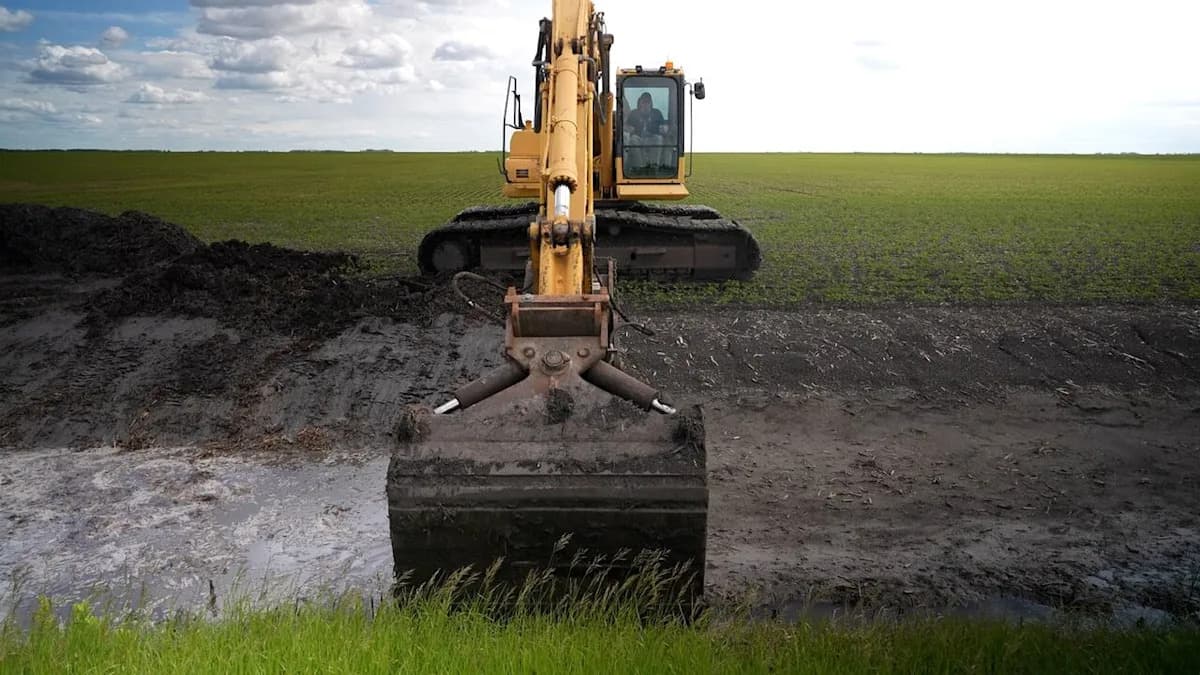
In the aftermath of a severe dust storm that struck southern Manitoba on May 14, 2026, several rural municipalities are confronting significant financial and operational challenges as they attempt to clear mud and debris from ditches, culverts, and roads. The storm, which generated winds reaching 100 kilometres per hour, swept large amounts of dirt across the region, causing widespread disruption to agricultural and transportation infrastructure.
The Rural Municipality of Montcalm reports that it has completed only about a quarter of the necessary cleanup, while the neighbouring Rural Municipality of Morris has managed to clear approximately one third of the accumulated muck. The debris has impeded water flow, resulting in pooling on fields and subsequent crop damage across hundreds of kilometres. Both municipalities estimate that millions of dollars are required to fully address the damage, a sum well beyond their current financial capacity.
Paul Gilmore, reeve of Montcalm, stated that his municipality needs roughly $2 million solely for drainage cleanup. He described the event as unprecedented within local memory, saying, "Nobody recalls the last time this ever happened." Scott Siemens, reeve of Morris, characterized the situation as "an unforeseen, unbudgeted event." Siemens noted that the accumulated, silty soil has formed drifts on his own farm and clogged local drains, making it difficult for plants to emerge and grow. He anticipates additional work will be required in the fall to restore field ditches.
The cleanup process has been slow. For example, an excavator deployed in Montcalm was able to clear only about 1.5 kilometres of ditch in a 12-hour period. With the limited number of contractors currently engaged, the municipalities estimate that the work could stretch well into the autumn, unless additional resources are secured. Both Gilmore and Siemens expressed concern that, without further funding, they may have to halt the effort and incorporate the remaining work into their regular ditching programs over several years.
The reeves have appealed for more funding to hire additional contractors or to pay those already employed, warning that current expenditures are depleting municipal reserves. Gilmore indicated that these reserves are typically earmarked for essential equipment purchases, such as graters. He warned that drawing down these funds for the cleanup jeopardizes the municipalities' ability to address future needs.
Manitoba Transportation and Infrastructure offered equipment assistance shortly after the storm, but according to Gilmore, the machinery provided was too small to be effective for the scale of the task. In addition to the damage to ditches and agricultural fields, gravel roads have also been affected. Gilmore stated that some roads now require four-wheel-drive vehicles to traverse, adding to the list of repairs needed.
Beyond Montcalm and Morris, the rural municipalities of Emerson-Franklin and Rhineland have also declared local states of emergency and requested disaster financial assistance from the province. All four municipalities are awaiting a decision from the provincial government, which, according to a spokesperson, is still reviewing the requests more than six weeks after the storm.
The delay in provincial response has left local governments uncertain about how to proceed. Without confirmation of disaster assistance, municipal leaders are considering the possibility of pausing the cleanup and extending it over several years, which could have implications for agricultural productivity and local infrastructure.
The financial strain is compounded by the unplanned nature of the event, which was not accounted for in municipal budgets. Siemens described the situation as requiring municipalities to "go into reserves and deplete most of our reserves," which he argues could compromise their capacity to respond to future challenges.
The storm's impact on drainage and water management is particularly significant in a region where efficient runoff is crucial for both agriculture and infrastructure. Obstructed ditches and culverts can lead to flooding of fields, further damaging crops and potentially leading to longer-term soil and yield issues. The additional debris on roads also presents transportation and safety challenges for rural residents and agricultural operators.
The affected municipalities have emphasized that they lack the resources to manage the crisis independently and are relying on provincial disaster relief to continue and complete the necessary cleanup. The ongoing review by provincial authorities is being closely monitored by local officials who argue that the scale and urgency of the situation require prompt intervention.
This incident highlights the vulnerability of rural infrastructure to extreme weather events and the fiscal constraints faced by small municipalities when responding to large-scale, unanticipated disasters. The outcome of the provincial government's review will determine whether the affected communities can restore their infrastructure in a timely manner or will be forced to spread the recovery process over an extended period, potentially affecting local economies and services.