Leadership Lessons for Canadian Politics: Insights from the UK Labour Transition
Analyzing the implications of Keir Starmer’s resignation for Mark Carney and Pierre Poilievre
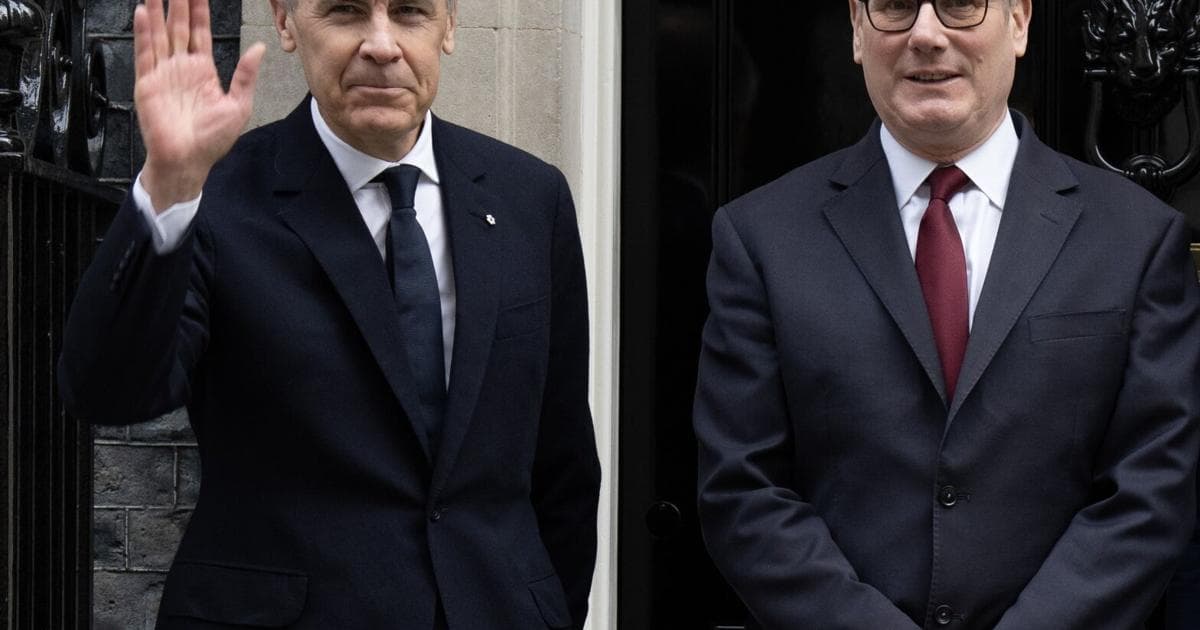
Recent developments in British politics, namely the resignation of Labour Party leader and Prime Minister Keir Starmer, have generated discussion about what lessons might be drawn for Canadian political figures, specifically Mark Carney and Pierre Poilievre. The analysis of Starmer’s leadership tenure and its conclusion provides a comparative framework to assess current and prospective Canadian leaders.
Keir Starmer, who entered the political arena after a career in law, became Labour leader following Jeremy Corbyn’s defeat in the 2019 general election. Corbyn’s leadership had been characterized by a shift to the hard left and controversies including allegations of antisemitism. Starmer served under Corbyn during this period, only later attempting to reposition the party away from its radical elements. Despite these efforts, Starmer’s critics contend that he failed to articulate a clear vision, develop a concrete plan for governance, or establish his credentials as the best person to lead the country. His victory in the 2024 election has been attributed, in part, to the electorate’s desire for an alternative to the Conservative Party rather than to enthusiasm for his own leadership.
Starmer’s resignation has paved the way for Andy Burnham, the outgoing mayor of Manchester, to assume the Labour leadership. Burnham, who previously served as a Member of Parliament from 2001 to 2017 and as health secretary, is recognized for his communication skills. However, his prior bids for the Labour leadership were unsuccessful, finishing fourth to Ed Miliband in 2010 and losing to Jeremy Corbyn in 2015. Following his defeats, Burnham left national politics to lead Manchester, rather than remain engaged in parliamentary debates over Labour’s direction.
Labour’s internal divisions, spanning hard left, soft left, and centre-right factions, have persisted through multiple leadership changes. Starmer is criticized for not sufficiently engaging with these groups, presuming that broad support among party members would suffice. This approach failed to resolve the party’s ideological and organizational rifts, a factor now seen as contributing to his resignation. Burnham is said to have a deeper understanding of these internal dynamics, recognizing the challenge of reconciling the disparate demands of Labour’s factions, especially given the UK’s economic constraints and the expectations of Labour MPs.
Despite his communication skills, Burnham faces questions about his ability to make and implement difficult decisions, a quality seen as essential for effective governance. Observers have noted that Burnham tends to avoid confrontation, a trait which may complicate efforts to manage competing interests within the party and the broader electorate. The ability to balance party unity with principled decision-making is highlighted as a core requirement for successful political leadership.
The British experience is seen as instructive for Canadian leaders. Mark Carney, identified as not having to contend with the same degree of party factionalism as his British counterparts, is nonetheless urged to focus on executing a clear vision and achieving tangible results. Carney’s political ascent, like Starmer’s, is partly attributed to being viewed as an alternative to other prominent figures, specifically Pierre Poilievre and Justin Trudeau. The sustainability of such support, it is argued, depends on the delivery of domestic policy successes that can be presented as evidence of effective leadership.
Pierre Poilievre, the leader of the Conservative Party of Canada, faces a different set of challenges. The Conservative base is described as energized by the style and substance associated with Trumpism in the United States. While this approach resonated with some Canadians dissatisfied with the previous government, it presents risks for broader appeal. Poilievre succeeded in making the case for his leadership in the last campaign, but his party is considered to have fallen short in providing a compelling vision and comprehensive plan for governance.
Both Carney and Poilievre are positioned at a juncture where effective administration and the ability to deliver on promises are seen as critical. Public skepticism about the capacity of government institutions to implement policy is noted as a significant factor. This climate has contributed to a desire among some voters for radical change, or at minimum, for leaders who can restore faith in the machinery of government. The experience of Starmer, who is described as having failed to mobilize an effective public service, serves as a cautionary example.
In this context, the capacity to attract and empower proven administrators is emphasized as a key leadership attribute. While communication skills are important, the ability to manage complex organizations and drive policy implementation is regarded as equally vital. Burnham’s strengths as a communicator are contrasted with perceived weaknesses in administration, raising questions about the prospects for effective governance under his leadership.
The analysis also highlights the dangers of relying on negative comparisons with political opponents as a primary basis for electoral success. Starmer’s experience is cited as a warning that victories achieved primarily by default, rather than through positive engagement with voters and the articulation of a coherent programme, may not translate into durable authority or effective governance.
For Canadian politics, the lessons drawn from the UK leadership transition revolve around the importance of internal party management, the necessity of clear policy direction, and the ability to deliver results through effective administration. Leaders are seen as needing to balance the demands of party unity, public expectations, and the practicalities of governing in a complex and sometimes divided political landscape.
The experiences of figures such as Starmer, Burnham, Carney, and Poilievre illustrate the ongoing challenges faced by leaders in parliamentary democracies. The interplay between vision, execution, communication, and organizational management remains central to the prospects of political parties and the quality of governance they are able to provide.