Judicial Review Sought Over New Brunswick Power Plant Approval
Opponents challenge EUB decision on $2.8B gas and diesel facility, raising questions about process and alternatives
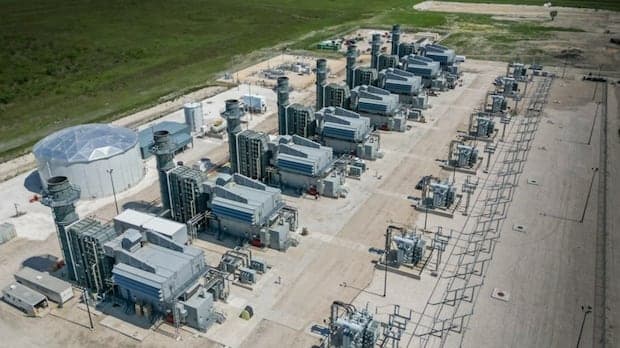
Opponents of a 500-megawatt gas and diesel power plant in southeast New Brunswick have initiated a judicial review process, seeking to overturn the Energy and Utilities Board’s (EUB) approval of the project. An application was filed June 26 with the New Brunswick Court of Appeal, requesting that the board’s decision be quashed and a new hearing be convened. The court has scheduled a hearing on the matter for September 15.
The judicial review application, filed by Sackville resident Gregor MacAskill on behalf of the Protect the Chignecto Isthmus Coalition, alleges the EUB’s decision was inadequate, incoherent, and procedurally unfair. The coalition, which participated as an intervener during the board’s hearings earlier in the year, argues that the board failed to properly consider submissions from interveners, including evidence about potential alternatives to the proposed plant. Lisa Griffin, spokesperson for the coalition, stated that the group is seeking to establish a precedent to ensure that watchdog groups and citizens are not bypassed in such regulatory processes. "What we're hoping is that we can win on the side of the ratepayer, win on the side of the process," Griffin said.
On May 28, the EUB gave approval to N.B. Power’s 25-year contract with U.S.-based ProEnergy to install and operate 10 gas and diesel turbines at a rural site near Centre Village. The plant is intended to address anticipated electricity supply shortfalls, particularly during periods of peak demand and when renewable generation is low. According to N.B. Power, failure to have the plant operational by 2028 could result in rotating blackouts. Of the plant’s capacity, 400 megawatts are designated for New Brunswick, while 100 megawatts would be sold to Nova Scotia’s system operator under a 10-year agreement with N.B. Power.
During the public hearings, which spanned eight days in February and March, opponents—including the coalition—questioned the urgency of the additional capacity and argued that the utility had not adequately explored alternatives such as high-capacity batteries. The coalition’s application contends that the EUB did not make a rational or reasonable decision based on the evidence presented, and that it did not sufficiently address N.B. Power’s departure from its established investment governance framework for major capital projects.
MacAskill, an economist and Sackville resident, highlighted two key issues in the EUB’s process. He stated that at one point, board chair Christopher Stewart suggested the onus was on the coalition to prove batteries were a superior alternative, rather than on N.B. Power to demonstrate it had properly dismissed battery options. MacAskill also noted that when the coalition later submitted evidence regarding batteries in the second stage of the hearings, the board ruled it was too late, as it had already approved the 400-megawatt portion and was only considering the additional 100 megawatts for sale to Nova Scotia.
The coalition’s filing further claims the board failed to ensure procedural fairness, including by not providing relevant materials in a timely manner, thus impairing the coalition’s ability to fully participate and challenge N.B. Power’s assertions regarding the prudence of the investment. "These procedural deficiencies impaired the [coalition's] ability to meaningfully participate in the proceeding and to fully test and challenge NB Power’s assertion that the Matter constituted a prudent investment," the application states.
Board chair Christopher Stewart, in delivering the EUB’s reasons for approval, was critical of N.B. Power for not following its own investment governance framework and for providing insufficient information to the board. Nonetheless, Stewart indicated the board was able to satisfy itself of the project’s prudence based on the submitted evidence.
N.B. Power has argued that the plant is necessary due to an expected electricity supply shortfall and that conventional procedures would have taken five years, longer than the anticipated timeline for when the supply gap could materialize. Utility CEO Lori Clark told a legislative public accounts committee last month that building and owning the plant directly was not feasible, as the corporation was unable to procure turbines during a period of equipment shortage. Clark also confirmed that the utility is planning to build at least one more fossil-fuel-burning plant before 2030 to meet projected demand growth.
The $2.8-billion ProEnergy deal has drawn scrutiny from New Brunswick’s auditor general, Paul Martin, who released a report shortly after the EUB’s approval. Martin described the utility’s decision-making as "haphazard," noting a lack of documentation regarding the study of alternatives and identifying the chosen private contractor model as more costly than having the utility build and operate the plant itself. Martin told MLAs on June 2, "There's just gaping holes in this whole assessment and decision model taken."
Lisa Griffin, who is also affiliated with the Atlantic Wildlife Institute near the proposed plant site, raised concerns about environmental impacts and the broader trend towards additional gas plants. She said alternatives such as batteries capable of lasting up to eight hours and recharging during low-demand periods were not properly considered, and expressed concern about increased emissions and the prospect of further fossil-fuel infrastructure.
MacAskill also raised issues regarding the economic implications, questioning the decision to engage an American firm rather than Canadian businesses for the plant’s construction and operation. He argued that the board’s dismissal of the coalition’s evidence on procedural grounds was inappropriate, particularly as the 100-megawatt expansion was intrinsically linked to the initial 400-megawatt approval.
The EUB and N.B. Power have declined to comment on the specifics of the judicial review, citing the ongoing legal process. Elizabeth Fraser-McAllister, a spokesperson for N.B. Power, reiterated in a statement that the utility respects the roles of the courts and the EUB and remains committed to established regulatory and legal procedures.
The EUB has previously faced judicial challenges to its decisions. In recent years, the New Brunswick Court of Appeal upheld the board’s decision to reduce N.B. Power’s requested rate increase, while an Enbridge Gas challenge resulted in a successful order for the regulator to rehear its case.
David Young, speaking for the EUB, indicated that the board would likely retain outside legal counsel for the upcoming court hearing in September. The outcome of the judicial review could set a precedent for how future regulatory hearings accommodate interveners and address procedural fairness in major infrastructure approvals.
The case has drawn attention to the balance between ensuring energy reliability, managing costs, exploring alternative technologies, and maintaining public confidence in regulatory processes. The judicial review will examine whether the EUB’s process and decision-making met the standards required by law, and the outcome could influence the approach to energy infrastructure approvals in New Brunswick and beyond.