Floods and Storms Challenge Eastern Saskatchewan Communities
Heavy rainfall, infrastructure damage, and rising river levels converge as severe weather persists
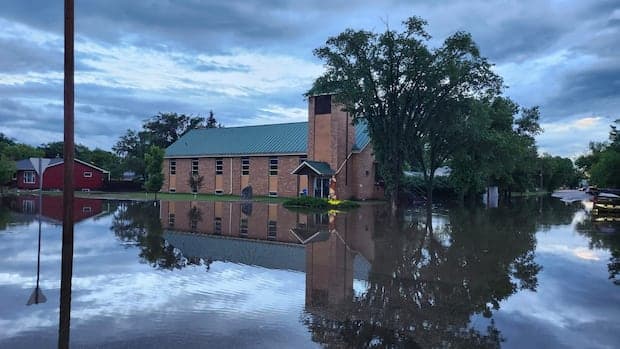
A series of intense weather events has brought significant disruption to communities across eastern and southern Saskatchewan, where heavy rainfall, flash flooding, and severe storms have resulted in multiple local states of emergency, infrastructure damage, and ongoing public safety concerns.
Over a period of nearly 48 hours, a slow-moving low-pressure system stalled over the region, delivering rainfall totals that meteorologists have described as highly unusual for the Canadian Prairies. According to Environment and Climate Change Canada meteorologist Brad Vrolijk, a provincial fire weather station near the Manitoba border recorded 174 millimetres of rain in two days, a figure that far exceeds the 50 to 100 millimetres typically seen during heavier rainfall events in the area. Vrolijk called the event “anomalous” and noted the system was fuelled by hot, humid air from the United States and southeast Manitoba, which prolonged the precipitation.
The effects were swift and widespread. Communities such as Norquay, Wadena, Canora, Kamsack, Togo, and the Keeseekoose and Cote First Nations have all declared local states of emergency. In Norquay, floodwaters surrounded homes, businesses, and roads, with the downtown area temporarily cut off. The village’s lift station was overwhelmed, leading to water backing up into basements, sometimes up to waist-deep. Jennifer Lindgren, a local resident, reported that the pump station could not keep pace and that volunteers worked for hours in basements, removing water and salvaging belongings.
The village of Togo, with a population of 83, saw 60 homes affected by flooding, as well as some businesses. Rita Brock, the village administrator, stated that roads were covered, houses flooded, and that the community’s lift station, wells, and water treatment plant had to be shut down, leaving no access in or out of the village. She noted, “I don't think there's a house in town that isn't affected on some level.”
Canora reported 51 damaged properties as of Tuesday afternoon. Brandi Zavislak, community development officer, said that ditches and roads were overflowing, barricades had been set up, and portable toilets brought in as the local sewer lift station struggled to recover. Zavislak noted that residents had been unable to use their bathrooms for two days and that while there was no organized volunteer effort, neighbours were supporting each other informally.
Kamsack and Keeseekoose First Nation also declared states of emergency. Kelsey Rauckman, Kamsack’s public works manager, described working around the clock with crews using vacuum trucks to pump out water from the overburdened sewer system. Residents reported carrying out thousands of litres of water from basements, with significant damage to personal property. Joe Levesque, a renter in Kamsack, estimated removing 1,700 litres of water from his basement over three days. Another resident, Theresa Deyneka, said, “It got so out of control that we couldn't keep up with two shopvacs.”
The effects of the rainfall extended to critical infrastructure, with several highways in northeastern Saskatchewan closed due to flooding, washouts, and culvert failures. According to Saskatchewan's Highway Hotline, closures included Highway 980 (from Highway 3 to 14.5 kilometres south of Highway 3), Highway 982 (from Highway 983 to Parr Hill access), and Highway 49 near Pelly. Police and barricades were present at affected sites, with motorists advised to avoid travel and use alternate routes. Charis Winslow, a Ministry of Highways summer student, reported incidents of vehicles becoming trapped in collapsed road sections, including a passenger vehicle and an RCMP cruiser, though no injuries were reported.
The Saskatchewan Public Safety Agency stated on Tuesday it was on standby to provide support to municipalities. By the afternoon, communities such as Togo and Canora were in discussions with the agency regarding supplies and resources for flood cleanup. The agency urged caution and noted it was awaiting further requests for assistance.
The response from local residents has included spontaneous volunteer efforts. In Norquay, more than 50 volunteers joined response efforts, with neighbouring communities providing additional equipment and food. Regan Foster, a volunteer, described the work of pumping water and removing damaged belongings, while Lindgren remarked on the strong sense of community exhibited during the crisis.
The severe weather is not confined to flooding. The Weather Network has forecast another round of severe thunderstorms for southern Saskatchewan, set to develop through Thursday afternoon and evening. These storms are expected to bring high winds, the risk of large hail, and heavy rainfall. The greatest threat zone includes Regina, Moose Jaw, Weyburn, Estevan, and potentially stretches as far north as Saskatoon. Forecasters caution that all modes of severe weather, including tornadoes—especially near the international border—are possible, and urge residents to monitor alerts and have emergency plans in place.
In response to the rainfall, the Water Security Agency has announced increased releases from the Gardiner Dam, resulting in a significant rise in the South Saskatchewan River’s flow. The agency projects outflows to reach up to 770 cubic metres per second by Friday, compared to typical seasonal outflows of about 160 m³/s. The river is expected to rise by approximately two metres through Moon Lake and 0.8 metres in Saskatoon. The agency anticipates maintaining elevated outflows until July 25, or longer if inflows remain high. Public safety warnings have been issued for residents and recreational users near the river and dam, as fast-moving water may pose a risk.
The increased river flow follows previous releases earlier in June, when the dam spillway was opened for the first time since 2020, prompted by above-normal snowpack and rainfall in Alberta. The high water levels have also affected safety infrastructure, including a line of buoys near the Saskatoon weir, which was damaged by the earlier surge and subsequently repaired and reinstalled by the Saskatoon Rowing Club. The river has also been the site of a recent incident involving a missing jet skier, Adan Vargas Salvador, whose disappearance on June 20 shifted search efforts to recovery.
With the immediate threat of rain decreasing, Environment Canada predicts only intermittent showers through the weekend, followed by clearer, warmer weather next week. This forecast offers communities a window to shift focus from emergency response to recovery and cleanup, though officials and residents remain alert to the ongoing risks posed by saturated ground, high river levels, and the potential for further storms.
The overlapping impacts of flooding, infrastructure damage, and severe weather underscore the challenges faced by eastern and southern Saskatchewan communities. While local and provincial agencies continue to monitor the situation and provide support, the events have tested municipal systems, prompted large-scale volunteer mobilization, and highlighted the importance of preparedness as the region enters the peak of the severe weather season.