Ex-husband found guilty of second-degree murder in death of Tatjana Stefanski in B.C.
Jury convicts Vitali Stefanski in 2024 stabbing; sentencing hearing to be scheduled
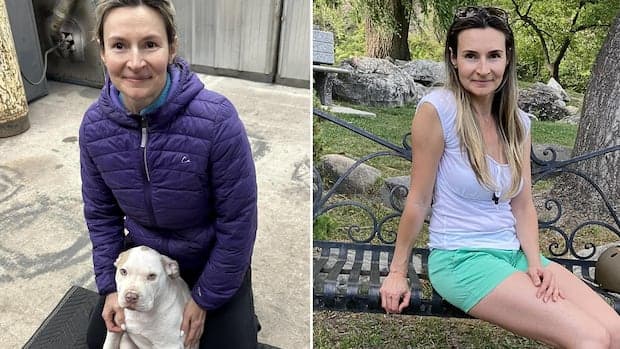
Vitali Stefanski has been found guilty of second-degree murder in the 2024 death of his ex-wife, Tatjana Stefanski, following a jury trial in B.C. Supreme Court in Kamloops. The verdict was delivered unanimously by a 12-person jury on Friday morning, after deliberations that began Thursday night and concluded the following day. The case centred on the fatal stabbing of Tatjana Stefanski, whose body was discovered with multiple wounds off a rural forest service road near the village of Lumby, B.C., in April 2024.
Tatjana Stefanski's body was found with numerous stab wounds, including seven to the chest, which affected her heart and lungs, as well as multiple "sharp-force injuries" to her arms and legs. Wounds to her hands were described by pathologist Dr. Eric Bol as consistent with "defensive-type" injuries. A bent and bloodied knife recovered near the scene contained the DNA of both Tatjana and Vitali Stefanski. Police testified that Vitali Stefanski was found shoeless in the forest and, according to their account, confessed to the killing and gestured in the direction of the body. However, during the trial, Vitali Stefanski denied making such a confession, stating, “I never said that,” and challenged the veracity of the police testimony, asserting, “That statement does not exist, so that does not exist, and he has no proof that it does exist.”
According to the evidence presented, Tatjana and Vitali Stefanski had two children together, now aged 11 and 18. Both children testified at the trial, as did Tatjana’s partner, Jason Gaudreault, who currently has custody of the children. Gaudreault attended the proceedings but expressed he was too emotionally affected to speak publicly immediately after the verdict. He later told Global News, “Now it’s time to heal and start a brand new life,” and noted the relief and closure the conviction brought for the family. Family friend Jen de Bourcier stated, “I felt that the jury was going to serve justice in this case, and they did, and I was hugely relieved.”
The prosecution argued that the only reasonable conclusion from the available evidence was that Vitali Stefanski fatally stabbed his ex-wife. Crown lawyer Laura Drake, in closing arguments, told the jury that Stefanski’s account was inconsistent with common sense and contradicted the forensic and testimonial evidence. The Crown’s position was that Stefanski’s explanations for his actions and the circumstances of Tatjana’s death were not credible given the physical evidence and witness statements.
Vitali Stefanski maintained his innocence throughout the proceedings. He was represented by legal counsel for much of the trial but dismissed his lawyer before closing arguments, choosing to represent himself. During his closing submission, delivered in English with a heavy accent, he told the jury, “You should believe me that I am not guilty,” and described Tatjana’s death as “like a suicide.” He argued that there was “practically no evidence” proving he was responsible for her death and asserted that the Crown’s claims were “actually opposite and even wrong.” Stefanski testified that on the morning of April 13, 2024, Tatjana approached him at her home with a bloody nose, after which they left together in his black Audi. He claimed that she stabbed herself with his fishing knife while in the car, and that he did everything possible to help her, including driving away from the nearest hospital due to the orientation of his vehicle.
Stefanski further testified that after Tatjana became unresponsive, he removed her from the car and tried to return her to the vehicle, at which point her body "slipped" from his grasp and went down an embankment. He denied dumping her body or causing her fatal injuries. Following this, Stefanski stated that he attempted suicide by drowning and subsequently by stabbing himself with a kitchen knife at a nearby cabin, losing consciousness and awakening the next day. He was arrested in the forest on April 14, 2024, the day after Tatjana was reported missing. After his arrest, Stefanski was initially released on conditions, but was charged with murder and taken into custody again on May 31, more than a month later.
During cross-examination and in his closing statement, Stefanski contended that he bore no physical evidence of a struggle, such as scratches, cuts, or bruises, asserting, “I have no scratches, no cuts, no bruises … and there wasn’t anything that would indicate that Vitali caused Tatjana’s death.” He argued that if he had attacked her, there would be physical evidence to support that claim, and insisted, “Because I’m just a witness.”
The trial process included Stefanski’s applications for a mistrial, a switch to a judge-alone trial, or an adjournment to instruct new counsel, all of which were denied. Justice Bradford Smith presided over the trial, instructing the jury that while they were not required to provide a recommendation on parole eligibility, any recommendation they did make would be considered. The jury’s recommendations regarding parole were not disclosed in open court.
A conviction for second-degree murder in Canada carries a mandatory life sentence with no eligibility for parole for at least 10 years, though the period before parole eligibility can be set as high as 25 years at the judge’s discretion. Justice Smith outlined that factors to be considered in setting parole eligibility include the character of the accused, the nature of the offence, and the circumstances surrounding its commission.
Following the verdict, Justice Smith advised Stefanski to retain legal counsel to assist with the upcoming sentencing phase. Stefanski agreed to participate in future proceedings via video appearance. The case is scheduled to return to court on July 13 to determine a date for the sentencing hearing.
The events surrounding Tatjana Stefanski’s death and the subsequent criminal process attracted significant local attention, particularly in Lumby, B.C., where the initial arrest and release of the accused caused concern in the community. The outcome of the trial has been described by those close to the victim as providing a measure of closure, although the process has left lasting impacts on the family and community.