Deloitte Report Assesses Impact of Possible U.S. Exit from CUSMA on Canada
Economic modelling projects sectoral vulnerabilities and outlines potential strategies for mitigation
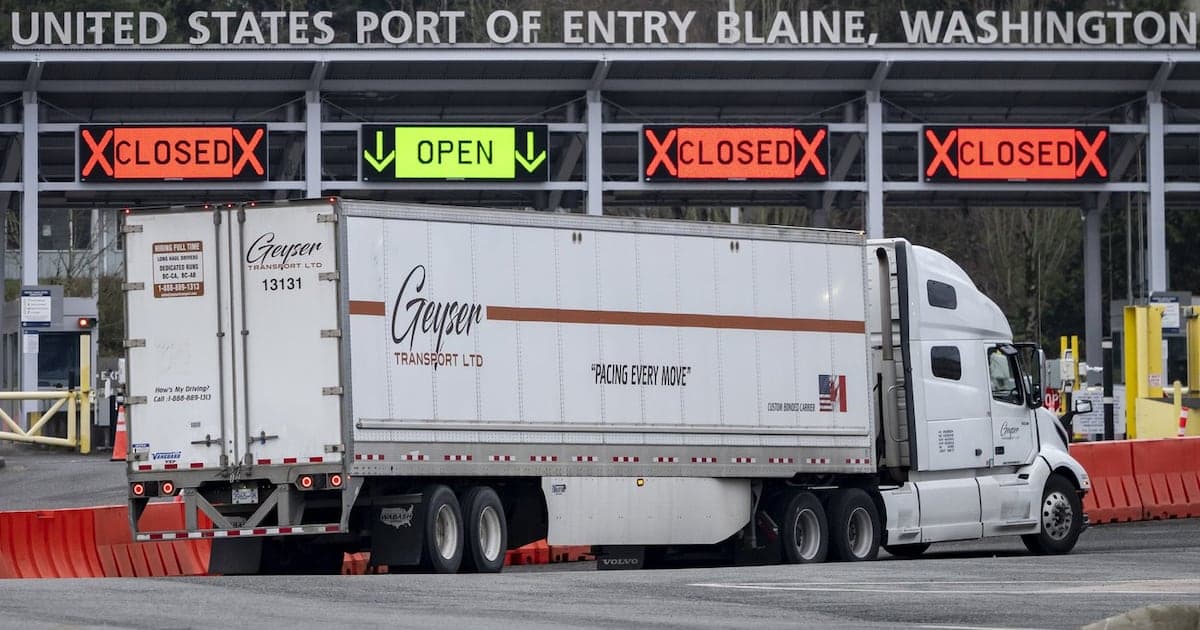
A recent report by Deloitte Canada examines two potential scenarios for Canada’s economy in light of increasing uncertainty around the future of the Canada-United States-Mexico Agreement (CUSMA). The report, titled “Tariffs: A Rough Road Leads to New Destinations,” evaluates the consequences if the United States were to withdraw from the trade pact and considers alternative strategies for Canada to offset potential losses.
CUSMA, which succeeded the North American Free Trade Agreement (NAFTA), governs trade relations among Canada, the United States, and Mexico. The agreement is central to Canadian trade, with the United States accounting for approximately 70 per cent of Canada’s exports as of 2025. The Deloitte report’s authors, including Matthew Stewart, Danielle Bochove, and Trevin Stratton, modelled economic outcomes under both a worst-case and a best-case scenario.
In the scenario where the United States opts out of CUSMA, Canadian trade would revert to Most-Favoured-Nation (MFN) tariff rates under World Trade Organization rules. The report notes that this scenario is “a possibility that cannot be dismissed.” It further acknowledges the potential for an even more adverse outcome if the U.S. administration, as indicated by previous statements, were to impose additional punitive tariffs on Canadian goods. The duration and enforceability of such tariffs remain uncertain, given possible legal and political challenges.
Under the CUSMA withdrawal scenario, the report projects Canada’s real gross domestic product (GDP) would fall by 1.6 per cent, or $402 billion, over the next decade relative to a baseline that assumes existing tariff levels and CUSMA are maintained. Employment would shrink by an average of 163,000 jobs annually, with corresponding declines in wages and consumer spending. The report states, “Domestic investment in things like infrastructure and machinery take a hit and employment is also projected to shrink by 163,000 jobs annually on average.”
The economic impact would not be distributed evenly across sectors. Manufacturing would be most affected, with a projected 28 per cent reduction in sector GDP by 2036. Electronics, machinery and equipment are forecast to decline by 21 per cent, rubber and plastics by 20 per cent, and chemicals by 13 per cent. The oil and gas sector would also be exposed to a 10 per cent global tariff imposed by the U.S., resulting in an 11 per cent drop in oil sales and a 30 per cent fall in natural gas exports to the U.S.
Despite these sectoral losses, the overall contraction in oil and gas GDP is projected to be less severe: a 0.4 per cent reduction for oil and 0.9 per cent for natural gas, according to the report. The authors characterize the overall macroeconomic impact as “severe but not cataclysmic,” while noting that for certain sectors, the effects could be “cataclysmic.”
The alternative scenario in the report, termed “Accelerated diversification,” assumes Canada maintains all existing free trade agreements, including CUSMA, and successfully negotiates new trade agreements with other partners. This model forecasts real GDP growth of 0.6 per cent, or $141 billion, over the next decade, and the creation of 53,000 jobs annually.
Within this positive scenario, agriculture is identified as a sector with significant growth potential, particularly through expanded access to markets in China and India. The report projects an increase of $4 billion in crop exports to non-U.S. markets and $16 billion in food manufacturing output by 2036. Gains are also anticipated in manufacturing, with electronics, machinery and equipment expected to grow by $3 billion (5 per cent), motor vehicles and parts by $1.1 billion (3 per cent), transportation equipment by $1 billion (4 per cent), and chemicals by $1 billion (3 per cent).
Matthew Stewart, a partner at Deloitte Canada, noted the complexity of predicting U.S. policy directions, stating, “It’s so tough to tell lately. Every day I hear different things from our government negotiators and the contacts I have. So it’s so tough to tell. It just seems to change direction on a regular basis.” He expressed cautious optimism that trade discussions could resume following the next U.S. election, but anticipated continued protectionist pressures.
The report emphasizes that diversification alone would not fully compensate for the loss of preferential U.S. market access. The authors argue that Canada should also pursue domestic reforms, such as removing interprovincial trade barriers and fostering new industries. They identify internal trade as an area with significant untapped potential, noting that interprovincial exports accounted for 18.1 per cent of GDP in 2023, a figure largely unchanged for over three decades.
Deloitte’s research suggests that completely phasing out interprovincial trade barriers over five years could generate an additional $881 billion in economic output by 2040, equivalent to a 2.4 per cent increase in GDP, and create 133,000 new jobs. Stewart commented, “I don’t think all of this would be easily attainable, but I think we could at least achieve half of that. Together with the diversification and more open internal trade, we could offset most of the decline from a worsening situation with the United States.”
Interprovincial trade involves not only goods but also labour mobility. Stewart observed that regulatory barriers, such as differing health and safety standards, can hinder the movement of workers between provinces, increasing project costs.
The report also points to the importance of expanding transportation infrastructure and critical minerals projects to support export growth and market diversification. It highlights recent federal investments in defence, export infrastructure, and minerals refining as steps towards greater self-sufficiency.
While the report outlines possible mitigation strategies, it underscores the scale of the challenge facing Canada in the event of a U.S. exit from CUSMA. The U.S. remains Canada’s dominant trading partner, and the loss of preferential access would have broad and varied effects across the economy. The report concludes that a multi-faceted policy approach, combining external diversification with domestic reforms, offers the best prospects for cushioning the impact and fostering future growth.