Concerns Raised Over Cellular Dead Zones and 911 Access in Whitehorse
Residents, businesses and government officials cite risks and rising complaints as providers and regulators weigh solutions
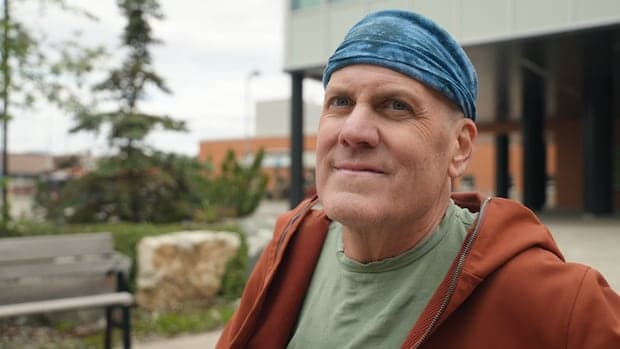
In June, Whitehorse resident Trevor Mead-Robins experienced difficulty connecting with 911 operators during a medical emergency at his home in the Copper Ridge neighbourhood. According to Mead-Robins, it took three attempts to reach emergency services. On his first call, the operator was unable to hear him and the call was rerouted out of town, after which he was asked to call back. His second attempt also failed. On the third try, the operator was able to ascertain his location and needs, but ongoing audio issues required Mead-Robins to repeat himself several times. He estimated that the process took between eight and nine minutes, rather than the typical one or two minutes expected. Mead-Robins, who is undergoing chemotherapy and uses Public Mobile, a Telus subsidiary, described the experience as stressful, especially given his intense pain at the time.
Mead-Robins expressed concern that continued cellular reception issues and the presence of so-called "dead zones" in Whitehorse could prevent individuals from accessing emergency services when needed. He stated, "My biggest fear is that the next time someone calls, they may not be able to get through and that may result in something more, like a tragedy, or something more serious." He added that he was fortunate to have been able to call back multiple times, but criticized the time and effort required.
Anne Lewis, a Telus customer who operates a garden centre in Whitehorse's Hillcrest area, recounted a similar experience in 2023. When she called 911 for her unresponsive father at her business, the call dropped during a breathing exercise. Subsequent attempts to reconnect initially failed, though she eventually re-established contact with emergency services. More than a year later, Lewis continued to seek public reassurance regarding cellular reliability. While she acknowledged that coverage limitations are expected when travelling between communities in the North, she stated, "But certainly I do expect [service] in Whitehorse."
Unreliable calls, data connection issues, and network degradation during periods of peak usage or emergencies are longstanding complaints in Yukon, affecting both rural and urban residents. These issues have been observed not only within Whitehorse but also along major highways. Mead-Robins, who also operates a business called MEADIAsolutions, reported that his customers frequently experience confusion regarding cellular problems, which are sometimes beyond their control. He stated, "It's not a secret that the quality of cellphone service in many areas are not at a satisfactory level," and added that the problem appears to be ignored.
The Yukon RCMP confirmed that dispatchers at their operations centre have received "911 hangups"—calls that disconnect unexpectedly. However, the RCMP does not track the specific reasons for such disconnections. Possible explanations include accidental hangups, misdials, entering coverage dead zones, or other network issues. The Yukon Hospital Corporation did not comment on whether 911 call issues have directly affected patients but noted that as the territory's only critical care provider, it relies on telecommunications, including cellular service, and coordinates closely with Emergency Medical Services to ensure access to hospital care.
A spokesperson for Yukon’s Community Services department outlined the 911 call routing process in the territory. Telecommunications carriers provide the routing and interconnection for 911 calls, with both the caller’s service provider and the local carrier, Northwestel (owned by Bell), involved. The local carrier directs calls to the public safety call centre, which also assesses abandoned or disconnected 911 calls for emergency purposes. The spokesperson noted that cellphone calls remain subject to "dead zones and limitations."
Political pressure on telecommunications providers has increased. Two years ago, then-premier Ranj Pillai wrote to Bell, stating "Yukoners are pissed," and called on major companies including Bell, Rogers and Telus to improve cellular services. More recently, Highways and Public Works Minister Linda Benoit and Economic Development, Tourism and Culture Minister Jen Gehmair sent letters to Bell CEO Mirko Bibic, the Canadian Radio-television and Telecommunications Commission (CRTC), and the federal industry minister. The letters described the Yukon government’s observations and the complaints it has received regarding cellular service.
Minister Benoit stated that cabinet ministers and other MLAs have received "many" complaints about poor reception and that the problem is worsening. Benoit clarified that they are not necessarily blaming Bell alone but emphasized, "They are the cellphone infrastructure provider here in the Yukon. It is their infrastructure that the mobile network runs on and they're responsible for maintaining it, upkeeping it, upgrading it, and that kind of thing." The Yukon government’s letter to Bell demanded acknowledgment of the problem, an explanation, and information on plans to improve the network. The letter to the CRTC inquired about regulatory tools to improve transparency and service, while the request to Innovation, Science and Economic Development Canada sought federal support in monitoring progress.
Statistics from the Commission for Complaints for Telecom-television Services indicate an increase in consumer dissatisfaction. Complaints in the territory rose from nine in 2023-24 to 60 in 2024-25, nearly a six-fold increase.
Bell responded by email that it had no record of 911 outages on the dates referenced in June. The company explained that Yukon’s 911 system relies on the traditional landline network to route calls to operators and stated, "In this instance, the 911 service was operating as designed. Any issue would have been related to the wireless network coverage or connectivity in the area from which the individual was attempting to place the call." Bell reported spending $20 million on its Yukon wireless network since 2019 to enhance speed and reliability and referenced ongoing discussions with the territorial government. The company noted that expanding the network in the Yukon poses significant challenges, including logistical complexity and high operational costs due to regional conditions, and suggested that government funding is necessary to make further expansion feasible.
The CRTC stated that federal, territorial, and municipal governments, along with telecommunications providers, share responsibility for ensuring 911 access. The CRTC regulates service providers that connect 911 calls to first responders and confirmed no 911 outage notifications had been received for the recent time period in question. The CRTC requires providers to report 911 outages and is considering additional measures to increase network resilience and protect consumers during outages. The CRTC is also developing a standardized approach for collecting and reporting cellphone coverage data to better identify areas requiring improvement.
Daniel Sokolov, a telecommunications journalist based in Whitehorse, explained that all mobile companies in the territory share the same network infrastructure. Though he could not account for why issues appear to be worsening, Sokolov asserted, "The first thing is Bell has to recognize the problem. 911 calls should always get priority."
The issue of cellular dead zones in Whitehorse and the broader Yukon region connects to broader challenges of delivering telecommunications infrastructure in remote and northern areas, where population density, geography, and climate increase costs and complexity. The discussions underway between all levels of government, regulators, and providers reflect differing perspectives on responsibility, investment, and oversight. The outcome has implications for public safety, business operations, and the quality of life for residents in Yukon’s capital and beyond.