Close Encounter with Grizzly Bear in Kananaskis Highlights Ongoing Bear-Human Interactions
Recent incident prompts warnings, restrictions and renewed focus on safety in Alberta’s backcountry
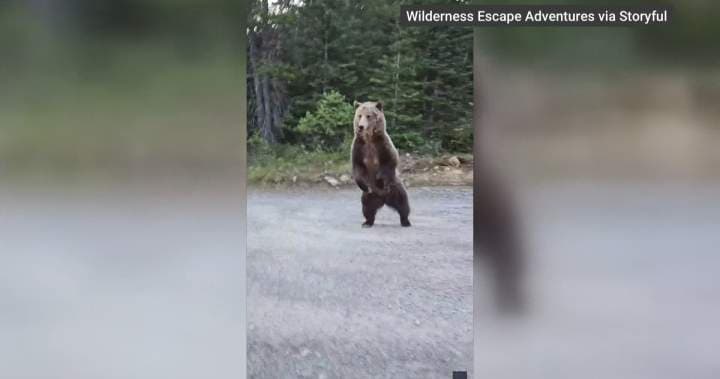
On the morning of Wednesday, June 24, a woman identified as Jessie was walking her dog, Skoki, near Mount Engadine Lodge in Alberta’s Kananaskis Country when she experienced a close encounter with a grizzly bear. Jessie, carrying her morning coffee, was on a gravel driveway near the wilderness camp when the bear appeared a short distance away. Jelmer de Blois, a licensed guide with Wilderness Escape Adventures, witnessed and recorded the event.
According to de Blois, the grizzly approached Jessie and her dog, then accelerated, closing the distance to within a few feet. The video footage shows Jessie shouting commands such as “stop, enough, no, hey, stop it, go away, bad” in an effort to deter the animal. The grizzly circled Jessie and Skoki several times and, on several occasions, reared up on its hind legs. Eventually, after Jessie persisted in yelling, the bear retreated into the woods, continuing to stare at them as Jessie hurried away to safety.
Alberta Forestry and Parks responded to the incident by issuing a bear warning for the area around Mount Engadine Lodge, as well as nearby Mount Shark Road and Rummel Lake Trail. The posted warning notes that the grizzly demonstrated “persistent, dog-focused behaviour” and repeatedly approached the hiker and dog, closing to approximately one metre. The encounter drew attention as one of several recent bear-human interactions in the Kananaskis and adjacent Banff region.
Alberta Parks subsequently confirmed the bear warning and acknowledged the rising number of grizzly sightings and incidents in Kananaskis Country. In another recent case, a family of four grizzly bears was reported frequenting a campground, where a camper was compelled to use bear spray after a bear tore a hole in a tent. In response to this event, Alberta Parks prohibited the use of tents in two affected campgrounds, permitting only hard-sided campers to be used as a precautionary measure.
Banff National Park, situated just north of Kananaskis, has also seen a string of bear-related incidents in June. On June 6, Parks Canada staff closed a section along the north shore of Lake Minnewanka after a black bear damaged and accessed an unoccupied tent at a backcountry campsite. Subsequently, on June 13, a bear damaged two more tents at a different campsite in the area; a further two tents were damaged on June 14 at another site. No injuries were reported in these cases, but Parks Canada evacuated all campers from the affected zone and closed the area to backcountry users.
These recent events have led to several warnings from Alberta Parks and Parks Canada for hikers, campers, and outdoor enthusiasts. Both Kananaskis Country and Banff National Park are popular destinations for activities such as hiking, biking, camping, canoeing, and fishing, resulting in frequent overlap between human and bear territories.
Authorities have highlighted the specific risk posed when dogs are present during bear encounters. In the Mount Engadine Lodge incident, the bear reportedly exhibited a strong focus on the dog, which wildlife experts note can trigger predatory or defensive responses in bears. Alberta Parks’ warning cited the dog-focused behaviour as a key factor in the repeated close approaches by the grizzly.
The increase in bear-related incidents has prompted management interventions, including the temporary closure of campgrounds, changes in allowable camping equipment, and area-wide advisories. Hard-sided camping units are preferred in certain locations to reduce potential bear access to food or human scent, measures intended to minimize risks to both people and wildlife.
Wildlife officials and guides underscore the need for vigilance and preparedness. Standard advice includes carrying bear spray, keeping dogs leashed, making noise while on trails, and avoiding hiking alone. In the Mount Engadine encounter, Jessie’s vocal efforts to deter the bear and her ability to leave the area without escalation were noted as factors that may have prevented injury.
The Kananaskis incident comes against a backdrop of past bear attacks in Alberta and Western Canada. Previous years have seen fatal bear encounters, including an attack on a couple in Banff National Park in 2023. These events have led to ongoing discussions around public safety, wildlife conservation, and the management of human-bear conflict in areas with high recreational use.
Officials continue to monitor the situation and emphasize the importance of reporting all bear sightings and encounters. The goal, according to Alberta Parks and Parks Canada, is to ensure the safety of both visitors and wildlife through timely warnings, education, and adaptive management responses. The recurrence of close encounters highlights the dynamic relationship between humans and bears in Alberta’s backcountry and the need for continued vigilance as outdoor recreation remains highly popular in these regions.