Carney Signals Firm Stance on Russia Ahead of Potential G20 Summit Confrontation
Prime minister reiterates call for Russian withdrawal from Ukraine as debate continues over Putin's possible attendance in Miami
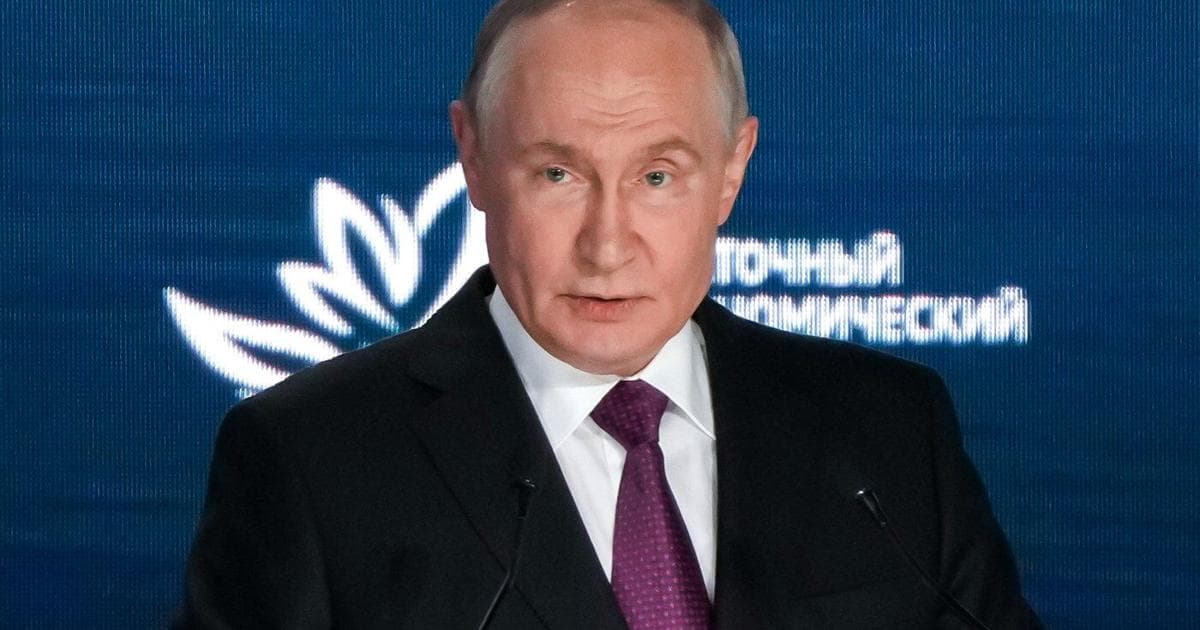
Prime Minister Mark Carney stated on Thursday that, should Russian President Vladimir Putin attend the G20 leaders’ summit scheduled for December in Miami, his message would be direct: “get out of Ukraine.” Carney made these remarks during a news conference in Thunder Bay, Ontario, emphasizing an approach he described as one of strength and directness. “He only understands strength and directness,” Carney said, adding, “The message would be simple: get out of Ukraine, give back all of Ukraine to Ukraine, end this war which is killing more than 30,000 of your people every single month.” He noted that he has spoken with Putin on several occasions in the past.
The context for Carney’s remarks is the ongoing war in Ukraine, which escalated into a full-scale invasion by Russia in 2022. The conflict’s roots include Russia’s annexation of Crimea from Ukraine in 2014. The International Criminal Court (ICC) has issued an arrest warrant for Putin, but the United States is not a member of the ICC and the Trump administration has taken steps to undermine the court’s authority, including what has been described as a campaign to “dismantle” it.
U.S. President Donald Trump is hosting this year’s G20 summit and has indicated openness to inviting Putin, despite the ICC warrant. The Kremlin signaled earlier in the year that Putin might accept such an invitation. Recent developments include Russian Finance Minister Anton Siluanov’s attendance at a G20 finance ministers’ meeting in Asheville, North Carolina, hosted by U.S. Treasury Secretary Scott Bessent. Canadian Finance Minister François-Philippe Champagne commented that Siluanov’s presence “created a lot of discomfort around the table,” a sentiment he said was shared by several other countries’ representatives.
Carney acknowledged that the decision on who attends the G20 summit is the prerogative of the host nation, stating, “It’s the host’s prerogative to invite who they invite to the G20.” However, he also asserted there are “very valid reasons” to exclude Russia, citing Russia’s “unprovoked attack in 2014” as the reason for its ejection from the G7. Carney then stated that further attacks “almost five years ago now” led to Russia being “rejected from the G20,” a claim that was later corrected by Russian officials.
In response to Carney’s comments, Russian Ambassador Oleg Stepanov clarified that Russia has remained a member of the G20 since its founding in 1999. Stepanov noted that while Russian officials have sometimes walked out of G20 events due to disagreements, Russia has not left the group and continues to participate. Regarding the G7, Stepanov described Russia’s 2014 ejection as a decision by the other seven members to leave the G8, which he characterized as a move driven by political motivations. Stepanov argued that organizations such as the G20, BRICS, and the Shanghai Cooperation Organization hold more international significance than the G7, which he described as lacking substantive influence in current global affairs.
Putin has not attended a G20 summit since the full-scale invasion of Ukraine began in 2022, instead delegating attendance to his foreign minister. The prospect of Putin’s participation in the Miami summit has attracted international scrutiny and debate. The U.S. has also barred South Africa from multiple G20 events in recent years, while Trump has made unsubstantiated claims about South Africa’s domestic policies, including allegations of genocide against white people.
The issue of Russia’s status in international forums has a recent history. In March 2014, the G7 nations—Canada, the United States, United Kingdom, Germany, Japan, Italy, and France—suspended Russia’s membership, reverting the G8 back to the G7. In the years that followed, Russia announced its permanent departure from the group. Carney’s language echoes that of former Prime Minister Stephen Harper, who at the 2014 G20 summit in Brisbane was reported to have told Putin, “I guess I’ll shake your hand, but I have only one thing to say to you: You need to get out of Ukraine.” At the time, Russian officials denied the exchange took place.
Recent Russian military activity includes a series of drone strikes in Kyiv over the past week, which Ukrainian authorities say have resulted in civilian casualties. Despite ongoing hostilities, there have been recent indications from both Russian and Ukrainian officials of a potential renewed push for peace negotiations. Putin said on Thursday that countries including the U.S. and China are ready to support a peace settlement, though he emphasized that the conflict’s resolution ultimately rests with Russia and Ukraine. Ukrainian Foreign Minister Andrii Sybiha expressed optimism about a “new dynamic in the peace efforts,” suggesting increased diplomatic engagement, but did not provide further details.
Canada’s position, according to Carney and Champagne, is to maintain support for Ukraine and to communicate Canadian and allied discomfort with Russia’s participation in international forums while the conflict continues. Ukrainian President Volodymyr Zelenskyy is expected to visit Canada in the coming week, following a previous visit in December in which he met with Carney in Halifax before travelling to the U.S. for discussions with Trump focused on efforts to end the war.
The upcoming G20 summit in Miami thus represents both a diplomatic challenge and a potential flashpoint, as questions over Russia’s role in multilateral organizations continue to intersect with broader geopolitical disputes. The invitation of Russian officials to G20 events under the Trump administration and the possibility of Putin’s attendance have highlighted diverging international perspectives on engagement with Russia. While some governments, including Canada, argue for continued exclusion in response to the invasion of Ukraine, others maintain that dialogue within multilateral institutions should continue. The outcome of these deliberations may influence not only the conduct of the Miami summit but also broader international approaches to the war in Ukraine and the future of global governance structures.