Canada-U.S. Trade Talks Collapse Amid Tariffs and Shifting Red Lines
Prime Minister Carney cites inconsistent U.S. positions, sovereignty and industry protections as key issues; both sides prepare counter-tariffs as rhetoric escalates
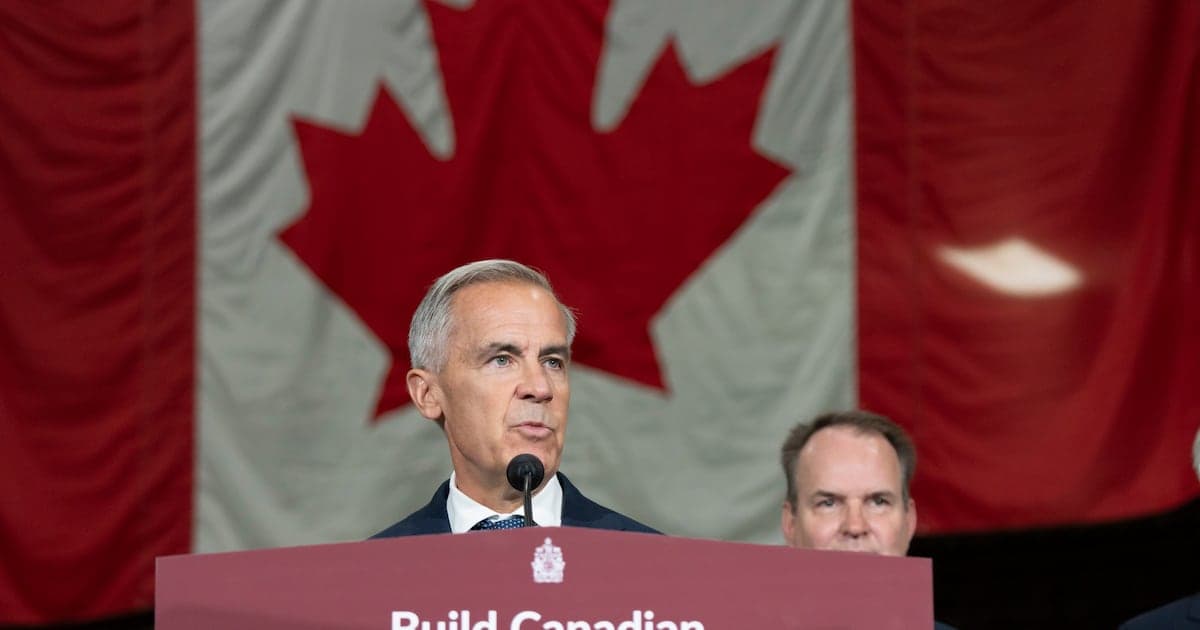
Prime Minister Mark Carney has stated that Canada remains ready to negotiate a comprehensive trade agreement with the United States, but only under terms that both benefit and protect Canadian interests. Carney’s comments follow the collapse of high-profile trade talks late last month, which has triggered a new phase of escalating tariffs and public exchanges between officials of both countries.
The failure of negotiations has led to the implementation of 50 per cent tariffs by the United States on roughly $20 billion to $28 billion worth of Canadian goods, including items covered under the Canada-U.S.-Mexico Agreement. Canada has announced retaliatory tariffs on a similar scale, amounting to $27.6 billion worth of U.S. products, set to take effect on September 8. The U.S. has also threatened to impose 50 per cent tariffs on all Canadian cars and car parts starting January 1.
Carney, speaking in Thunder Bay, Ontario, attributed the breakdown to a series of last-minute U.S. demands that he described as red lines, which included continued tariffs on heavy-duty trucks produced in southern Ontario, restrictions on Canada’s ability to sign trade deals with other countries, and provisions that would roll back cultural protections for the French language. According to Carney, these conditions would have undermined Canada's sovereignty and its capacity to protect its culture and industries.
U.S. Commerce Secretary Howard Lutnick and U.S. Trade Representative Jamieson Greer have disputed the Canadian account, asserting that Canada withdrew from the talks for domestic political reasons. Lutnick, in particular, denied that U.S. officials made the French language a sticking point, characterizing the issue as “manufactured” to influence the Quebec provincial election and an Alberta plebiscite. Greer further claimed that late-stage demands from Canada contributed to the impasse.
Carney rejected these assertions, stating, “I don’t think, with all respect, appointed, unelected cabinet members in the United States are experts on Canadian politics.” He emphasized that the Canadian government’s stance was not politically motivated but rather grounded in the need to secure an agreement durable over time, offering protections to Canadian workers, families, and industries.
The prime minister noted a recent shift in U.S. positions, suggesting that some of the previously immovable American red lines no longer appear to be central to their negotiating posture. “Some of what they’re saying now is different than what they were drawing the line on,” Carney said, adding that Canada is prepared to resume negotiations when the U.S. demonstrates readiness to respect Canada’s fundamental requirements, especially regarding linguistic and cultural protections and the ability to independently negotiate with other countries.
Carney also highlighted the integrated nature of the North American auto industry, stressing that any agreement must ensure the competitiveness of Canada’s automobile, steel, and aluminum sectors. The prime minister indicated that Canada is not seeking a return to pre-tariff arrangements but rather a stable, mutually beneficial framework.
In response to the collapse, President Donald Trump used social media to suggest that Canadian politicians, including Carney, were positioning him as an adversary for political gain, warning of dire economic consequences for Canada if the stalemate persists.
The current standoff arrives amid a broader context in which Canada has been working to reduce its trade reliance on the U.S. Since the imposition of tariffs by the Trump administration last year, the proportion of Canadian exports destined for the U.S. has fallen. According to Statistics Canada, 66.35 per cent of Canadian exports went to the U.S. in July, down from 69.39 per cent in June and 72.64 per cent a year earlier. Meanwhile, Canadian import dependence on the U.S. has declined to 59 per cent over the past year, from 62 per cent in 2024.
As part of efforts to diversify and strengthen domestic industry, Carney announced a $4.7 billion contract to build and maintain more than 300 Via Rail passenger rail cars in Canada, with production facilities in Quebec and Thunder Bay. This move marks a shift away from previous reliance on U.S. imports for such infrastructure.
The collapse of talks has also led to a notable escalation in rhetoric, with U.S. officials, including Lutnick and Treasury Secretary Scott Bessent, taking to social media and public forums to criticize Canada. This has included remarks about Canadian military capabilities and cultural identity. Carney has dismissed these comments as “beneath their office,” calling on U.S. negotiators to end personal attacks and focus on substantive discussions.
Both governments continue to blame each other for the breakdown, with each side maintaining that the other introduced last-minute demands or political considerations that made an agreement unattainable. Despite the impasse and retaliatory measures, Carney has reiterated Canada’s willingness to return to negotiations, provided that its core demands are respected and that any deal provides stability and mutual benefit.
The stakes remain significant given the scale of bilateral trade, the deeply integrated nature of key industries, and the political pressures on both sides. The imposition of high tariffs and the uncertainty surrounding future trade relations have prompted Canadian efforts to diversify export markets and invest in domestic production, while the U.S. administration continues to link the issue to broader political narratives.
As of early September, both countries are bracing for the economic impact of the reciprocal tariffs, with the potential for further escalation or renewed talks depending on future developments and shifts in negotiating positions.