Canada’s Most Affordable Luxury Cars for 2026: A Segment-by-Segment Analysis
A comprehensive look at the entry-level prices, trims, and features of luxury cars in the Canadian market for the 2026 model year
The Canadian automotive landscape for luxury cars in 2026 reveals a marketplace still offering a range of entry points for consumers seeking premium vehicles without the highest price tags. While luxury SUVs remain the dominant choice for many buyers, a variety of sedans, coupes, convertibles, and wagons continue to be available, reflecting both evolving consumer preferences and the persistence of traditional body styles.
For those seeking the most accessible option in the subcompact luxury sedan segment, the Audi A3 40 TFSI Quattro stands as the least expensive model, with a manufacturer’s suggested retail price (MSRP) of $43,950 before delivery charges of $2,850. The A3 is equipped with a 2.0-litre turbocharged four-cylinder engine paired with a 48-volt mild-hybrid system. This configuration delivers 201 horsepower and 236 lb-ft of torque, with standard all-wheel drive (Quattro). Fuel consumption is rated at 9.7 L/100 km in the city, 7.1 on the highway, and 8.5 combined. The next step up in this segment is the BMW 2 Series Gran Coupé, starting at $49,900, offering a turbocharged 2.0-litre four-cylinder engine producing 241 horsepower.
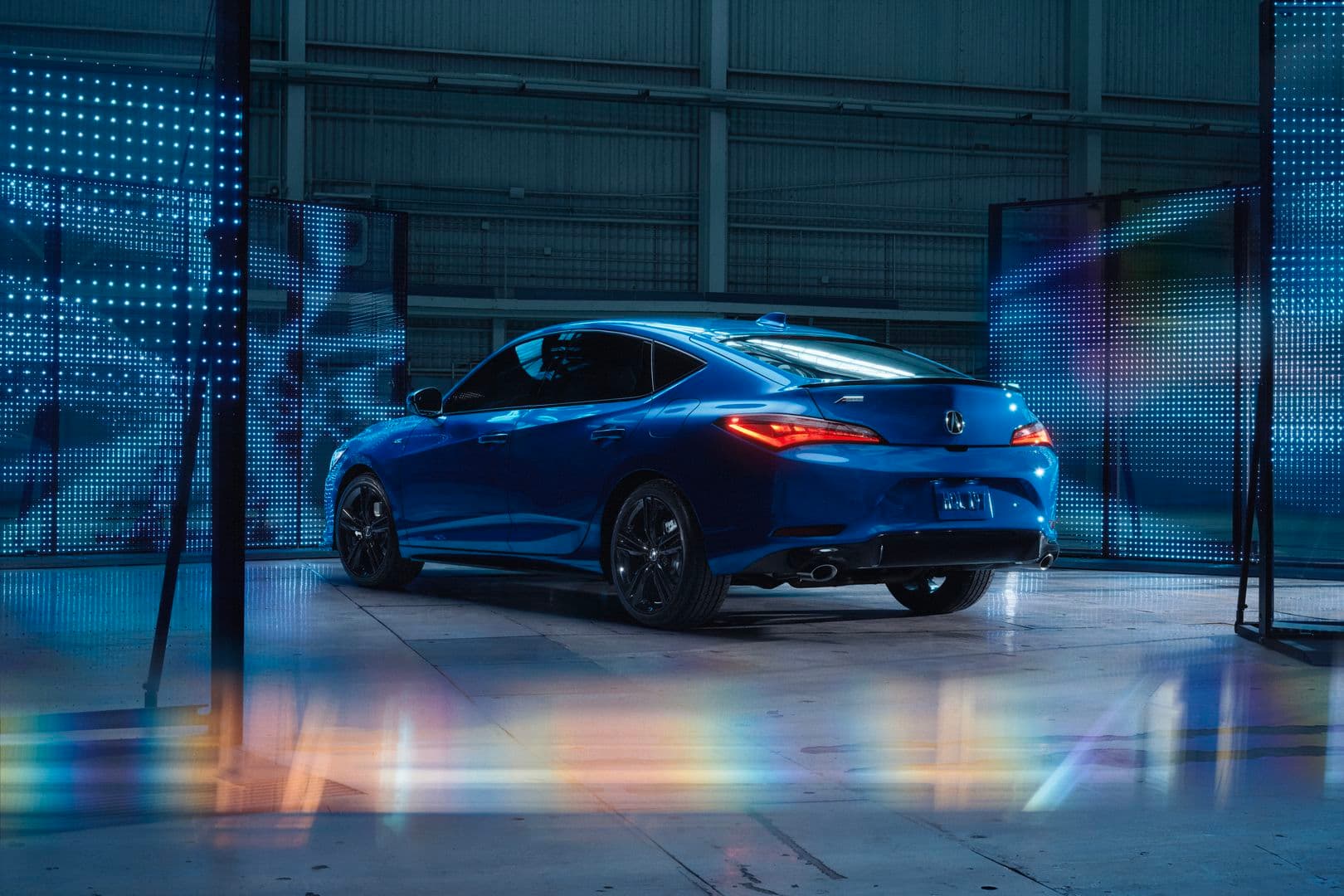
In the compact luxury sedan category, the Acura Integra A-Spec is the least costly, starting at $41,075 plus $2,595 delivery. Sharing its platform with the Honda Civic, the Integra A-Spec uses a 1.5-litre turbocharged four-cylinder engine delivering 200 horsepower and 192 lb-ft of torque. Transmission options include a continuously variable automatic (CVT) as standard, with a six-speed manual available in the Elite A-Spec trim. All Integra models are front-wheel drive. The combined fuel efficiency is listed as 7.3 L/100 km. The next lowest-priced compact luxury sedan is the Cadillac CT-4 at $43,799 for rear-wheel drive, with all-wheel drive available at $46,299. The Mercedes-Benz C300 sedan follows at $54,500, though pricing comparisons are impacted by how different brands include or exclude delivery and fees. For example, Genesis vehicles are sold with fees included, putting the G70 at $56,000 all-in.
Among midsize luxury sedans, the Cadillac CT5 holds the lowest entry price at $58,599, with an additional $2,900 for delivery. The CT5 comes standard in rear-wheel drive with a 2.0-litre turbocharged four-cylinder engine producing 237 horsepower and 258 lb-ft of torque. All-wheel drive is available, raising the price to $61,099. Two core trim levels—Premium Luxury and Sport—are offered at the same price, differentiated by their feature sets. The vehicle’s fuel efficiency is rated at 10.6 L/100 km city, 7.5 highway, and 9.2 combined. Higher-performance variants include the CT5-V with a twin-turbo V6 (360 horsepower) and the CT5-V Blackwing with a 668-hp turbocharged V8, starting at $111,599. The next least expensive midsize luxury sedan is the hybrid Lexus ES at $59,900, followed by the BMW 530i at $73,900, Genesis G80 at $74,500, and Mercedes-Benz E350 at $75,550.
Within the full-size luxury sedan segment, the Audi A8 is the most affordable, with a base MSRP of $108,400 and a $2,850 delivery fee. The current fourth-generation A8, refreshed in 2022, features a 3.0-litre turbocharged V6 generating 335 horsepower and 369 lb-ft of torque, along with standard Quattro all-wheel drive. Its fuel efficiency is rated at 12.6 L/100 km city, 8.8 highway, and 10.9 combined. The future of the A8 remains uncertain, as production has ceased in Germany, but U.S. operations have confirmed availability for the 2027 model year. The S8 variant, with a turbocharged V8 delivering 563 horsepower, starts at $156,900. The Genesis G90 follows at $118,000 (all-in), while the Mercedes-Benz S500 is priced at $149,100 and the BMW 760i at $153,900.
In the luxury coupe segment, the BMW 230i xDrive Coupe is the least expensive, with a starting price of $50,900 and a $2,955 delivery charge. This two-door vehicle features a 2.0-litre turbocharged four-cylinder engine producing 255 horsepower and 295 lb-ft of torque, and employs BMW’s xDrive all-wheel drive system. It is rated at 9.5 L/100 km in the city, 7.1 on the highway, and 8.4 combined. The coupe seats four, though rear seat space is limited. The BMW 430i xDrive Coupe is next at $62,500, followed by the M240i xDrive Coupe at $62,900, and the Mercedes-Benz CLE 300 4Matic Coupe at $64,950. More performance-oriented or exclusive models, such as the Porsche 718 Cayman ($79,500) and the soon-to-be-discontinued Lexus LC500 ($118,180), occupy higher price points.
For convertibles, the BMW 430i xDrive Cabriolet is the lowest-priced option, starting at $72,500 plus $2,955 delivery. This model is the drop-top version of the 430i coupe, equipped with a 2.0-litre turbocharged four-cylinder engine and a mild-hybrid system, matched to an eight-speed automatic transmission. The car produces 255 horsepower and 295 lb-ft of torque and is rated for 9.6 L/100 km city, 7.1 highway, and 8.5 combined. The Mercedes-Benz CLE 300 4Matic Cabriolet follows at $74,950, with the Porsche Boxster at $81,900. The Lexus LC500 Convertible, also exiting the market, starts at $135,050. The BMW Z4, previously available and sharing its platform with the Toyota Supra, was discontinued earlier in 2026 after a limited run of "Final Edition" models priced at $99,900.
In the station wagon category, the Volvo V60 Cross Country is the least costly, with an MSRP of $65,839 and a $2,770 delivery fee. This model features a 2.0-litre turbocharged four-cylinder engine with a mild-hybrid system, generating 247 horsepower and 258 lb-ft of torque, along with standard all-wheel drive. It offers 519 litres of cargo capacity with the rear seats upright and fuel efficiency rated at 10.1 L/100 km city, 7.6 highway, and 8.9 combined. The Mercedes-Benz E450 4Matic All-Terrain is next at $92,250. The Audi A6 Allroad is absent from the 2026 market but is expected to return as a plug-in hybrid in 2027. The Volvo V90 was discontinued for 2026, with only existing dealer inventory remaining.
The prevalence of gasoline-powered and hybrid models among the most affordable luxury cars is notable, with no fully electric or plug-in hybrid vehicles making the list. This reflects both current availability and pricing structures, as well as consumer demand patterns that continue to favour internal combustion engines in this segment.
Price comparisons in this sector are influenced by how manufacturers present their pricing. Some, such as Genesis, include delivery and fees in their advertised prices, while others list base MSRPs without these additional costs, which can alter the perception of affordability when comparing across brands.
The range of entry-level pricing in each segment demonstrates that, while the cost of luxury vehicles remains significant, there are still multiple options for buyers seeking a premium badge at a lower price threshold. The market also illustrates a contraction in certain body styles, such as wagons and full-size sedans, as manufacturers shift focus in response to consumer preferences for SUVs and crossovers.
The continued presence of performance-oriented variants within these lineups, many with substantially higher prices, suggests that automakers are maintaining a two-pronged strategy: providing accessible entry points while also catering to buyers seeking more powerful or exclusive vehicles. These dynamics, combined with evolving powertrain offerings and model availability, are shaping the future of luxury car offerings in Canada.