Canada Faces Severe but Manageable Economic Risk from Potential U.S. Withdrawal from CUSMA
Deloitte modelling and sector analysis outline scale, uneven impact, and strategic policy options as trade pact future uncertain
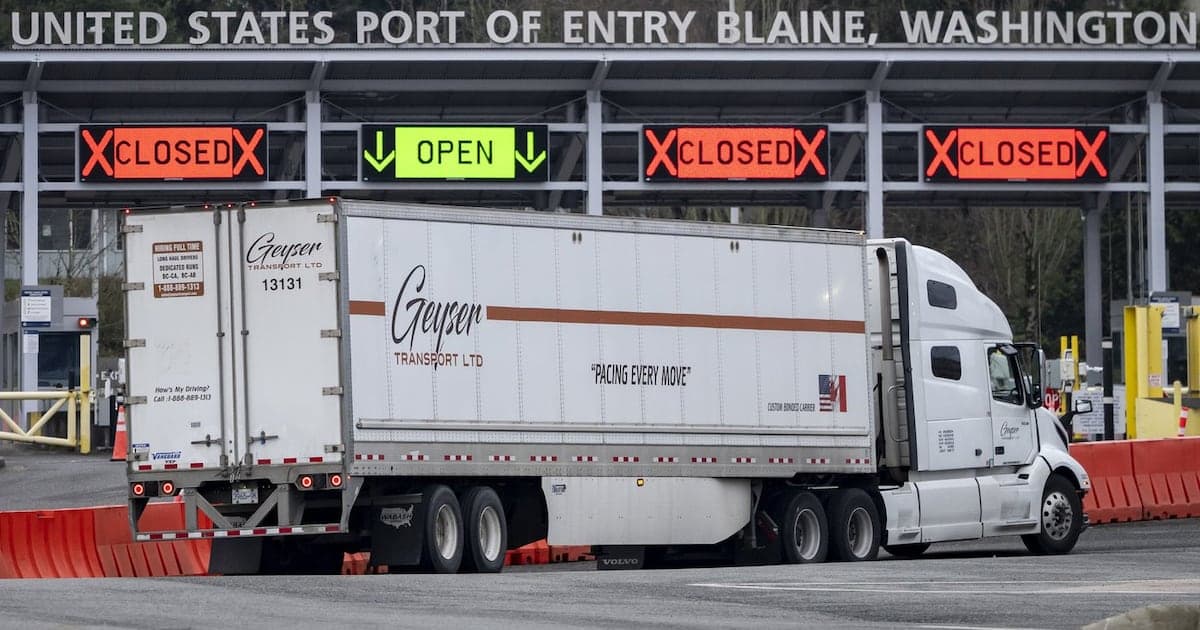
The prospect of the United States withdrawing from the Canada-United States-Mexico Agreement (CUSMA) has become a central topic in Canadian economic and policy circles following heightened trade tensions and recent tariff escalations. A new report released by Deloitte Canada, titled “Tariffs: A Rough Road Leads to New Destinations,” models two contrasting futures for the Canadian economy: a downside scenario in which the U.S. exits CUSMA and trade resets to World Trade Organization Most-Favoured-Nation (MFN) rates, and a more optimistic path where Canada retains CUSMA while expanding and diversifying its global trade agreements.
Deloitte’s modelling estimates that in the event of a U.S. withdrawal, Canada’s real gross domestic product (GDP) would fall by 1.6% by 2036, amounting to $402 billion in lost output over the decade relative to a July 1, 2026, status quo baseline. The report projects average annual job losses of 163,000, a figure that would directly affect employment levels, wages, and domestic consumption. The Canadian American Business Council previously estimated that a total CUSMA breakdown could cost 102,000 jobs in 2027 alone.
The impact would not be distributed evenly across the economy. Manufacturing is identified as the most vulnerable sector, with real GDP in motor vehicles and parts forecast to decline 28% by 2036, followed by electronics, machinery, and equipment (down 21%), rubber and plastics products (down 20%), and chemicals (down 13%). Energy exports, which have historically benefited from CUSMA exemptions, would no longer be shielded from a 10% U.S. global tariff. The report anticipates oil exports to the United States declining by 11%, and natural gas by 30%, resulting in a net loss of 0.4% in real GDP for oil and 0.9% for natural gas by 2036.
The authors of the Deloitte report, Danielle Bochove, Trevin Stratton, and Matthew Stewart, characterize the overall impact as “severe but not cataclysmic,” though they note that for certain sectors, the effects could be described as cataclysmic. The initial years following a U.S. withdrawal would likely see the sharpest adjustment as companies lose their competitive position in their largest export market. Stewart, a partner in Deloitte Canada’s Economics and Financial Advisory group, stated: “What we wanted to do is to get a better picture around what’s the impact if the worst happens and the (CUSMA) agreement falls apart, and then how much can we offset of the negative impact?”
The magnitude of the shock is linked to Canada’s continued reliance on the U.S. market, which accounted for about 70% of Canadian exports in 2025. By 2036, Deloitte projects that Canada’s exports to the U.S. would fall by approximately 21% under the downside scenario, though total global exports would decline only about 10.5%, as displaced Canadian products seek new markets or find domestic buyers. The report notes that while U.S. protectionism would raise American production costs, it could allow Canadian producers to capture a portion of U.S. global market share in some sectors.
On the U.S. side, Canada’s counter-tariffs—currently valued at $27.6 billion—are set to increase on a range of American goods, with rates on certain steel, aluminum, and iron products rising from 25% to 50%. These measures, according to Inu Manak of the Peterson Institute for International Economics, are designed to protect Canadian companies while also creating economic and political pressure in key U.S. states, including Michigan, Ohio, Indiana, Pennsylvania, and Iowa. In 2025, these states accounted for roughly half of all U.S. iron, steel, and ferroalloy exports to Canada, worth US$2.6 billion collectively. Michigan and Ohio, both deeply integrated with Canadian manufacturing supply chains, are especially exposed, with 38% and 32% of their exports going to Canada, respectively.
Automotive manufacturing is a focal point for cross-border integration and vulnerability. Canada continues to impose a 25% counter-tariff on American-made vehicles that do not meet CUSMA requirements, first implemented in April 2025. Additional tariffs of 25% to 50% are set to target motorcycles, trailers, and related products. Dairy is another sector at risk, with new Canadian levies proposed on U.S. milk, cream, cheese, curd, and whey, affecting states like Michigan and Wisconsin, which export substantial proportions of their dairy output to Canada. The appliance sector is also exposed, with states such as Ohio, Kentucky, and Tennessee sending a significant share of their exports northward.
Canadian retaliatory tariffs are expected to impact about 3% of total imports, with the scope for Canadian consumers and businesses to substitute to alternative products to offset higher costs. According to RBC, the share of Canadian exports to the U.S. crossing the border duty-free remains close to 86%, a figure largely attributed to CUSMA exemptions. RBC estimates that even with the imposition of section 338 tariffs in August, only about 0.4% of Canadian GDP and employment, and roughly 5% of exports to the U.S., are directly affected.
In the alternative “accelerated diversification” scenario, Canada maintains CUSMA and continues to pursue new trade agreements globally. Under this path, Deloitte projects real GDP growth of 0.6% by 2036, adding $141 billion in cumulative output over the decade and creating approximately 53,000 jobs annually. The sectors most likely to benefit include agriculture—particularly if access to markets like China and India expands—food manufacturing (up $16 billion annually by 2036), and manufacturing of electronics, machinery, and equipment (up $3 billion). Motor vehicles and parts, transportation equipment, and chemicals could also see moderate gains in non-U.S. markets.
Despite the positive effects of export diversification, Deloitte’s analysis finds that the gains are not large enough to fully compensate for the losses arising from a CUSMA collapse. The authors argue that Canada will need to complement diversification efforts with policies aimed at fostering greater self-sufficiency. One major area identified is the removal of internal barriers to interprovincial trade, which has remained stagnant for decades. Deloitte’s research suggests that phasing out these barriers over five years could yield $881 billion in additional economic output by 2040 and create 133,000 new jobs, representing a 2.4% increase in GDP. Stewart noted, “Together with the diversification and more open internal trade, we could offset most of the decline from a worsening situation with the United States.”
The federal government has initiated a number of industrial policy measures in response to the risk of deteriorating U.S. trade relations. Recent investments include a comprehensive Defence Industrial Strategy, with the goal of increasing defence exports by 50% over the next decade, and significant spending on export infrastructure and critical minerals refining. The government is also supporting workforce reskilling programs to help workers in disrupted sectors transition to emerging industries. In August, Ottawa announced what it described as the largest energy investment in North American history, focused on the East Coast and aimed at boosting green energy production and associated manufacturing opportunities.
Historically, Canada’s economic relationship with the United States has fluctuated between periods of closer integration and efforts to diversify. The 1971 “Nixon Shock,” which saw the imposition of a 10% tariff on imports, prompted Canadian policymakers to advocate for a “Third Option” strategy of trade diversification and domestic industrial development. While that approach was never fully realized, the current debate echoes similar themes. Prime Minister Mark Carney has emphasized the need to “build Canada strong at home and diversify our trading relationships abroad,” acknowledging limits to Canada’s ability to influence U.S. trade policy.
The political context in the United States adds further uncertainty. With the Trump administration indicating the possibility of further punitive tariffs starting in January, and both major U.S. parties exhibiting increased protectionist sentiment, Canadian officials and analysts regard a formal U.S. withdrawal from CUSMA as a credible risk. Stewart, when asked about the likelihood of a U.S. exit, remarked, “It’s so tough to tell lately. Every day I hear different things from our government negotiators and the contacts I have. So it’s so tough to tell. It just seems to change direction on a regular basis.”
Trade data for July 2026 show Canada’s merchandise trade surplus narrowing to $769 million from a revised $4.2 billion in June, driven by a 2.3% fall in exports (notably metals and energy) and a 2.2% rise in imports (led by motor vehicles and parts). Exports to the U.S. fell 6.6% that month, while imports rose 1.8%. Trade with non-U.S. countries reached a record high, with exports up 7.4% month-over-month and nearly 50% year-over-year.
Analysts caution that ongoing tariff escalation and trade uncertainty will likely dampen Canada’s near-term growth prospects, with the balance of risks tilted to the downside. Nevertheless, the modelling and policy discussion suggest that while the economic costs of a CUSMA breakdown would be significant, they are not insurmountable if Canada pursues a broad mix of diversification, industrial policy, and domestic economic integration. The authors of the Deloitte report conclude: “Canada will have to play the hand it is dealt to the best of its ability.”