Balancing Acts: Mark Carney and the Challenge of Simultaneous, Competing Priorities
Navigating trade-offs in environment, economy, alliances, and political coalitions
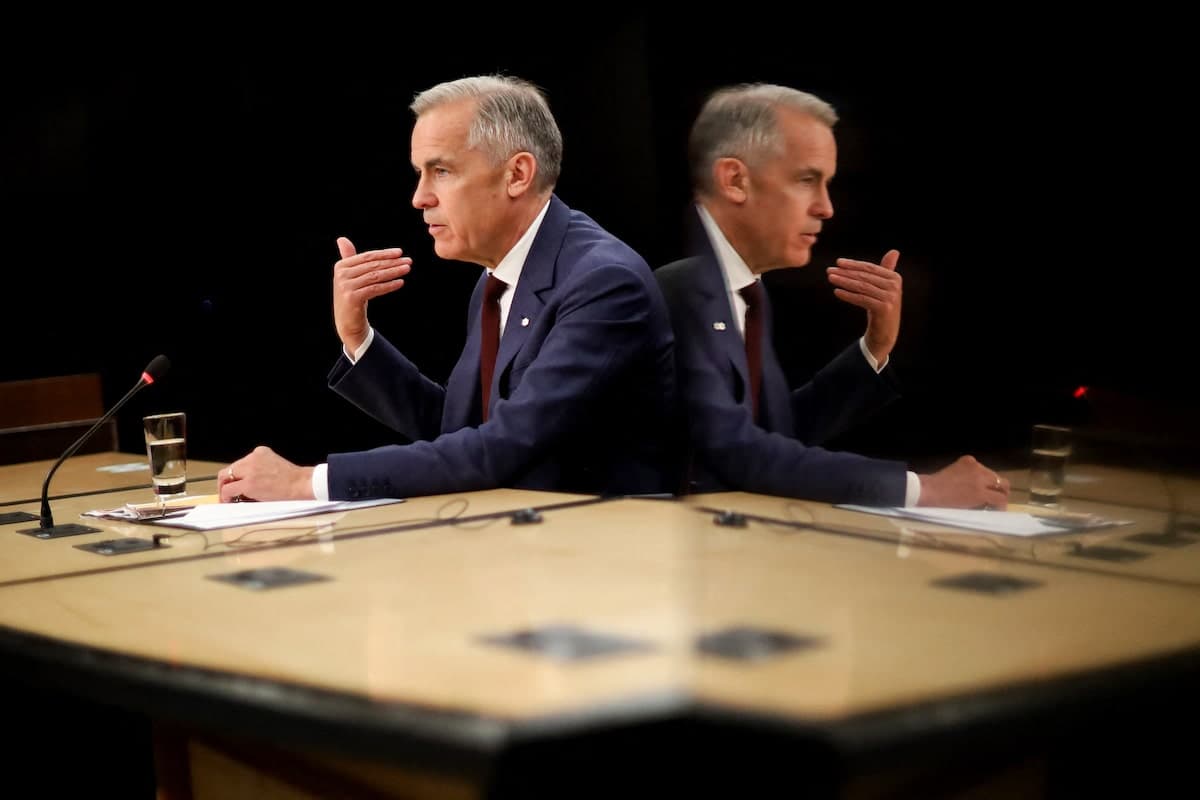
The adage that governing requires choosing between alternatives is contested by the realities facing Canadian policymakers. In practice, governance often requires managing trade-offs and balancing conflicting interests, rather than making clear-cut decisions. Mark Carney, recently at the centre of federal policymaking considerations, exemplifies this dynamic as he faces several complex, concurrent challenges that require simultaneous attention and compromise.
One of the foremost trade-offs confronting Carney involves the environment and the energy sector. Carney’s record indicates a strong concern about climate change, but there are also political imperatives, such as electoral considerations and the need to maintain national cohesion. This tension is illustrated by the sequence of decisions regarding climate policy, including the removal of the carbon tax, followed by deliberations over whether to approve another pipeline project.
A critical upcoming milestone is July 1, the deadline set in a memorandum of understanding signed by Carney and Alberta Premier Danielle Smith. By this date, Alberta is expected to submit its application to the federal Major Projects Office for pipeline consideration. However, the project currently lacks a private-sector sponsor, a requirement for its progression. The plan is for the project to be designated a project of national interest under the Building Canada Act by October 1, but several hurdles remain.
The context surrounding this deadline is further complicated by important political events. On October 5, Quebec will hold a provincial election, where the Parti Québécois is expected to campaign on anti-pipeline sentiment. Later in the month, on October 19, Alberta will conduct a referendum concerning provincial secession, with pipeline development a central issue for many voters. Between these dates, federal authorities are expected to complete consultations with affected Indigenous groups, secure financing for the Pathways carbon-capture storage project, and address opposition from environmental and political groups in British Columbia. The absence of a private-sector sponsor remains a significant unresolved factor.
If these questions are not settled by October 1, Carney may be faced with the decision to approve a contentious pipeline project days before Quebec’s election, risking political backlash in that province, or to reject it shortly before Alberta’s referendum, potentially inflaming tensions there. This scenario raises the possibility of a compromise solution that attempts to satisfy both sides, or alternatively, satisfies neither.
In parallel, Carney must navigate Canada’s approach to trade and defence alliances, particularly the country’s relationship with the United States. There is growing discussion about diversifying Canada’s alliances and reducing dependence on the United States for trade and security. However, Canada remains reliant on its southern neighbour for both economic and defence needs. The metaphor of “building a second plane while flying the first” is invoked to describe the challenge: Canada must attempt to develop alternative relationships while continuing to depend on existing ones, managing risks along the way.
Fiscal policy presents another set of competing priorities. The federal government has announced substantial spending plans for defence, infrastructure (especially trade infrastructure), housing, productivity initiatives, and possibly pipelines. These ambitions come as the country faces a worsening fiscal outlook, with deficits projected to exceed $60 billion for multiple years. The fiscal uncertainty is linked to Canada’s evolving relationship with the United States, internal divisions, and the challenges surrounding pipeline development.
Faced with these pressures, policymakers must decide whether to increase spending to address pressing needs or to exercise restraint in light of fiscal constraints. One potential approach is to balance the operating budget while permitting deficits for capital expenditures, effectively seeking to do both at once.
Political strategy adds another layer of complexity. The Liberal Party, under Carney’s influence, aims to retain the support of centre-right voters who have shifted from Pierre Poilievre’s Conservatives while also maintaining its appeal to the party’s traditional base on the left. This balancing act is complicated by Carney’s positions on defence spending and the environment, which may attract some voters while alienating others.
The central challenge is to maintain a coalition broad enough to govern, without losing key constituencies on either side. The risk of leaning too far in one direction is the potential loss of support from the other, while efforts to straddle both sides run the risk of satisfying neither group fully.
These overlapping trade-offs — between environmental protection and energy development, alliance diversification and existing dependencies, ambitious spending and fiscal prudence, and cross-party electoral appeal — illustrate the multidimensional nature of contemporary governance in Canada. Each decision influences the others, and the cumulative effect is to require ongoing negotiation and recalibration.
Consultations with Indigenous groups, private sector engagement, and regional political dynamics all play roles in shaping the options available. The interplay between national policies and provincial interests, particularly in resource development, continues to be a defining feature of Canadian federalism.
The policy landscape is further shaped by external events, such as elections and referenda, which can alter the incentives and constraints facing decision-makers. The timing of key decisions, such as pipeline approvals, underscores the interaction between administrative processes and the electoral calendar.
Ultimately, Carney’s experience reflects a broader principle: the practice of governance involves the management of simultaneous, often conflicting priorities. Rather than clear choices between alternatives, it requires the capacity to navigate trade-offs, seek compromise, and adapt to evolving circumstances. In this context, the act of straddling — balancing multiple interests at once — becomes both the challenge and the defining feature of political leadership.