Audit Reveals Oversight Gaps and Incidents in Newfoundland and Labrador Long-Term Care
Auditor General’s report cites accountability issues, safety incidents, and need for systemic reform
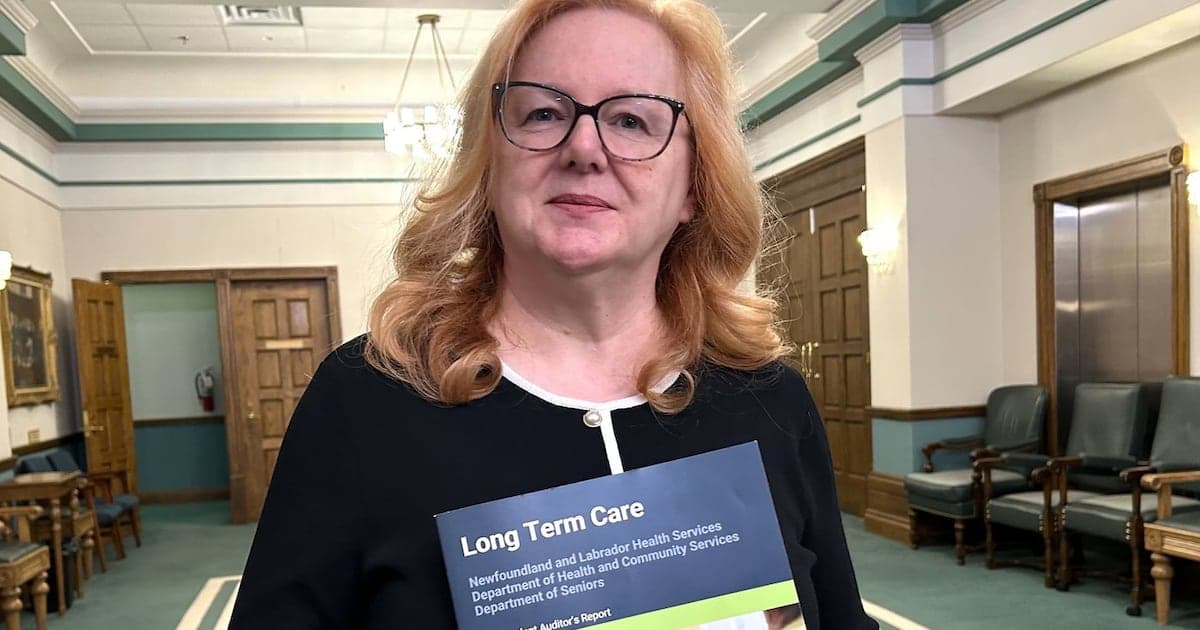
A recently released audit by Newfoundland and Labrador’s auditor general, Denise Hanrahan, documents a series of deficiencies in the province’s long-term care system, including incidents of abuse, medication errors, and missing residents. The audit, presented to the Public Accounts Committee, examined operations and oversight across the majority of the province’s long-term care facilities from April 2024 to March 2026.
Hanrahan’s team analyzed 30 of the province’s 39 long-term care facilities, 38 of which are operated by Newfoundland and Labrador Health Services (NLHS). The audit period covered the tenure of both the previous Liberal government and the current Progressive Conservative government. The system serves over 3,100 residents, with operational responsibility now shared between NLHS and the Department of Seniors, having previously been overseen by the Department of Health and Community Services until September 2025.
The report highlights governance gaps, outdated operational standards, and inconsistent monitoring. Hanrahan noted that operational standards for long-term care have not been comprehensively updated since 2005. The audit found weaknesses in governance, oversight, and operational practices, concluding that there is a lack of accountability within the system. "This increases the risk that vulnerable residents are not receiving safe, high-quality care that they deserve," the report stated.
A key concern identified was the management of wait-lists for long-term care. As of March, approximately 730 people were waiting for placement in a province with about 3,200 beds. The audit found the health authority lacks reliable provincial long-term care wait-list data and has no standard for appropriate wait times. Although the average wait is about six months, some individuals have waited as long as four years. Placement applications were also found to contain outdated or missing documentation. Of 51 residents sampled, nine were living in care without a signed resident agreement.
The audit also examined cases of abuse and safety incidents. Facilities received complaints regarding unexplained bruising and aggression between residents, with one reported incident of strangulation. A review of occurrence reports, which track undesired or unplanned events that could cause harm, revealed that at least 16 per cent of over 21,000 reports resulted in temporary harm to a resident. Auditors were able to review 37 incident reports documenting verbal abuse by staff, resident abuse, medication errors, and missing patients. However, due to patient safety legislation, the health authority did not provide full access to the occurrence reports, and it was not possible to determine whether incidents were reported to police when warranted.
The audit flagged deficiencies in staff screening and training. Of a sample of 150 employees across 15 facilities, 27 lacked a criminal record check, and 39 did not have a vulnerable sector check documented. In six cases, criminal record checks were conducted after employment began. Licensure verification was missing for 27 staff, and 43 per cent had not completed staff orientation. Twenty-three per cent had no record of training on file.
Staffing levels and adequacy of care were also issues, with the health authority failing to monitor actual hours of care to determine if targets were met. As a result, the audit could not confirm whether residents received the intended level of care. Hanrahan emphasized that while systemic issues persist, her team observed dedicated staff working to provide quality care.
Facility safety and maintenance presented additional concerns. Auditors found hazards such as holes in flooring, exposed heating equipment, and tripping risks in some homes. Food safety was scrutinized in 15 facilities, with three found to be unclean and disorganized, including unsealed food and cartons on the floor. Food-related complaints were not monitored, and no process existed to document them. Some of the food management recommendations from a 2015 auditor general’s report remain unaddressed.
Medication management also showed weaknesses. Seven of 15 facilities did not properly store medical administration records, and in two cases, medication carts were left unlocked. Facilities were found to be operating with expired pharmacy contracts or without contracts signed before medication distribution.
Financially, the government spent about $482 million on long-term care in the 2025-26 fiscal year, translating to approximately $151,000 per publicly funded bed. Newfoundland and Labrador’s population is aging rapidly, with projections that more than 30 per cent of residents could be over 65 by 2043, increasing pressure on the long-term care system.
The audit included 22 recommendations for the province and NLHS, such as updating operational standards, ensuring staff meet all hiring and training requirements, implementing proper oversight, and strengthening resident safety practices. Both the government and NLHS have accepted all recommendations. Sarah Stoodley, Liberal MHA for Mount Scio and chair of the Public Accounts Committee, confirmed that the committee will seek action plans from the involved departments and may invite officials to future public hearings.
This audit follows a previous review of personal care homes submitted in April 2025 and a public hearing held on May 20, 2025. The Public Accounts Committee has indicated its commitment to following up on these matters to ensure that quality of care in the province’s long-term care facilities meets the needs of vulnerable residents.