Alberta Alters Course on Public Health Inspectors Transfer Amid Union Concerns
Planned shift from Alberta Health Services to government ministry replaced with move to new agency
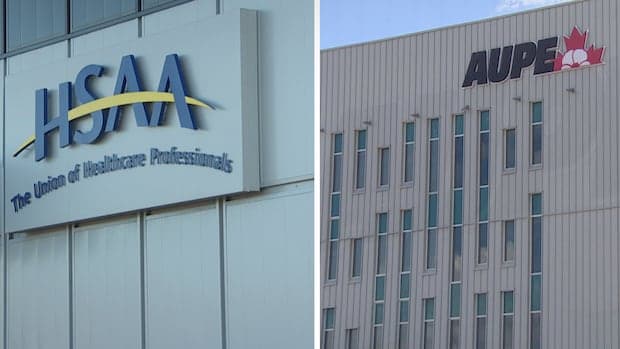
In a recent development within Alberta's ongoing health-care restructuring, Premier Danielle Smith announced that the province's public health inspectors will no longer be transferred directly into the provincial government as previously legislated. Instead, inspectors will move under the purview of Primary Care Alberta, a new agency, rather than becoming direct government employees this summer.
The decision was communicated by Smith on her call-in radio show, marking a reversal of the province's stated plan under last year's legislation to move public health inspectors from Alberta Health Services (AHS) to roles as direct employees of the health ministry. Smith stated that this change aims to keep the compensation and benefits packages of approximately 300 inspectors intact during the transition. "That then maintains all of the seniority and the various benefits and the various pay levels. That was the real issue that we discovered that by coming into government, it would have meant that those 300 or so workers would have had to switch unions," she explained.
Public health inspectors in Alberta are responsible for conducting risk assessments, investigating communicable diseases, and inspecting environments such as restaurants, child-care centres, and continuing-care facilities for factors that could lead to illness. The original plan, passed into law last year, would have required inspectors to move from their current union, the Health Sciences Association of Alberta (HSAA), to the Alberta Union of Provincial Employees (AUPE). This raised concerns about potential disruption to collective agreements and compensation.
Leanne Alfaro, president of HSAA, welcomed the announcement, expressing cautious optimism. She noted that both HSAA and AUPE had raised concerns that the forced union change could significantly affect inspectors’ working conditions. Alfaro stated, "This decision of the government was not our public health inspectors or that program's decision. … This wasn't on them. They're still doing the same work," and emphasized the importance of maintaining existing union agreements amid broader system restructuring.
According to a June 10 letter from the province to AUPE, inspectors’ salaries would not decrease if transferred from AHS to government employment, and the province would seek, "to the extent possible," to keep inspectors working in their current cities. However, the letter's assurances did not fully address union concerns about broader impacts on compensation and working conditions.
Some HSAA inspectors, particularly those in rural areas, expressed apprehension about possible relocations as part of the initial transfer plan. Alfaro recounted, "We had members saying they were going to change careers, they were leaving. So a lot of uncertainty, a lot of anxiety, of course, for all of these professionals."
Despite welcoming the revised approach, Alfaro raised questions about the timeline and specifics of the new transition plan, noting, "The number one question is, you know, when is it going to be official? It was announced, but we haven't actually seen it. We haven't had contact yet."
Jaye Lang, press secretary for Primary and Preventative Health Services Minister Justin Wright, said in a statement that the ministry is "committed to reducing disruption for public health inspectors as this transition moves forward." Lang stated the government’s decision followed concerns raised by affected employees but did not provide details on the logistics of the transition or confirm whether unions were notified in advance.
AUPE, in a news release, indicated support for the change but expressed frustration at the manner in which the news was communicated. "It's unfortunate that we had to learn about it through this means," the release stated. The union noted that, as recently as the day before Smith’s announcement, communication from the Public Service Commission had not conveyed the impending change, leaving members waiting for clarification on next steps.
Alfaro expressed hope that the province would draw lessons from the experience, particularly regarding the importance of consulting frontline health-care professionals before making decisions affecting their work. "I really hope that with all this restructuring, they see the need for consultation — real consultation — with the frontline health-care professionals to know the true impact that some of these decisions have," Alfaro said.
The transfer of public health inspectors is part of a larger restructuring of Alberta’s health system, a process which has involved legislative changes and reorganization of roles within the health-care sector. Inspectors’ core responsibilities are expected to remain unchanged, but union officials and affected staff have highlighted the significance of maintaining stability in compensation, benefits, and work locations during such transitions.
The province has not yet provided detailed information on how the transfer to Primary Care Alberta will be implemented or how concerns around union representation and working conditions will be addressed. Both unions and frontline workers have indicated they await further clarification and formal communication from the government.
This episode highlights the complexities involved in large-scale health-care restructuring, particularly when changes intersect with collective agreements, union representation, and workforce stability. The outcome is seen by some stakeholders as a case for increased consultation and transparency in public sector restructuring processes, while the province has positioned the revised transition as an effort to minimize disruption.