A Series of Overpass and Bridge Strikes Prompts Scrutiny in Saskatchewan
Eight incidents in 2024 highlight compliance and infrastructure concerns
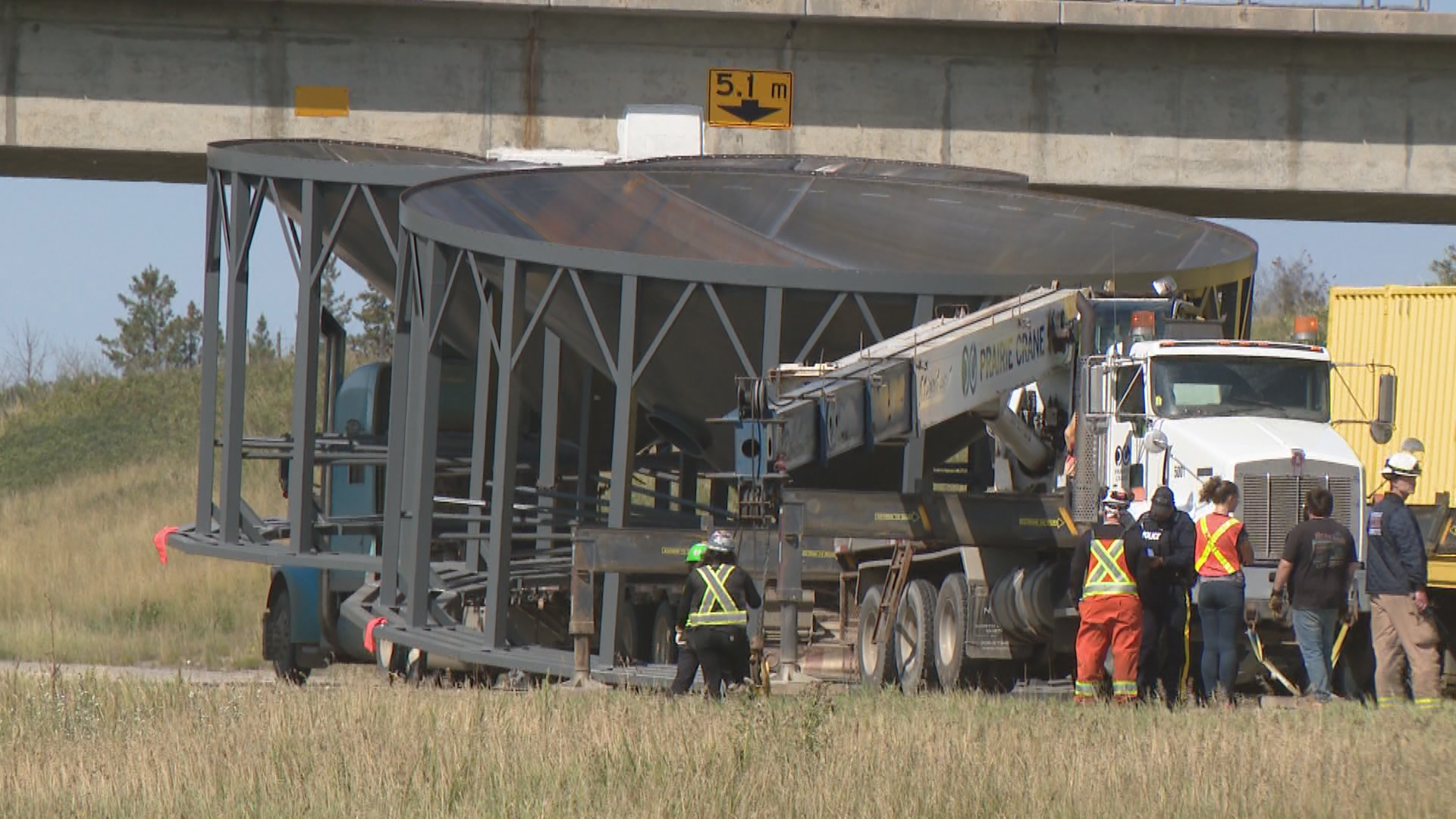
A semi-truck carrying hopper-bottom bins struck a train bridge near the Borden Bridge on Highway 16, about 50 kilometres northwest of Saskatoon, just before noon on September 2. The Saskatchewan Highway Patrol and RCMP responded to the scene, with crews deploying a crane to assist in moving the equipment. The incident marks at least the seventh, and according to some reports the eighth, overpass or train bridge strike in Saskatchewan in 2024.
The frequency of such incidents has drawn attention from authorities and industry representatives. Of all the strikes this year, five have occurred in Saskatoon. The most recent prior to the Borden Bridge incident took place in July, when a semi-truck hauling a grain bin hit the 51st Street overpass on Idylwyld Drive. The majority of incidents occurred in March, with five reported during that month alone.
Among the most costly incidents was the March 5 event, when a semi-truck hauling an excavator struck the Highway 16 overpass above Highway 11 at the Circle Drive cloverleaf. The City of Saskatoon estimated repairs for this incident at $400,000. Less than a week later, the 108th Street overpass over Circle Drive was struck, with repair estimates around $350,000. Another incident on March 16 involved a semi-truck carrying an excavator southbound on Highway 39 hitting an overpass on Highway 1 east of Moose Jaw.
March 22 saw two separate strikes: the McKercher Drive overpass was hit, and the CPKC rail bridge near the Attridge Drive overpass was also struck. In the latter incident, the driver left the scene but was later located by RCMP in Martensville. In June, a semi became stuck under Regina’s Broad Street train bridge.
In the case of the recent Borden Bridge incident, the semi-truck driver faces five charges: damage to a public improvement, failing to comply with permit conditions, exceeding the height authorized by permit, driving without due care and attention, and failing to carry a bill of lading. The Saskatchewan Highway Patrol is assisting the RCMP with the investigation, and the public has been asked to monitor highway restrictions and exercise caution in the area.
Canadian National Railway, responsible for the train bridge involved in the most recent incident, declined to comment on potential damage or impacts to rail operations, referring inquiries to the RCMP.
The Saskatchewan Highway Patrol has described overpass strikes as “unfortunate and completely avoidable by following height, width and weight restrictions on all city and provincial roadways.” In a public statement, the patrol urged operators to adhere to all transport regulations and to inspect loads before travel, emphasizing the need to protect infrastructure and ensure public safety.
Susan Ewart, executive director of the Saskatchewan Trucking Association, attributed the repeated incidents to a larger issue of non-compliance within the industry. She observed that, following the first two overpass strikes this year, there was an increase in cargo securing training. The association has initiated discussions with the province and municipalities, seeking to improve coordination and streamline the permitting process, which sometimes involves multiple departments.
Ewart noted that most drivers are experienced and prioritize safety when transporting large loads. She suggested that further education and support could help address the problem, and highlighted ongoing conversations with stakeholders aimed at finding effective solutions.
The repeated overpass and bridge strikes have raised questions about regulatory compliance, permit processes, and infrastructure resilience in Saskatchewan. Provincial authorities and industry groups are considering a range of measures, from enhanced training and streamlined permitting to stricter enforcement of existing rules. The financial costs associated with repairs have also underscored the stakes for both public infrastructure and transportation operators.
The incidents have prompted calls for increased vigilance and adherence to regulations among drivers and companies transporting oversized loads. They have also brought attention to the need for coordinated responses among municipal, provincial, and industry stakeholders, as well as the importance of maintaining safe and reliable transportation networks in the province.